Department of Ecology, College of Urban and Environmental Sciences and MOE Laboratory for Earth Surface Processes, Peking University, Beijing, China.
PLoS One. 2011 Apr 28;6(4):e19116. doi: 10.1371/journal.pone.0019116.
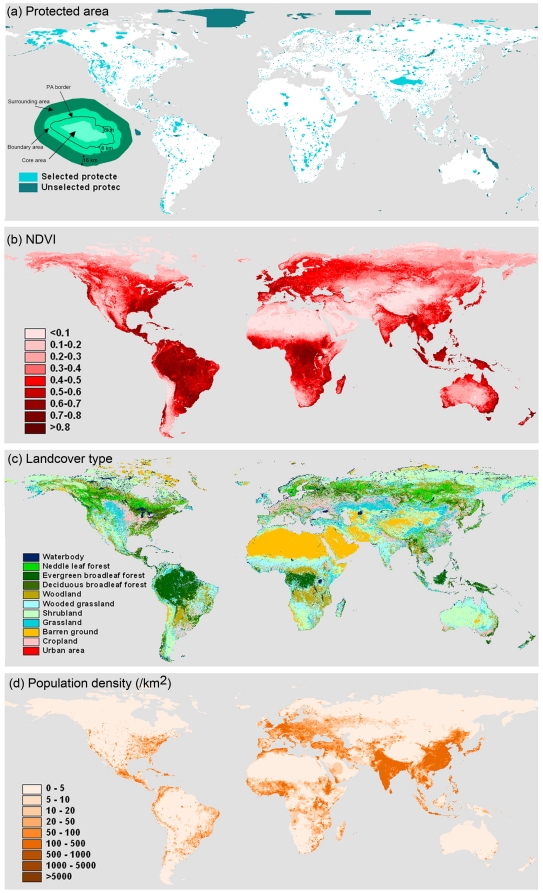
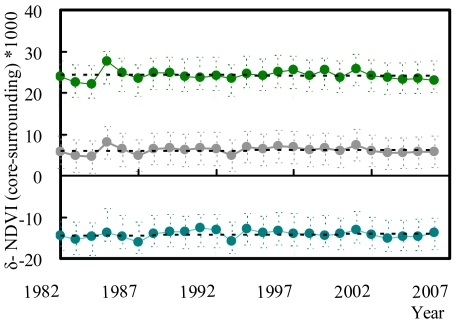
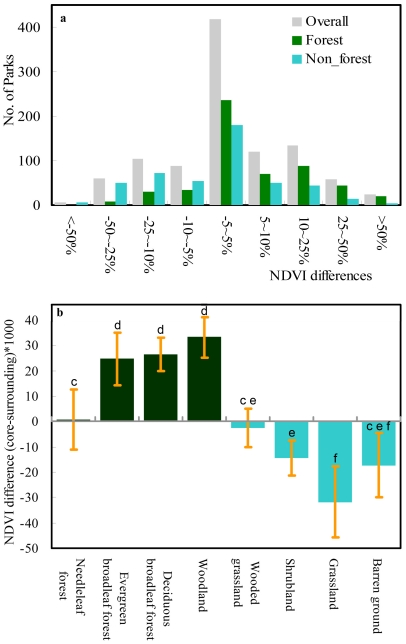
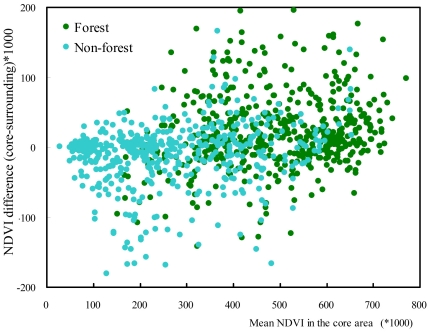
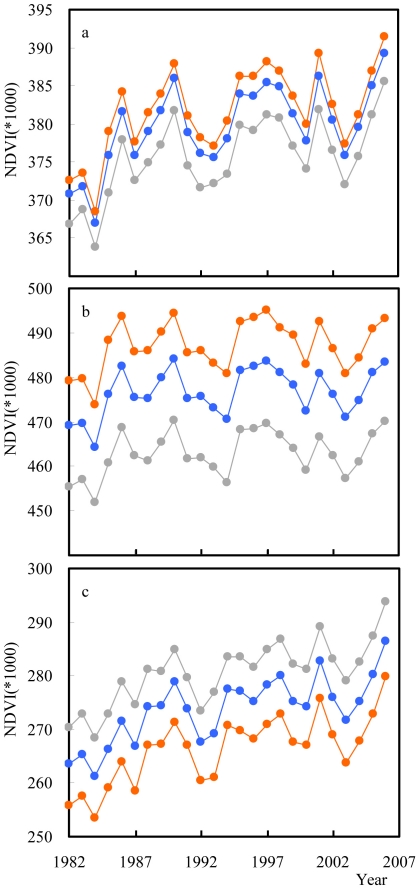
Given the central importance of protected area systems in local, regional and global conservation strategies, it is vital that there is a good understanding of their effectiveness in maintaining ecological functioning. Here, we provide, to our knowledge, the first such global analysis, focusing on plant production, a "supporting" ecosystem function necessary for multiple other ecosystem services. We use data on the normalized difference vegetation index (NDVI) as a measure of variation in plant production in the core, boundary and surroundings of more than 1000 large protected areas over a 25 year period. Forested protected areas were higher (or similar), and those non-forested were lower (or similar), in NDVI than their surrounding areas, and these differences have been sustained. The differences from surrounding areas have increased for evergreen broadleaf forests and barren grounds, decreased for grasslands, and remained similar for deciduous forests, woodlands, and shrublands, reflecting different pressures on those surroundings. These results are consistent with protected areas being effective both in the representation and maintenance of plant production. However, widespread overall increases in NDVI during the study period suggest that plant production within the core of non-forested protected areas has become higher than it was in the surroundings of those areas in 1982, highlighting that whilst the distinctiveness of protected areas from their surroundings has persisted the nature of that difference has changed.
鉴于保护区系统在地方、区域和全球保护战略中的核心重要性,必须充分了解其在维持生态功能方面的有效性。在这里,我们提供了,据我们所知,首次对植物生产进行这种全球分析,这是一种“支持”生态系统功能,是多种其他生态系统服务所必需的。我们使用归一化植被指数 (NDVI) 数据来衡量 25 年来 1000 多个大型保护区核心区、边界区和周围地区的植物生产变化。森林保护区的 NDVI 值高于(或相似)其周围地区,而非森林保护区的 NDVI 值低于(或相似)其周围地区,而且这些差异一直持续存在。常绿阔叶林和荒地的差异有所增加,草原的差异有所减少,落叶林、林地和灌木林的差异保持相似,反映了这些周围地区面临的不同压力。这些结果表明保护区在代表和维持植物生产方面是有效的。然而,在研究期间,NDVI 普遍呈整体增长趋势,表明非森林保护区核心区的植物生产已经高于 1982 年该地区周围的水平,这突显出尽管保护区与其周围环境的独特性持续存在,但这种差异的性质已经发生了变化。