International Rice Research Institute, Metro Manila, Philippines.
PLoS One. 2011;6(8):e22722. doi: 10.1371/journal.pone.0022722. Epub 2011 Aug 16.
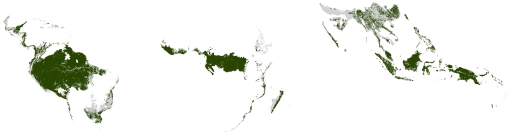
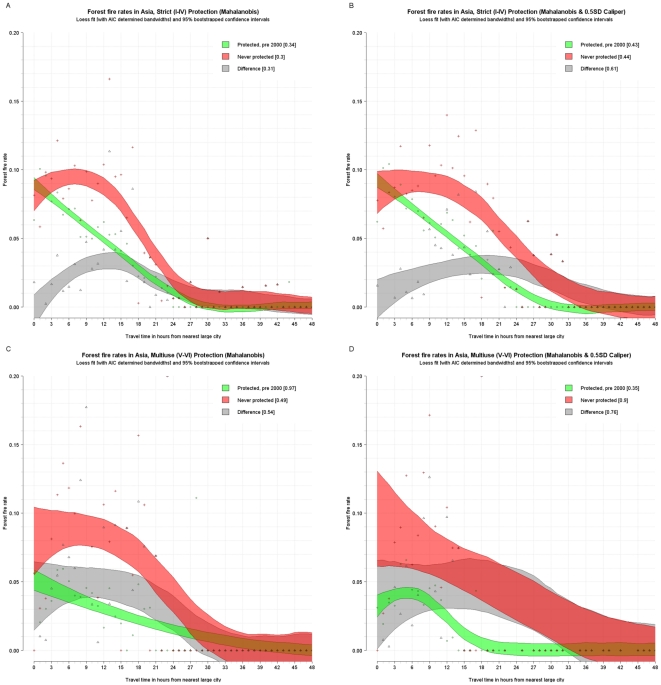
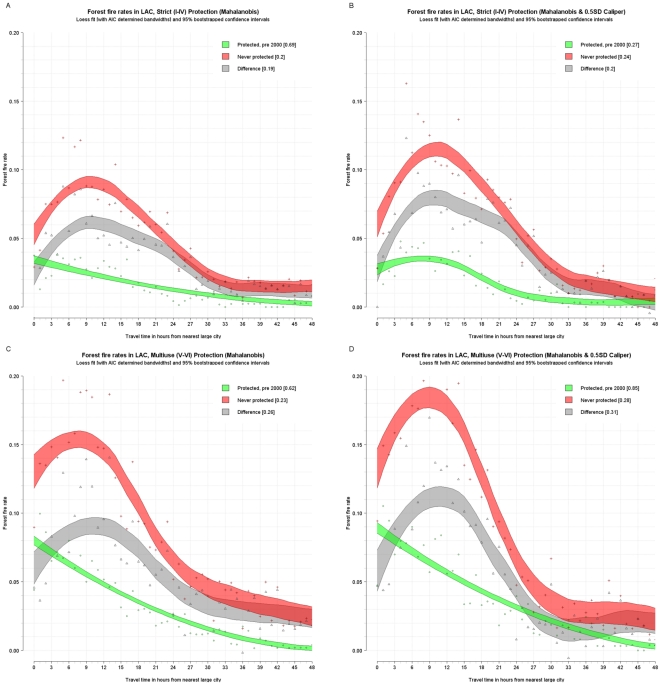
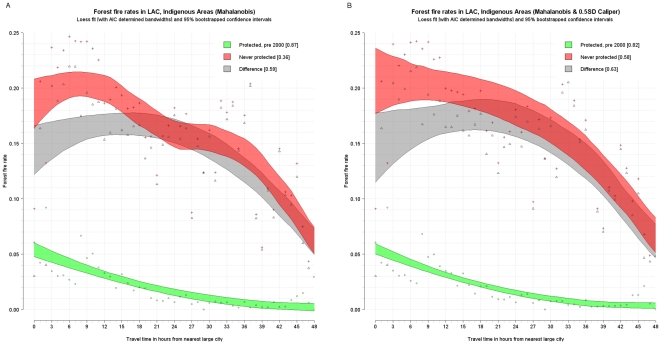
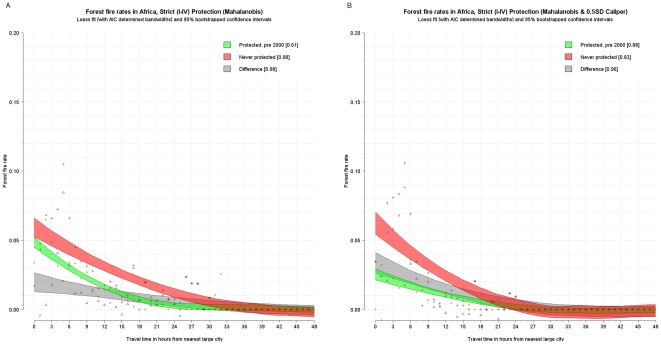
Protected areas (PAs) cover a quarter of the tropical forest estate. Yet there is debate over the effectiveness of PAs in reducing deforestation, especially when local people have rights to use the forest. A key analytic problem is the likely placement of PAs on marginal lands with low pressure for deforestation, biasing comparisons between protected and unprotected areas. Using matching techniques to control for this bias, this paper analyzes the global tropical forest biome using forest fires as a high resolution proxy for deforestation; disaggregates impacts by remoteness, a proxy for deforestation pressure; and compares strictly protected vs. multiple use PAs vs indigenous areas. Fire activity was overlaid on a 1 km map of tropical forest extent in 2000; land use change was inferred for any point experiencing one or more fires. Sampled points in pre-2000 PAs were matched with randomly selected never-protected points in the same country. Matching criteria included distance to road network, distance to major cities, elevation and slope, and rainfall. In Latin America and Asia, strict PAs substantially reduced fire incidence, but multi-use PAs were even more effective. In Latin America, where there is data on indigenous areas, these areas reduce forest fire incidence by 16 percentage points, over two and a half times as much as naïve (unmatched) comparison with unprotected areas would suggest. In Africa, more recently established strict PAs appear to be effective, but multi-use tropical forest protected areas yield few sample points, and their impacts are not robustly estimated. These results suggest that forest protection can contribute both to biodiversity conservation and CO2 mitigation goals, with particular relevance to the REDD agenda. Encouragingly, indigenous areas and multi-use protected areas can help to accomplish these goals, suggesting some compatibility between global environmental goals and support for local livelihoods.
保护区(PA)覆盖了四分之一的热带森林。然而,关于保护区在减少森林砍伐方面的有效性仍存在争议,特别是当当地居民有权使用森林时。一个关键的分析问题是,保护区可能位于森林砍伐压力较低的边缘土地上,从而对保护区和非保护区之间的比较产生偏差。本文使用匹配技术来控制这种偏差,以全球热带森林生物群系为研究对象,利用森林火灾作为森林砍伐的高分辨率代理指标;根据偏远程度(森林砍伐压力的代理指标)对影响进行细分;并将严格保护区与多种用途保护区和原住民地区进行比较。火灾活动被叠加在 2000 年热带森林范围的 1 公里地图上;对于任何一个经历过一次或多次火灾的地点,都可以推断出土地利用的变化。在保护区内的采样点与同一国家内从未受到保护的随机选择点进行匹配。匹配标准包括到路网的距离、到主要城市的距离、海拔和坡度以及降雨量。在拉丁美洲和亚洲,严格的保护区大大降低了火灾发生率,但多种用途的保护区更为有效。在有原住民地区数据的拉丁美洲,这些地区将森林火灾发生率降低了 16 个百分点,比与未受保护地区进行简单(未匹配)比较所表明的要高出两倍半。在非洲,最近建立的严格保护区似乎有效,但热带森林多种用途保护区的样本点较少,其影响也没有得到稳健估计。这些结果表明,森林保护既能为生物多样性保护和 CO2 减排目标做出贡献,也与 REDD 议程特别相关。令人鼓舞的是,原住民地区和多种用途保护区可以帮助实现这些目标,这表明全球环境目标和对当地生计的支持之间存在一定的兼容性。