Heino Matias, Kummu Matti, Makkonen Marika, Mulligan Mark, Verburg Peter H, Jalava Mika, Räsänen Timo A
Water and Development Research Group, Aalto University, Tietotie 1E, 02150, Espoo, Finland.
Natural Resources Institute Finland (Luke), Jokiniemenkuja 1, 01301, Vantaa, Finland.
PLoS One. 2015 Oct 14;10(10):e0138918. doi: 10.1371/journal.pone.0138918. eCollection 2015.
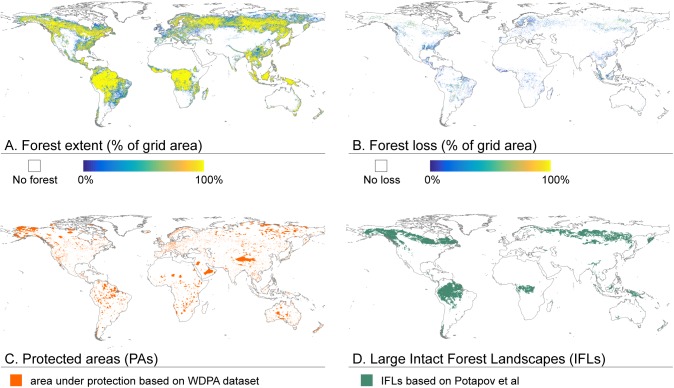
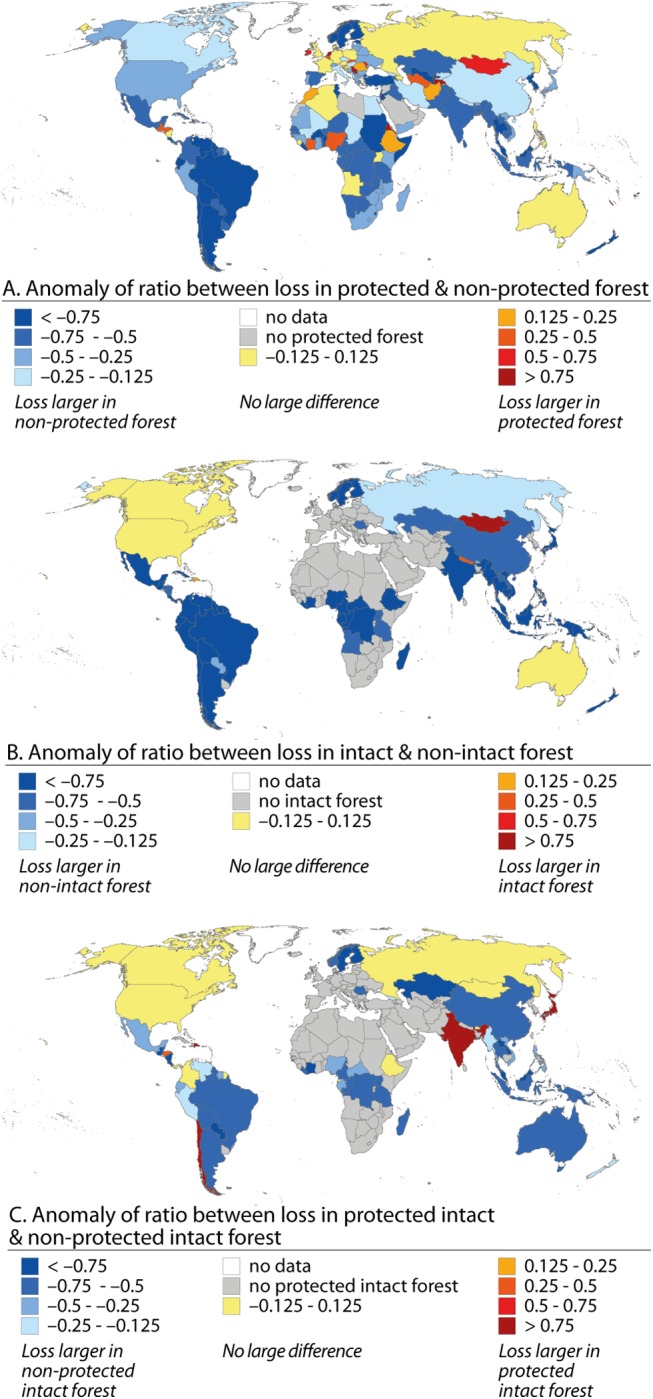
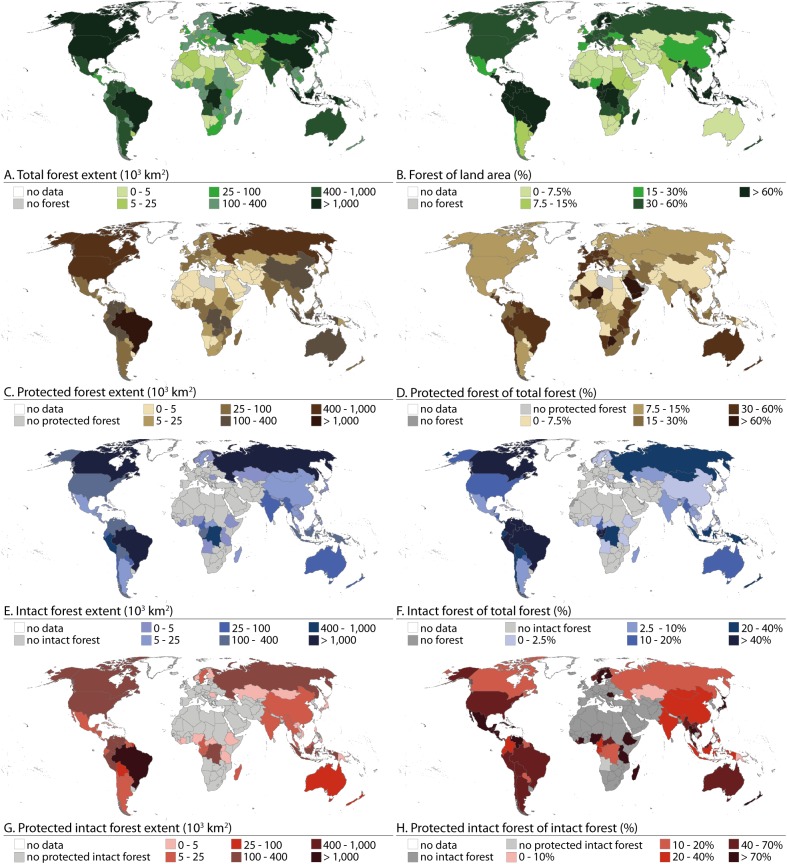
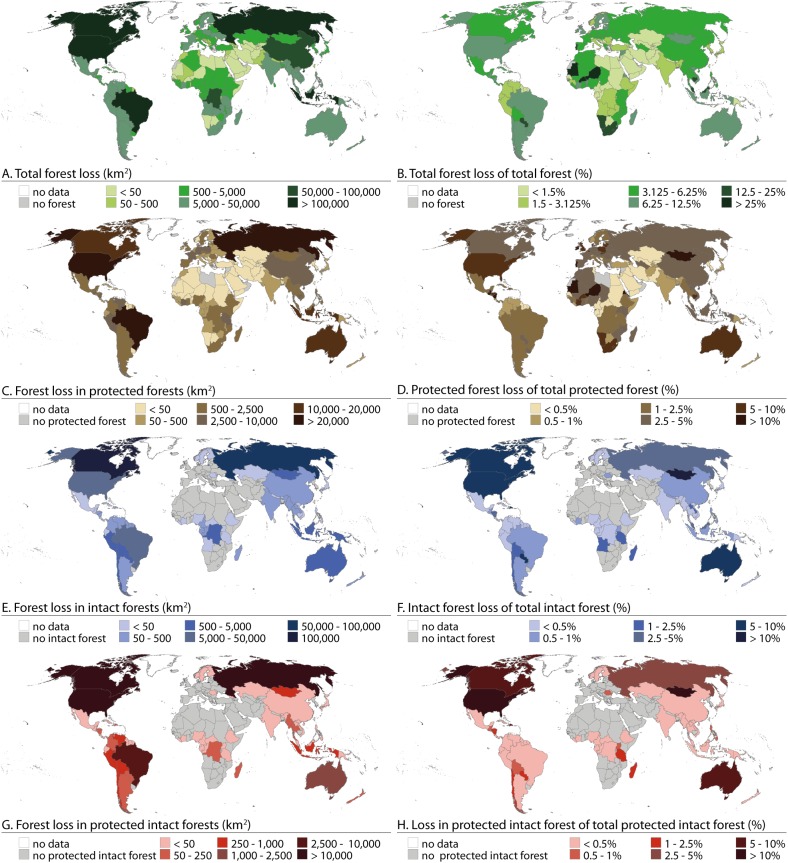
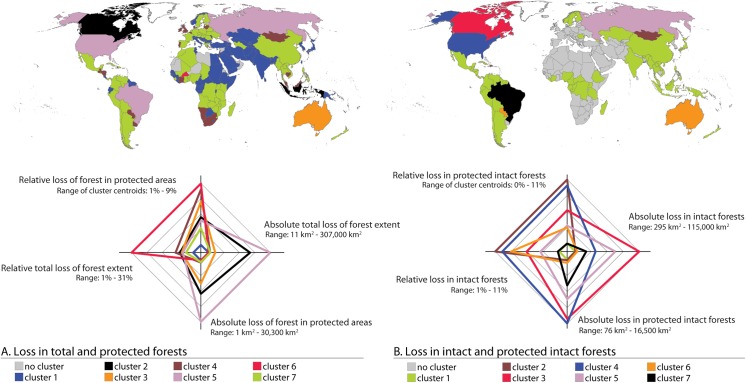
In spite of the high importance of forests, global forest loss has remained alarmingly high during the last decades. Forest loss at a global scale has been unveiled with increasingly finer spatial resolution, but the forest extent and loss in protected areas (PAs) and in large intact forest landscapes (IFLs) have not so far been systematically assessed. Moreover, the impact of protection on preserving the IFLs is not well understood. In this study we conducted a consistent assessment of the global forest loss in PAs and IFLs over the period 2000-2012. We used recently published global remote sensing based spatial forest cover change data, being a uniform and consistent dataset over space and time, together with global datasets on PAs' and IFLs' locations. Our analyses revealed that on a global scale 3% of the protected forest, 2.5% of the intact forest, and 1.5% of the protected intact forest were lost during the study period. These forest loss rates are relatively high compared to global total forest loss of 5% for the same time period. The variation in forest losses and in protection effect was large among geographical regions and countries. In some regions the loss in protected forests exceeded 5% (e.g. in Australia and Oceania, and North America) and the relative forest loss was higher inside protected areas than outside those areas (e.g. in Mongolia and parts of Africa, Central Asia, and Europe). At the same time, protection was found to prevent forest loss in several countries (e.g. in South America and Southeast Asia). Globally, high area-weighted forest loss rates of protected and intact forests were associated with high gross domestic product and in the case of protected forests also with high proportions of agricultural land. Our findings reinforce the need for improved understanding of the reasons for the high forest losses in PAs and IFLs and strategies to prevent further losses.
尽管森林具有高度重要性,但在过去几十年里,全球森林流失速度一直高得惊人。全球范围内的森林流失情况已通过空间分辨率越来越高的数据得以揭示,但保护区(PAs)和大型完整森林景观(IFLs)的森林范围及流失情况迄今尚未得到系统评估。此外,保护措施对维护完整森林景观的影响也未得到充分理解。在本研究中,我们对2000年至2012年期间保护区和完整森林景观中的全球森林流失情况进行了连贯评估。我们使用了最近发布的基于全球遥感的空间森林覆盖变化数据,该数据在空间和时间上是统一且连贯的数据集,同时结合了关于保护区和完整森林景观位置的全球数据集。我们的分析表明,在全球范围内,研究期间有3%的受保护森林、2.5%的完整森林以及1.5%的受保护完整森林流失。与同一时期全球5%的森林总流失率相比,这些森林流失率相对较高。森林流失和保护效果在不同地理区域和国家之间差异很大。在一些地区,受保护森林的流失率超过了5%(如在澳大利亚和大洋洲以及北美洲),并且保护区内的相对森林流失率高于保护区外(如在蒙古以及非洲、中亚和欧洲的部分地区)。与此同时,在一些国家(如在南美洲和东南亚),保护措施被发现能够防止森林流失。在全球范围内,保护区和完整森林的高面积加权森林流失率与高国内生产总值相关,而就受保护森林而言,还与高比例的农业用地相关。我们的研究结果强化了对保护区和完整森林景观中森林高流失率原因及防止进一步流失策略进行更好理解的必要性。