Omics Science Center, RIKEN Yokohama Institute, Yokohama, Japan.
PLoS One. 2011 Apr 29;6(4):e18956. doi: 10.1371/journal.pone.0018956.
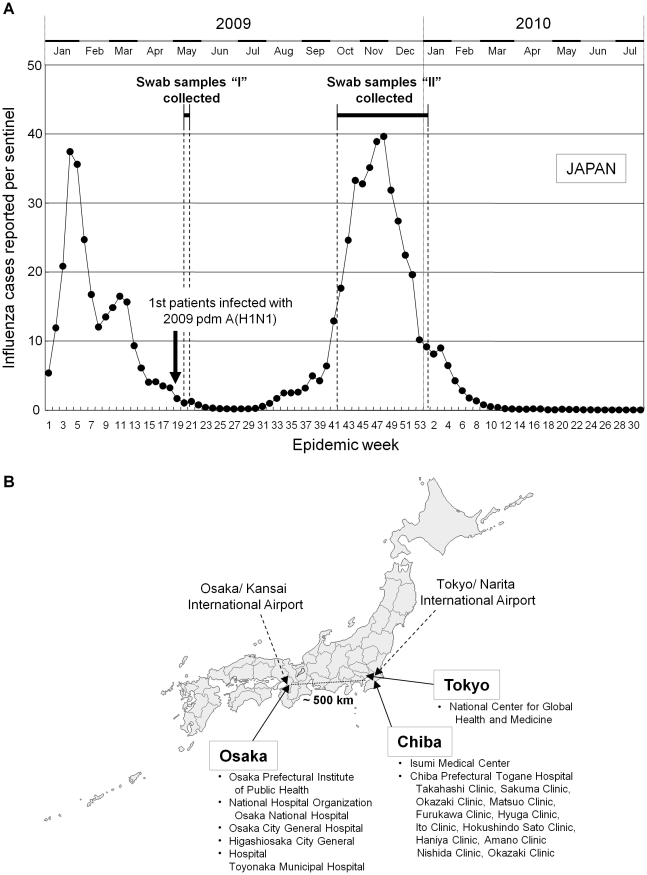
Pandemic influenza A(H1N1) virus infection quickly circulated worldwide in 2009. In Japan, the first case was reported in May 2009, one month after its outbreak in Mexico. Thereafter, A(H1N1) infection spread widely throughout the country. It is of great importance to profile and understand the situation regarding viral mutations and their circulation in Japan to accumulate a knowledge base and to prepare clinical response platforms before a second pandemic (pdm) wave emerges.
A total of 253 swab samples were collected from patients with influenza-like illness in the Osaka, Tokyo, and Chiba areas both in May 2009 and between October 2009 and January 2010. We analyzed partial sequences of the hemagglutinin (HA) and neuraminidase (NA) genes of the 2009 pdm influenza virus in the collected clinical samples. By phylogenetic analysis, we identified major variants of the 2009 pdm influenza virus and critical mutations associated with severe cases, including drug-resistance mutations.
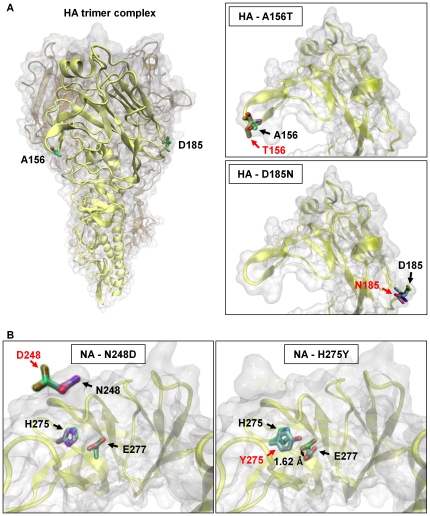
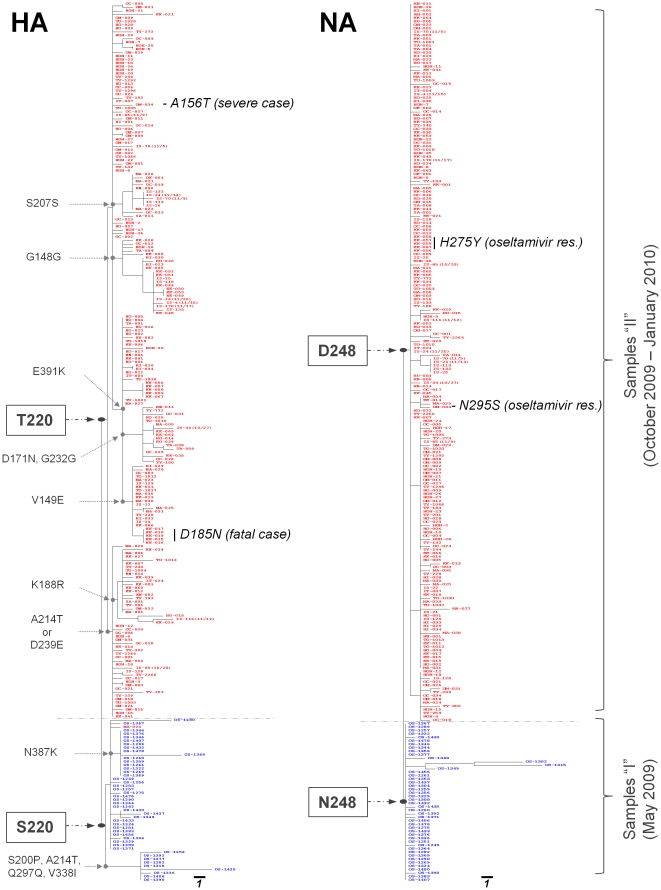
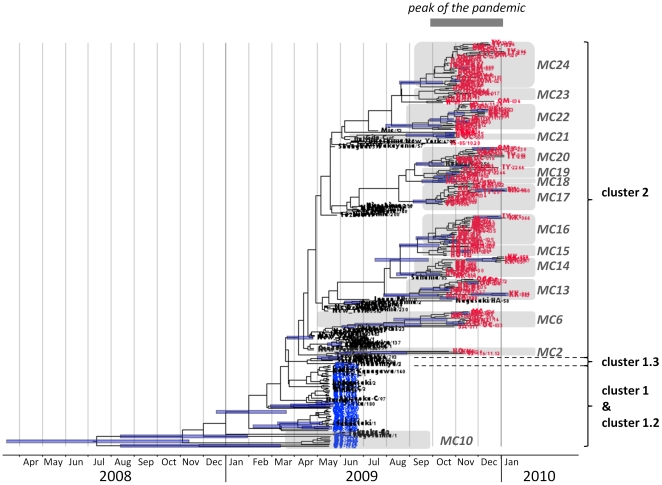
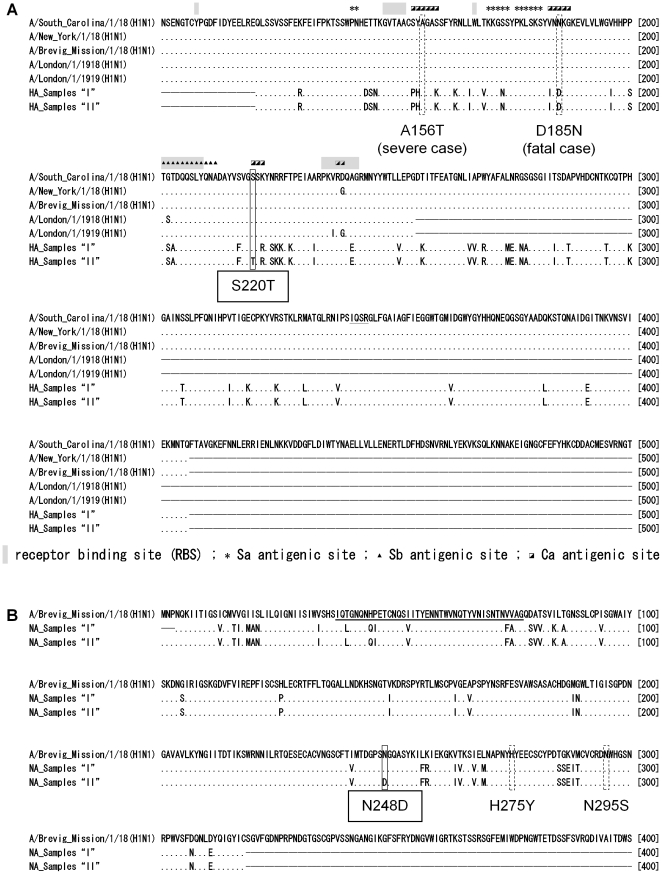
Our sequence analysis has revealed that both HA-S220T and NA-N248D are major non-synonymous mutations that clearly discriminate the 2009 pdm influenza viruses identified in the very early phase (May 2009) from those found in the peak phase (October 2009 to January 2010) in Japan. By phylogenetic analysis, we found 14 micro-clades within the viruses collected during the peak phase. Among them, 12 were new micro-clades, while two were previously reported. Oseltamivir resistance-related mutations, i.e., NA-H275Y and NA-N295S, were also detected in sporadic cases in Osaka and Tokyo.
甲型 H1N1 流感病毒于 2009 年在全球迅速传播。在日本,首例病例于 2009 年 5 月报告,比墨西哥首例病例晚一个月。此后,A(H1N1)感染在全国范围内广泛传播。了解病毒突变及其在日本的传播情况并积累知识库,以及在第二次大流行(pdm)浪潮出现之前准备临床应对平台,这一点非常重要。
共收集了 2009 年 5 月和 2009 年 10 月至 2010 年 1 月期间在大阪、东京和千叶地区流感样疾病患者的 253 个拭子样本。我们分析了收集的临床样本中 2009 年 pdm 流感病毒血凝素(HA)和神经氨酸酶(NA)基因的部分序列。通过系统进化分析,我们确定了 2009 年 pdm 流感病毒的主要变异株和与重症病例相关的关键突变,包括耐药性突变。
我们的序列分析表明,HA-S220T 和 NA-N248D 都是主要的非同义突变,可明确区分 2009 年 pdm 流感病毒在日本早期(2009 年 5 月)和高峰期(2009 年 10 月至 2010 年 1 月)鉴定的病毒。通过系统进化分析,我们发现高峰期采集的病毒中有 14 个微进化枝。其中,12 个是新的微进化枝,而 2 个是之前报道过的。在大阪和东京的散发病例中也检测到奥司他韦耐药相关突变,即 NA-H275Y 和 NA-N295S。