Singh Onkar, Gupta Shilpi Singh, Soni Mohan, Moses Sonia, Shukla Sumit, Mathur Raj Kumar
Department of Surgery, MGM Medical College and MY Hospital, Indore, India.
J Cutan Aesthet Surg. 2011 Jan;4(1):12-6. doi: 10.4103/0974-2077.79180.
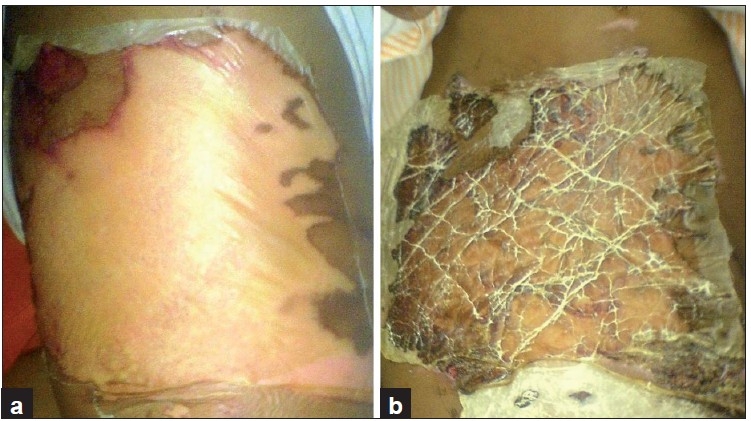
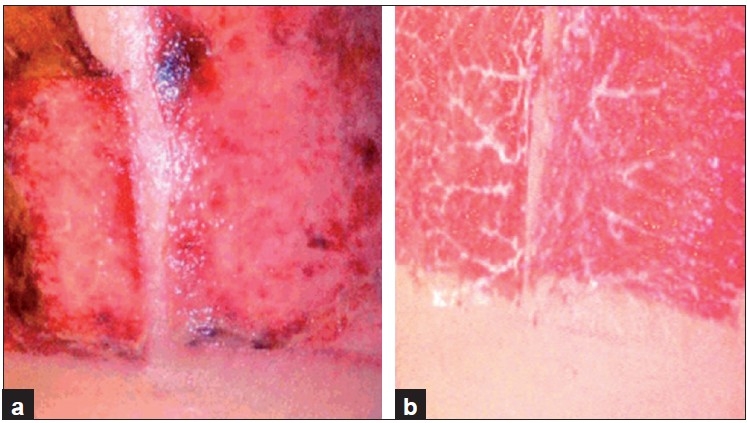
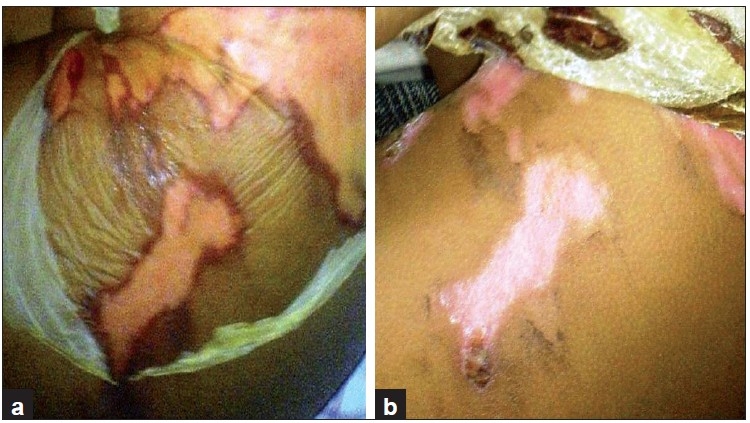
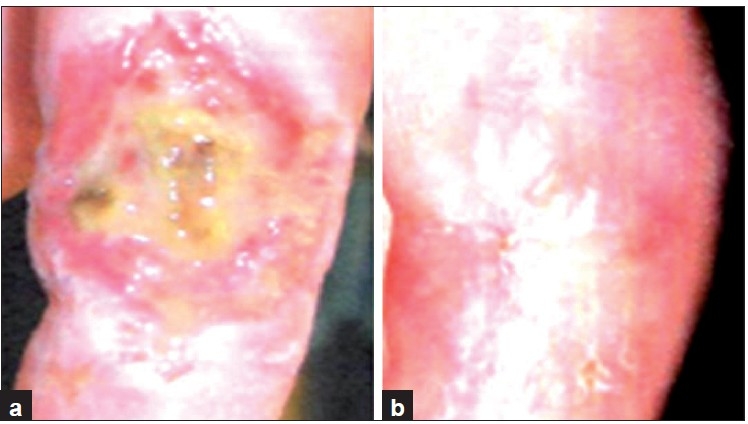
Biological dressings like collagen are impermeable to bacteria, and create the most physiological interface between the wound surface and the environment. Collagen dressings have other advantages over conventional dressings in terms of ease of application and being natural, non-immunogenic, non-pyrogenic, hypo-allergenic, and pain-free. This study aims to compare the efficacy of collagen dressing in treating burn and chronic wounds with that of conventional dressing materials.
The records of 120 patients with chronic wounds of varied aetiologies and with mean age 43.7 years were collected and analyzed. The patients had been treated either with collagen or other conventional dressing materials including silver sulfadiazine, nadifloxacin, povidone iodine, or honey (traditional dressing material). Patients with co-morbidities that could grossly affect the wound healing like uncontrolled diabetes mellitus, chronic liver or renal disease, or major nutritional deprivation were not included. For the purpose of comparison the patients were divided into two groups; 'Collagen group' and 'Conventional group', each having 60 patients. For assessment the wound characteristics (size, edge, floor, slough, granulation tissue, and wound swab or pus culture sensitivity results) were recorded. With start of treatment, appearance of granulation tissue, completeness of healing, need for skin grafting, and patients' satisfaction was noted for each patient in both groups.
With two weeks of treatment, 60% of the 'collagen group' wounds and only 42% of the 'conventional group' wounds were sterile (P=0.03). Healthy granulation tissue appeared earlier over collagen-dressed wounds than over conventionally treated wounds (P=0.03). After eight weeks, 52 (87%) of 'collagen group' wounds and 48 (80%) of 'conventional group' wounds were >75% healed (P=0.21). Eight patients in the 'collagen group' and 12 in the 'conventional group' needed partial split-skin grafting (P=0.04). Collagen-treated patients enjoyed early and more subjective mobility.
No significant better results in terms of completeness of healing of burn and chronic wounds between collagen dressing and conventional dressing were found. Collagen dressing, however, may avoid the need of skin grafting, and provides additional advantage of patients' compliance and comfort.
胶原蛋白等生物敷料对细菌具有不透性,能在创面与环境之间形成最接近生理状态的界面。与传统敷料相比,胶原蛋白敷料在应用便利性以及天然、无免疫原性、无致热原性、低致敏性和无痛等方面具有其他优势。本研究旨在比较胶原蛋白敷料与传统敷料材料治疗烧伤和慢性伤口的疗效。
收集并分析120例不同病因慢性伤口患者的记录,患者平均年龄43.7岁。这些患者接受了胶原蛋白或其他传统敷料材料的治疗,传统敷料材料包括磺胺嘧啶银、那氟沙星、聚维酮碘或蜂蜜(传统敷料材料)。患有可能严重影响伤口愈合的合并症(如未控制的糖尿病、慢性肝病或肾病、或严重营养缺乏)的患者未纳入研究。为了进行比较,将患者分为两组;“胶原蛋白组”和“传统组”,每组各60例。为了评估,记录伤口特征(大小、边缘、底部、腐肉、肉芽组织以及伤口拭子或脓液培养敏感性结果)。治疗开始后,记录两组中每位患者肉芽组织的出现情况、愈合的完整性(是否需要植皮)以及患者的满意度。
治疗两周后,“胶原蛋白组”60%的伤口无菌,而“传统组”只有42%的伤口无菌(P = 0.03)。胶原蛋白敷料覆盖的伤口比传统治疗的伤口更早出现健康的肉芽组织(P = 0.03)。八周后,“胶原蛋白组”52例(87%)伤口和“传统组”48例(80%)伤口愈合程度超过75%(P = 0.21)。“胶原蛋白组”8例患者和“传统组”12例患者需要进行部分中厚皮片移植(P = 0.04)。接受胶原蛋白治疗的患者早期活动更自如,主观感受更好。
在烧伤和慢性伤口愈合的完整性方面,胶原蛋白敷料与传统敷料相比未发现显著更好的效果。然而,胶原蛋白敷料可能避免植皮的需要,并具有患者依从性和舒适度方面的额外优势。