Molecular and Cellular Biology Program, Center for Cardiovascular Biology, Institute for Stem Cell and Regenerative Medicine, University of Washington, 815 Mercer St., Seattle, WA 98109, USA.
Circ Res. 2011 Jun 24;109(1):47-59. doi: 10.1161/CIRCRESAHA.110.237206. Epub 2011 May 19.
The developing heart requires both mechanical load and vascularization to reach its proper size, yet the regulation of human heart growth by these processes is poorly understood.
We seek to elucidate the responses of immature human myocardium to mechanical load and vascularization using tissue engineering approaches.
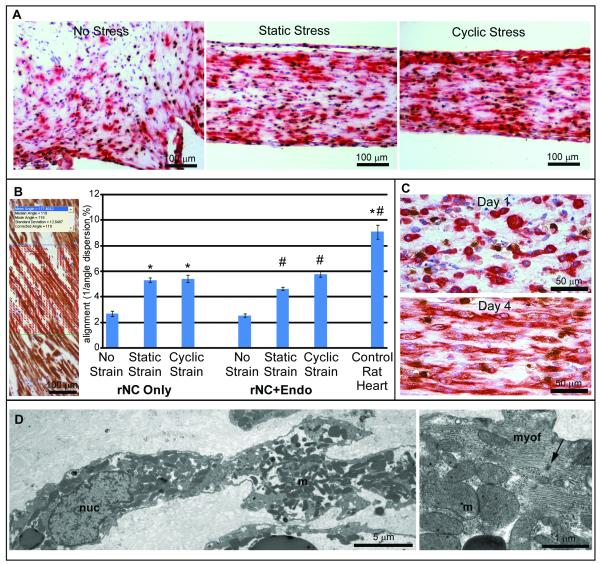
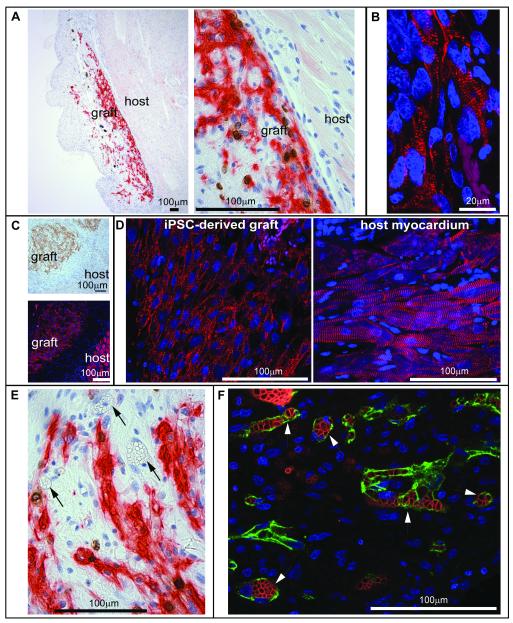
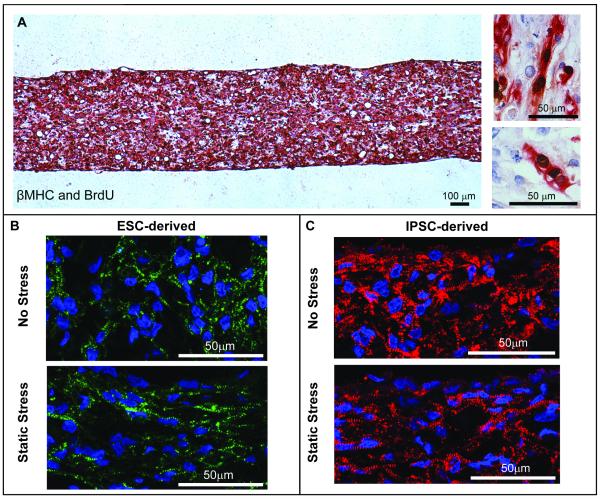
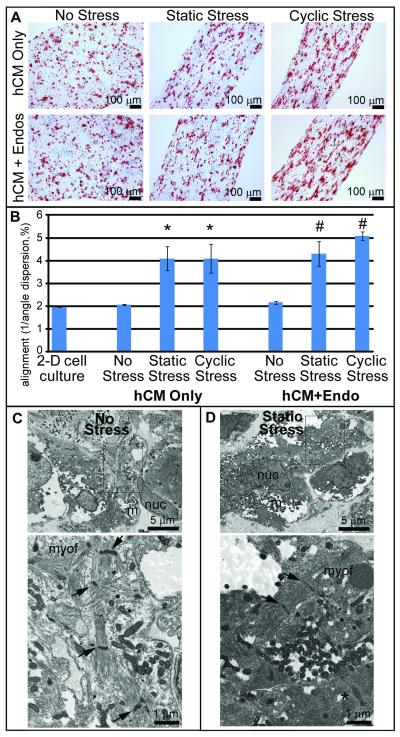
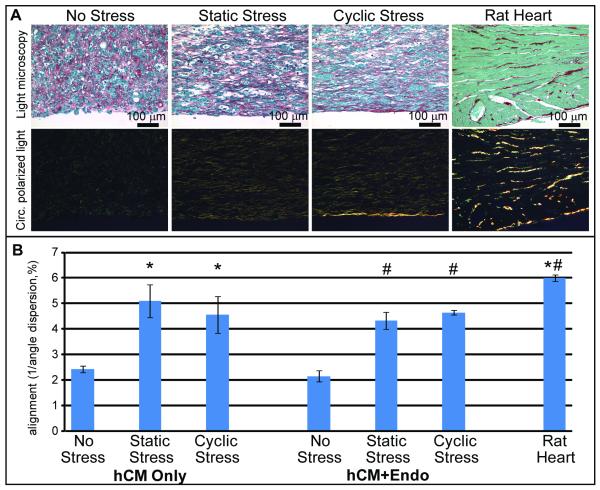
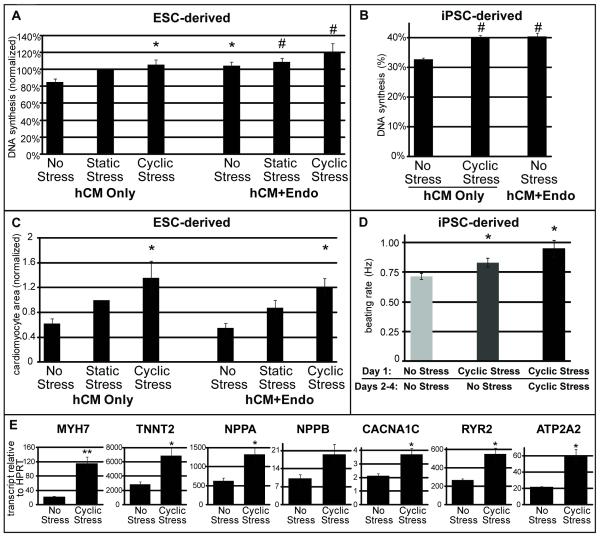
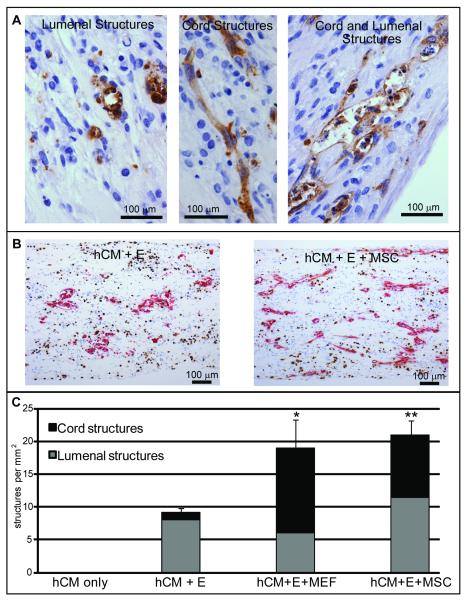
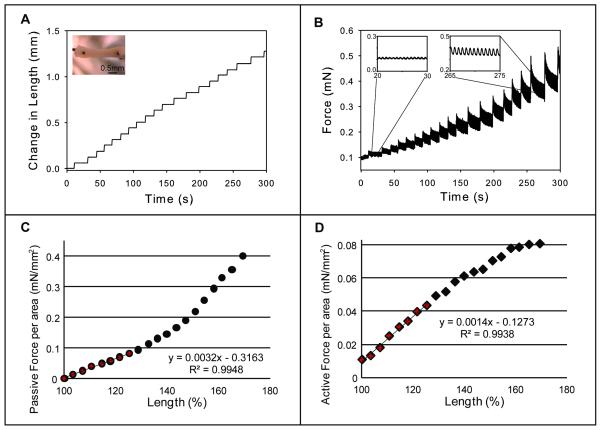
Using human embryonic stem cell and human induced pluripotent stem cell-derived cardiomyocytes in a 3-dimensional collagen matrix, we show that uniaxial mechanical stress conditioning promotes 2-fold increases in cardiomyocyte and matrix fiber alignment and enhances myofibrillogenesis and sarcomeric banding. Furthermore, cyclic stress conditioning markedly increases cardiomyocyte hypertrophy (2.2-fold) and proliferation rates (21%) versus unconditioned constructs. Addition of endothelial cells enhances cardiomyocyte proliferation under all stress conditions (14% to 19%), and addition of stromal supporting cells enhances formation of vessel-like structures by ≈10-fold. Furthermore, these optimized human cardiac tissue constructs generate Starling curves, increasing their active force in response to increased resting length. When transplanted onto hearts of athymic rats, the human myocardium survives and forms grafts closely apposed to host myocardium. The grafts contain human microvessels that are perfused by the host coronary circulation.
Our results indicate that both mechanical load and vascular cell coculture control cardiomyocyte proliferation, and that mechanical load further controls the hypertrophy and architecture of engineered human myocardium. Such constructs may be useful for studying human cardiac development as well as for regenerative therapy.
发育中的心脏需要机械负荷和血管生成才能达到适当的大小,但这些过程对人类心脏生长的调节知之甚少。
我们试图通过组织工程方法阐明未成熟人心肌对机械负荷和血管生成的反应。
使用人胚胎干细胞和人诱导多能干细胞衍生的心肌细胞在 3 维胶原基质中,我们发现单轴机械应力调节可促进心肌细胞和基质纤维排列增加 2 倍,并增强肌原纤维生成和肌节带形成。此外,循环应力调节与未调节的构建体相比,显著增加心肌细胞肥大(2.2 倍)和增殖率(21%)。内皮细胞的添加增强了所有应激条件下的心肌细胞增殖(14%至 19%),基质支持细胞的添加增强了血管样结构的形成约 10 倍。此外,这些优化的人心肌组织构建体产生 Starling 曲线,响应增加的静息长度增加其主动力。当移植到无胸腺大鼠的心脏上时,人心肌存活并形成与宿主心肌紧密贴合的移植物。移植物包含被宿主冠状动脉循环灌注的人微血管。
我们的结果表明,机械负荷和血管细胞共培养均控制心肌细胞增殖,而机械负荷进一步控制工程化人心肌的肥大和结构。这些构建体可能对研究人类心脏发育以及再生治疗有用。