Department of Chemistry, University of North Carolina Chapel Hill, North Carolina 27599-3290, USA.
Acc Chem Res. 2011 Dec 20;44(12):1280-91. doi: 10.1021/ar200051h. Epub 2011 May 26.
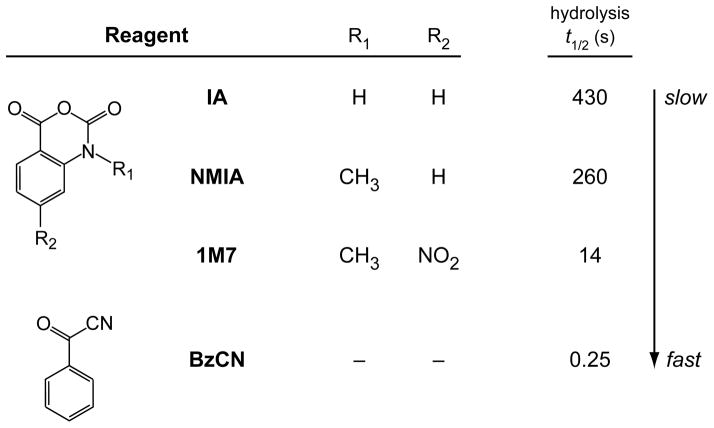
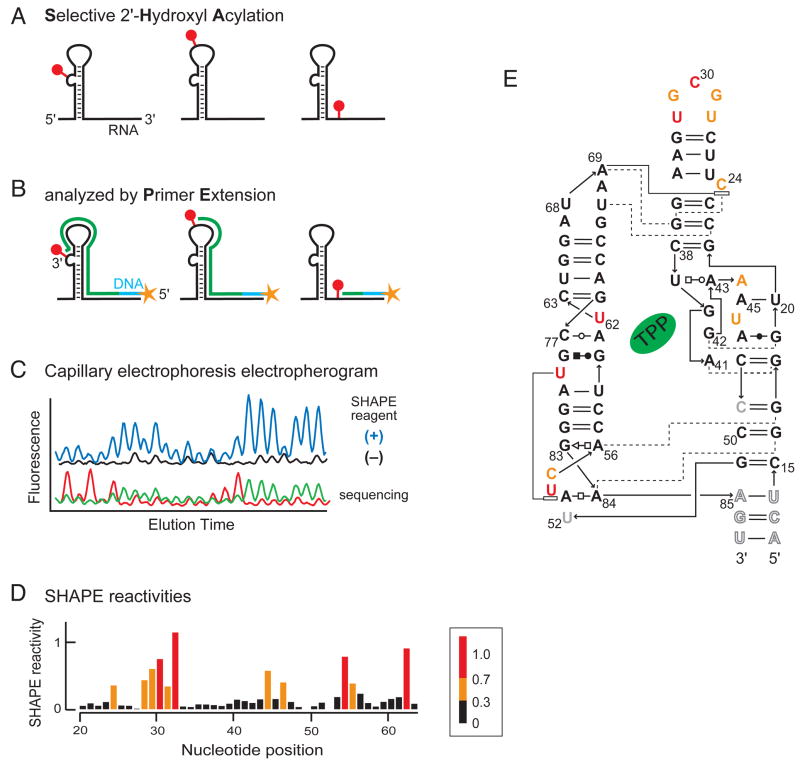
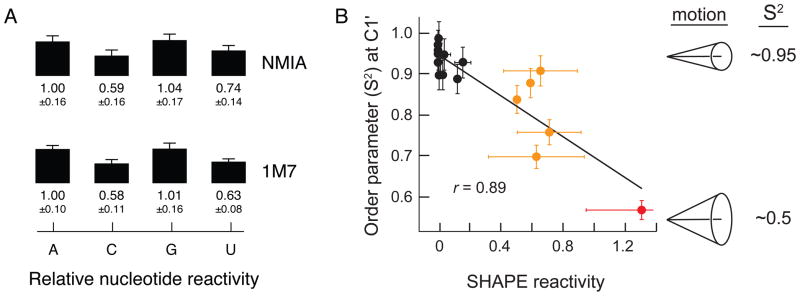
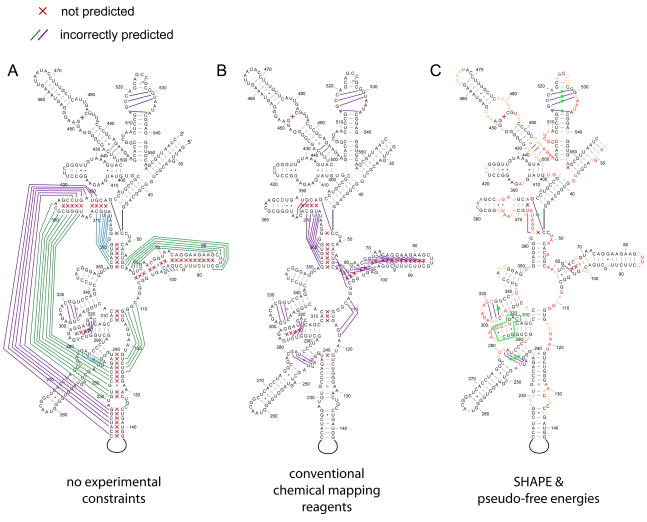
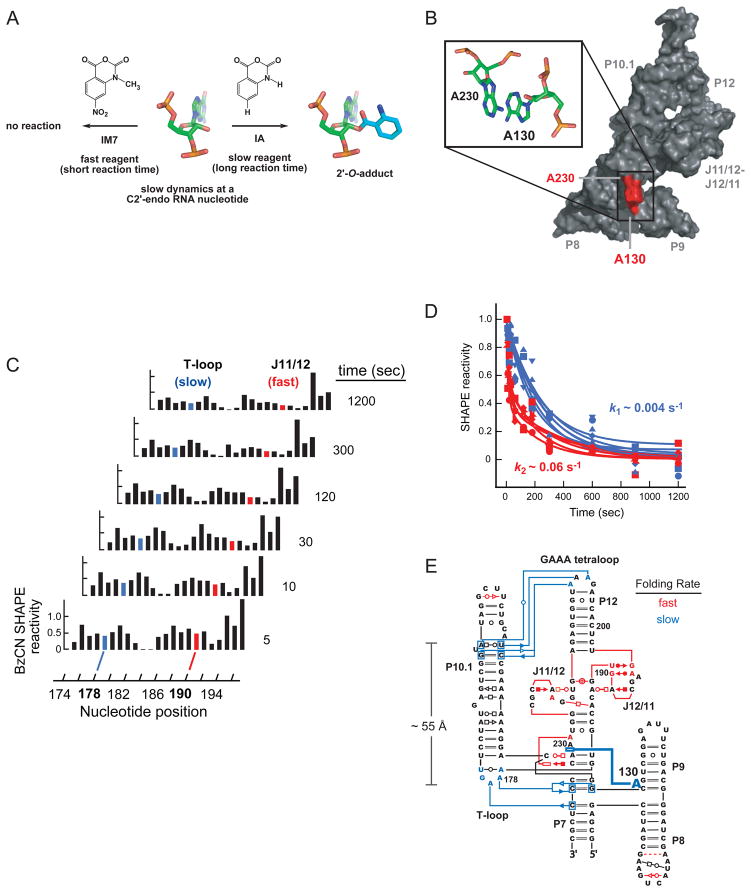
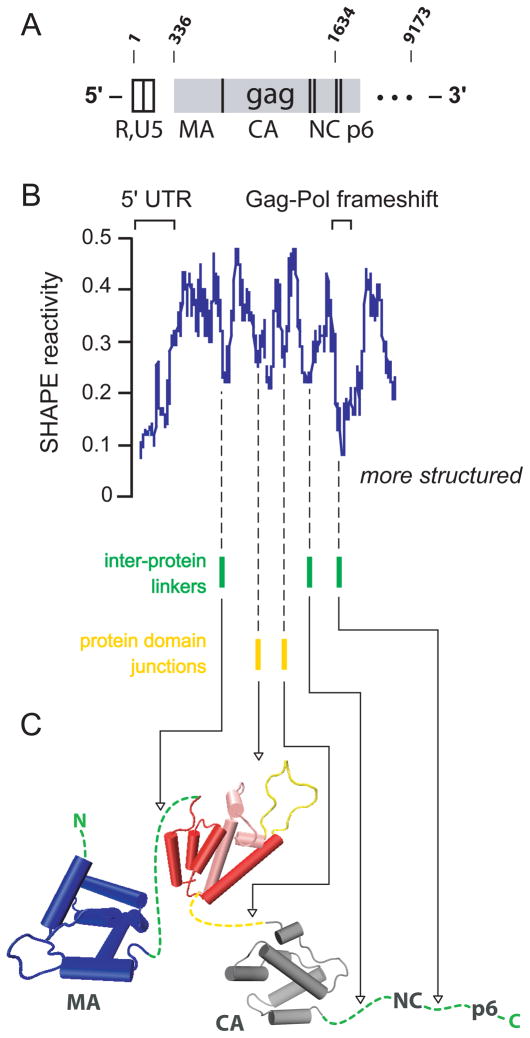
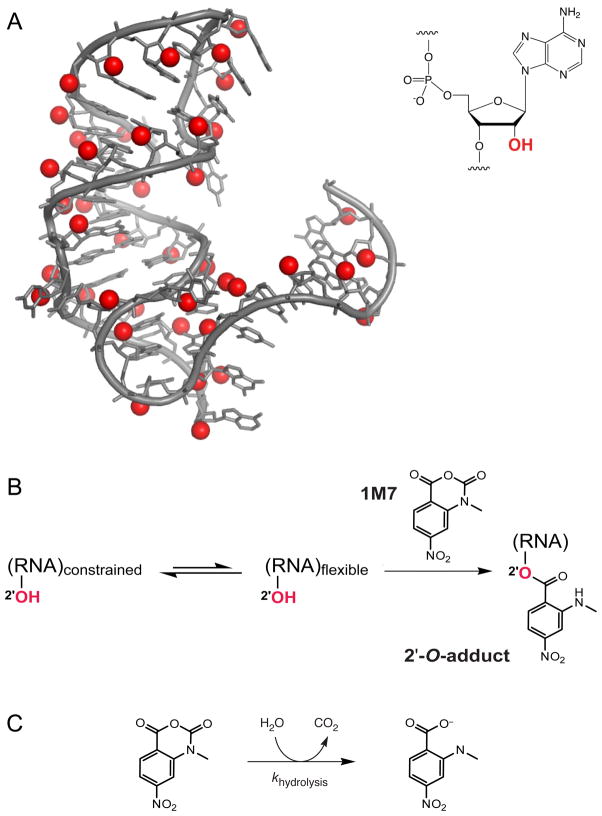
RNA is the central conduit for gene expression. This role depends on an ability to encode information at two levels: in its linear sequence and in the complex structures RNA can form by folding back on itself. Understanding the global structure-function interrelationships mediated by RNA remains a great challenge in molecular and structural biology. In this Account, we discuss evolving work in our laboratory focused on creating facile, generic, quantitative, accurate, and highly informative approaches for understanding RNA structure in biologically important environments. The core innovation derives from our discovery that the nucleophilic reactivity of the ribose 2'-hydroxyl in RNA is gated by local nucleotide flexibility. The 2'-hydroxyl is reactive at conformationally flexible positions but is unreactive at nucleotides constrained by base pairing. Sites of modification in RNA can be detected efficiently either using primer extension or by protection from exoribonucleolytic degradation. This technology is now called SHAPE, for selective 2'-hydroxyl acylation analyzed by primer extension (or protection from exoribonuclease). SHAPE reactivities are largely independent of nucleotide identity but correlate closely with model-free measurements of molecular order. The simple SHAPE reaction is thus a robust, nucleotide-resolution, biophysical measurement of RNA structure. SHAPE can be used to provide an experimental correction to RNA folding algorithms and, in favorable cases, yield kilobase-scale secondary structure predictions with high accuracies. SHAPE chemistry is based on very simple reactive carbonyl centers that can be varied to yield slow- and fast-reacting reagents. Differential SHAPE reactivities can be used to detect specific RNA positions with slow local nucleotide dynamics. These positions, which are often in the C2'-endo conformation, have the potential to function as molecular timers that regulate RNA folding and function. In addition, fast-reacting SHAPE reagents can be used to visualize RNA structural biogenesis and RNA-protein assembly reactions in one second snapshots in very straightforward experiments. The application of SHAPE to challenging problems in biology has revealed surprises in well-studied systems. New regions have been identified that are likely to have critical functional roles on the basis of their high levels of RNA structure. For example, SHAPE analysis of large RNAs, such as authentic viral RNA genomes, suggests that RNA structure organizes regulatory motifs and regulates splicing, protein folding, genome recombination, and ribonucleoprotein assembly. SHAPE has also revealed limitations to the hierarchical model for RNA folding. Continued development and application of SHAPE technologies will advance our understanding of the many ways in which the genetic code is expressed through the underlying structure of RNA.
RNA 是基因表达的中心管道。这种作用取决于其在两个水平上编码信息的能力:线性序列和 RNA 通过自身折叠形成的复杂结构。理解 RNA 介导的全局结构-功能相互关系仍然是分子和结构生物学的一大挑战。在本报告中,我们讨论了我们实验室中不断发展的工作,重点是创建方便、通用、定量、准确和高度信息丰富的方法,以了解生物重要环境中的 RNA 结构。核心创新源于我们发现 RNA 核糖 2'-羟基的亲核反应性受局部核苷酸灵活性控制。2'-羟基在构象柔性位置反应,但在受碱基配对约束的核苷酸处无反应性。RNA 中修饰部位的检测可以通过引物延伸或通过抗核酸外切酶降解来有效进行。该技术现在称为 SHAPE,代表选择性 2'-羟基乙酰化分析的引物延伸(或免受核酸外切酶的保护)。SHAPE 反应性在很大程度上独立于核苷酸身份,但与无模型的分子有序性测量密切相关。简单的 SHAPE 反应因此是一种稳健的、核苷酸分辨率的 RNA 结构的生物物理测量。SHAPE 可用于为 RNA 折叠算法提供实验校正,并在有利情况下以高准确度生成千碱基规模的二级结构预测。SHAPE 化学基于非常简单的反应性羰基中心,可改变以产生慢反应和快反应试剂。差异 SHAPE 反应性可用于检测具有缓慢局部核苷酸动力学的特定 RNA 位置。这些位置通常处于 C2'-endo 构象,有可能作为调节 RNA 折叠和功能的分子定时器。此外,快速反应的 SHAPE 试剂可用于在非常简单的实验中以一秒快照可视化 RNA 结构生物发生和 RNA-蛋白质组装反应。将 SHAPE 应用于生物学中的挑战性问题揭示了在研究充分的系统中令人惊讶的情况。已经确定了可能具有关键功能作用的新区域,其依据是它们高水平的 RNA 结构。例如,对大 RNA(例如真实病毒 RNA 基因组)的 SHAPE 分析表明,RNA 结构组织调节基序并调节剪接、蛋白质折叠、基因组重组和核糖核蛋白组装。SHAPE 还揭示了 RNA 折叠的层次模型的局限性。SHAPE 技术的持续发展和应用将促进我们对遗传密码通过 RNA 基础结构表达的多种方式的理解。