Department of Medical Oncology, Dana-Farber Cancer Institute, Harvard Medical School, Boston, Massachusetts, United States of America.
PLoS One. 2011;6(5):e20514. doi: 10.1371/journal.pone.0020514. Epub 2011 May 25.
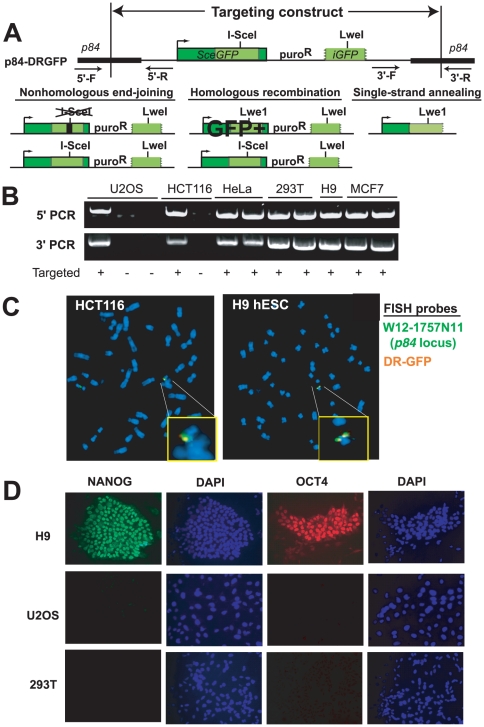
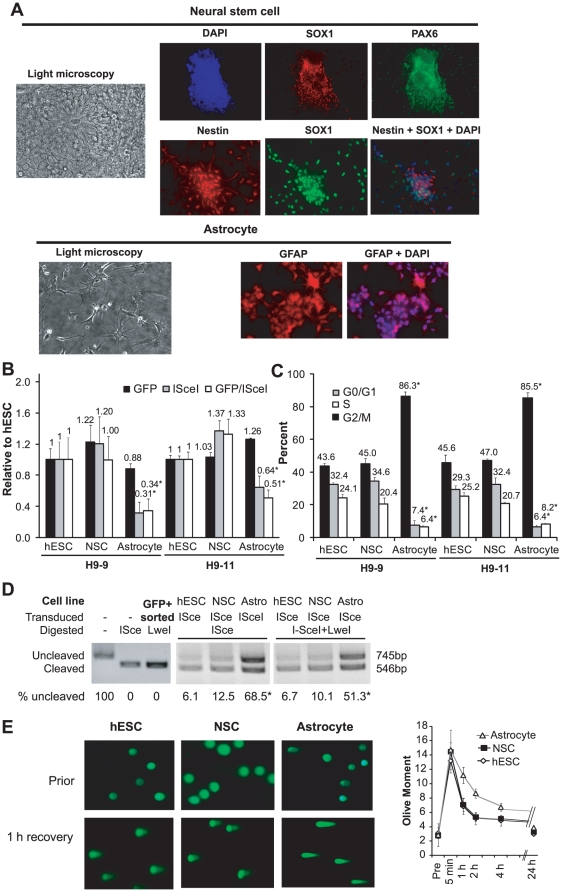
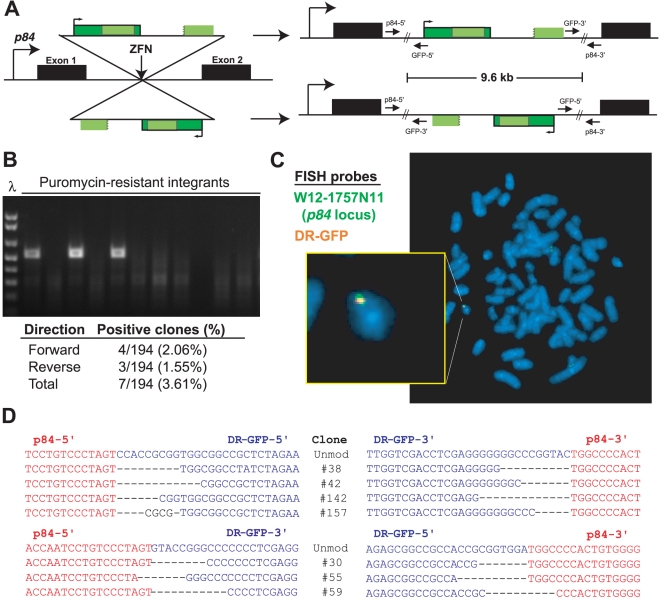
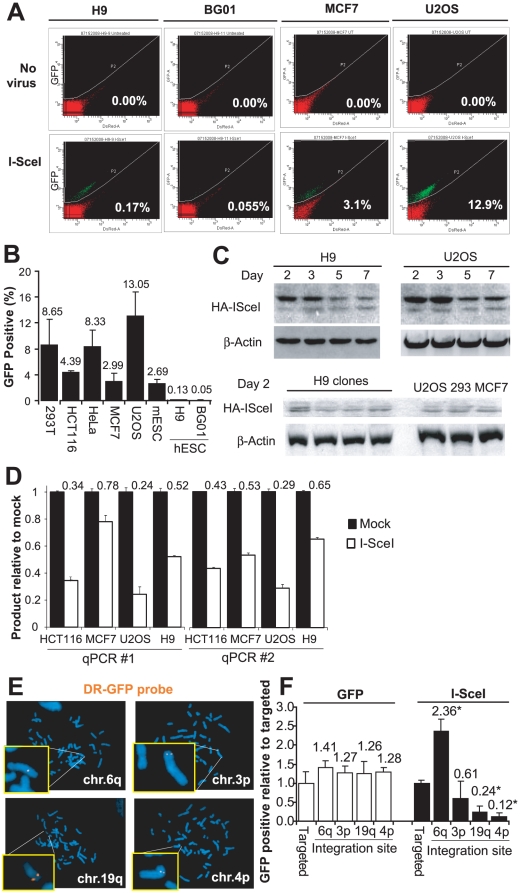
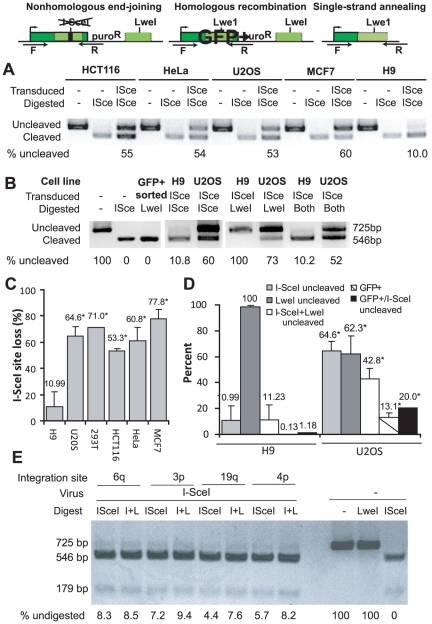
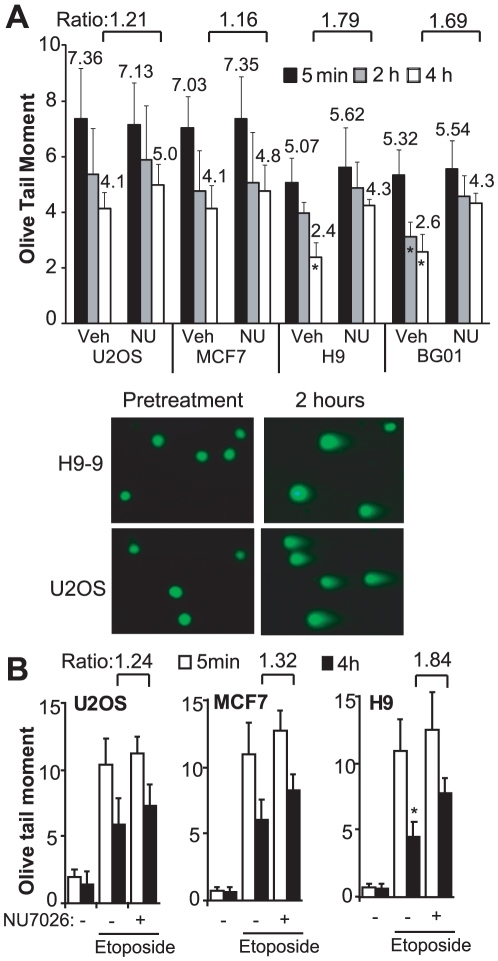
Differences in ex vivo cell culture conditions can drastically affect stem cell physiology. We sought to establish an assay for measuring the effects of chemical, environmental, and genetic manipulations on the precision of repair at a single DNA double-strand break (DSB) in pluripotent and somatic human cells. DSBs in mammalian cells are primarily repaired by either homologous recombination (HR) or nonhomologous end-joining (NHEJ). For the most part, previous studies of DSB repair in human cells have utilized nonspecific clastogens like ionizing radiation, which are highly nonphysiologic, or assayed repair at randomly integrated reporters. Measuring repair after random integration is potentially confounded by locus-specific effects on the efficiency and precision of repair. We show that the frequency of HR at a single DSB differs up to 20-fold between otherwise isogenic human embryonic stem cells (hESCs) based on the site of the DSB within the genome. To overcome locus-specific effects on DSB repair, we used zinc finger nucleases to efficiently target a DSB repair reporter to a safe-harbor locus in hESCs and a panel of somatic human cell lines. We demonstrate that repair at a targeted DSB is highly precise in hESCs, compared to either the somatic human cells or murine embryonic stem cells. Differentiation of hESCs harboring the targeted reporter into astrocytes reduces both the efficiency and precision of repair. Thus, the phenotype of repair at a single DSB can differ based on either the site of damage within the genome or the stage of cellular differentiation. Our approach to single DSB analysis has broad utility for defining the effects of genetic and environmental modifications on repair precision in pluripotent cells and their differentiated progeny.
细胞体外培养条件的差异会极大地影响干细胞的生理机能。我们试图建立一种检测方法,用于测量化学、环境和遗传操作对多能性和体细胞人类细胞中单链 DNA 双链断裂(DSB)修复精度的影响。哺乳动物细胞中的 DSB 主要通过同源重组(HR)或非同源末端连接(NHEJ)来修复。在大多数情况下,以前对人类细胞中 DSB 修复的研究都使用了非特异性的致裂剂,如电离辐射,这些致裂剂高度非生理,或者检测随机整合报告器的修复。在随机整合后进行修复的测量可能会受到修复效率和精度的位置特异性影响。我们表明,在人类胚胎干细胞(hESCs)中,基于基因组中 DSB 的位置,HR 在单链 DSB 处的频率差异高达 20 倍。为了克服 DSB 修复的位置特异性影响,我们使用锌指核酸酶将 DSB 修复报告器有效地靶向 hESCs 和一组体细胞人类细胞系中的安全港基因座。我们证明,与体细胞人类细胞或鼠胚胎干细胞相比,靶向 DSB 的修复具有高度的精确性。携带靶向报告器的 hESCs 分化为星形胶质细胞后,修复的效率和精度都会降低。因此,单链 DSB 修复的表型可能会因基因组内损伤的位置或细胞分化的阶段而异。我们的单 DSB 分析方法具有广泛的用途,可以用于确定遗传和环境修饰对多能细胞及其分化后代修复精度的影响。