Department of Pathology, Yale University School of Medicine, New Haven, CT 06520, USA.
Cell Metab. 2011 Jun 8;13(6):668-78. doi: 10.1016/j.cmet.2011.03.018.
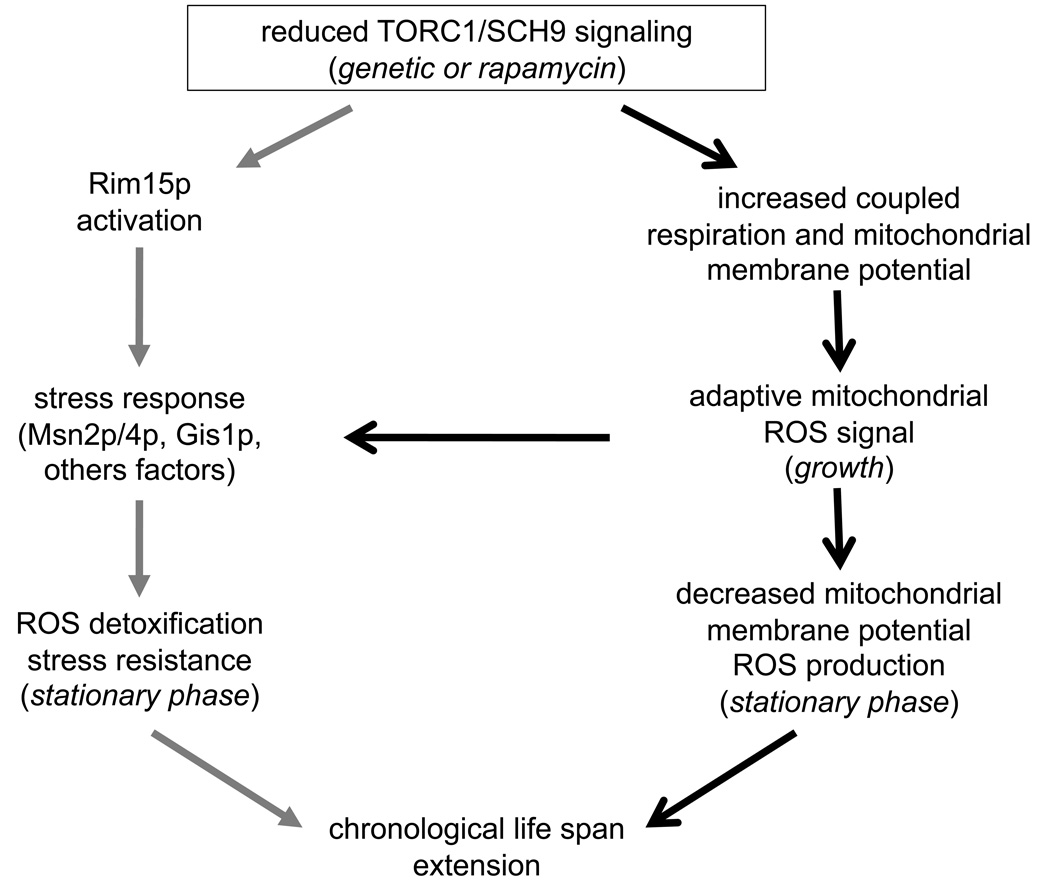
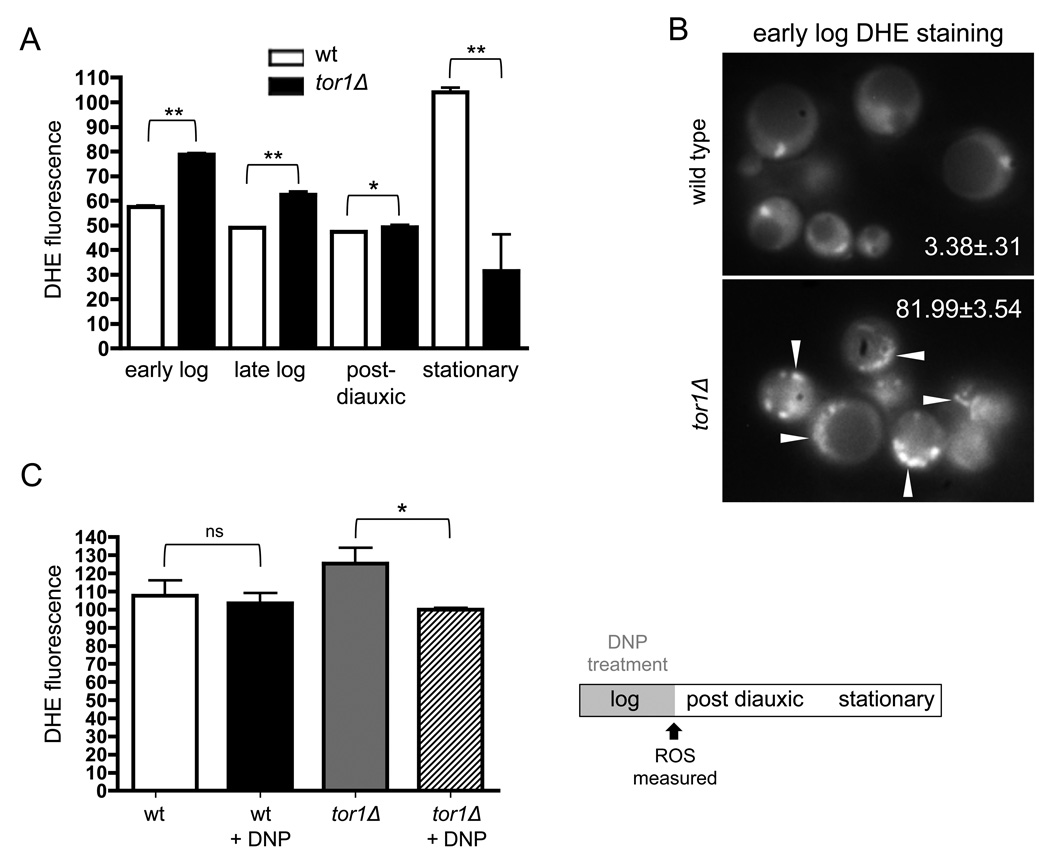
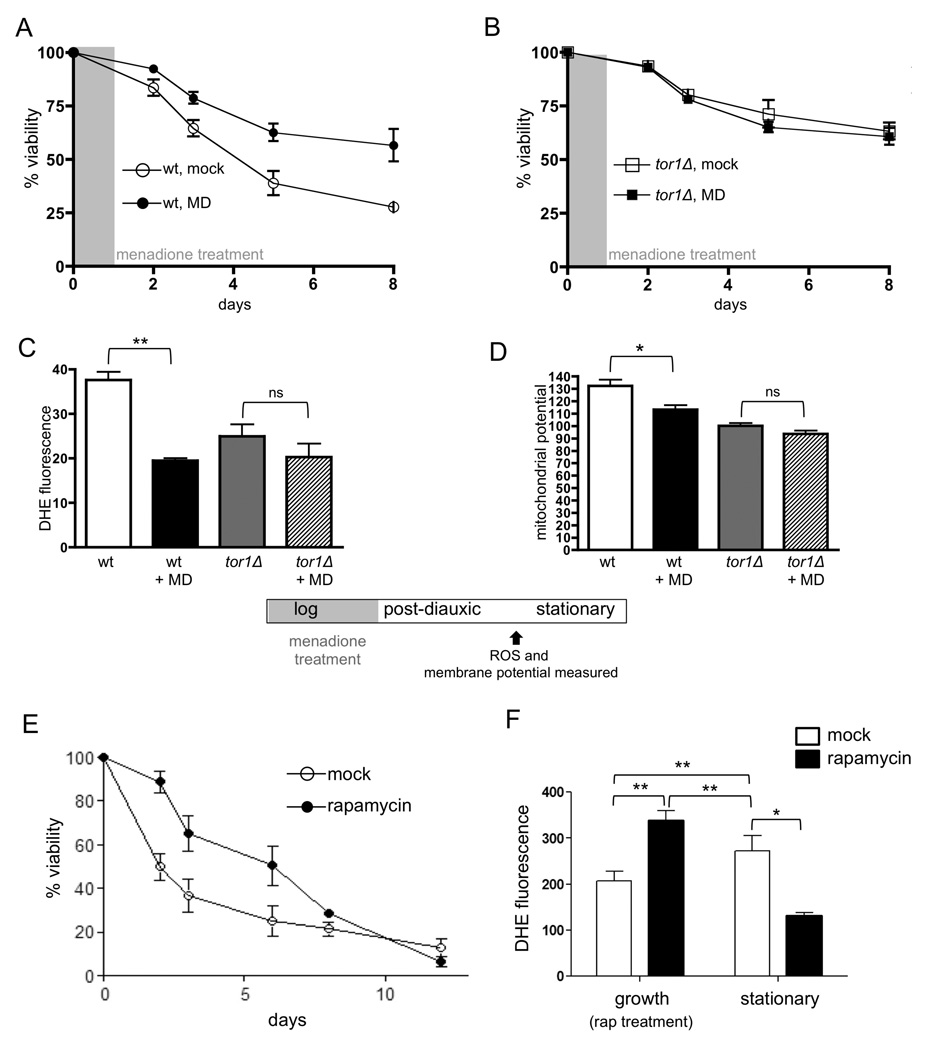
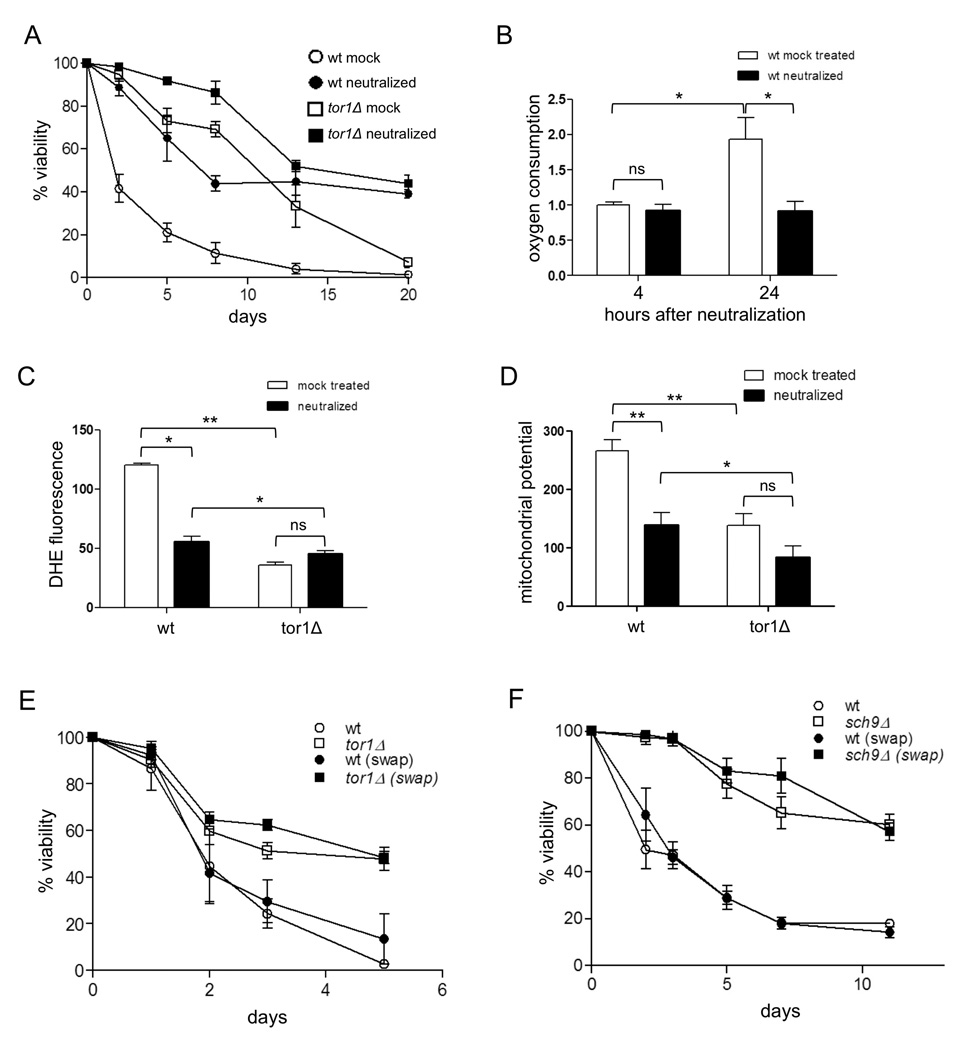
Here we show that yeast strains with reduced target of rapamycin (TOR) signaling have greater overall mitochondrial electron transport chain activity during growth that is efficiently coupled to ATP production. This metabolic alteration increases mitochondrial membrane potential and reactive oxygen species (ROS) production, which we propose supplies an adaptive signal during growth that extends chronological life span (CLS). In strong support of this concept, uncoupling respiration during growth or increasing expression of mitochondrial manganese superoxide dismutase significantly curtails CLS extension in tor1Δ strains, and treatment of wild-type strains with either rapamycin (to inhibit TORC1) or menadione (to generate mitochondrial ROS) during growth is sufficient to extend CLS. Finally, extension of CLS by reduced TORC1/Sch9p-mitochondrial signaling occurs independently of Rim15p and is not a function of changes in media acidification/composition. Considering the conservation of TOR-pathway effects on life span, mitochondrial ROS signaling may be an important mechanism of longevity regulation in higher organisms.
在这里,我们表明,雷帕霉素靶蛋白(TOR)信号减弱的酵母菌株在生长过程中具有更高的整体线粒体电子传递链活性,并且这种活性能够有效地与 ATP 产生相偶联。这种代谢变化会增加线粒体膜电位和活性氧(ROS)的产生,我们提出这提供了一个在生长过程中的适应性信号,可以延长酵母的时序寿命(CLS)。这一概念得到了强有力的支持,即在生长过程中解偶联呼吸或增加线粒体锰超氧化物歧化酶的表达,都会显著缩短 tor1Δ 菌株的 CLS 延长,并且在用 rapamycin(抑制 TORC1)或 menadione(生成线粒体 ROS)处理野生型菌株时,在生长过程中足以延长 CLS。最后,通过降低 TORC1/Sch9p-线粒体信号传递来延长 CLS 与 Rim15p 无关,也不是培养基酸化/组成变化的功能。考虑到 TOR 通路对寿命的影响的保守性,线粒体 ROS 信号可能是高等生物长寿调控的一个重要机制。