Department of Chemistry, Northwestern University, 2145 Sheridan Road, Evanston, Illinois 60208-3113, USA.
Acc Chem Res. 2011 Oct 18;44(10):903-13. doi: 10.1021/ar200018x. Epub 2011 Jun 15.
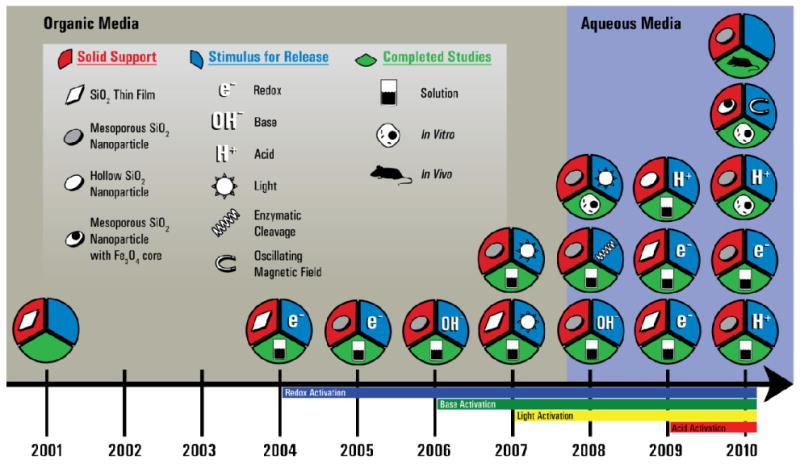
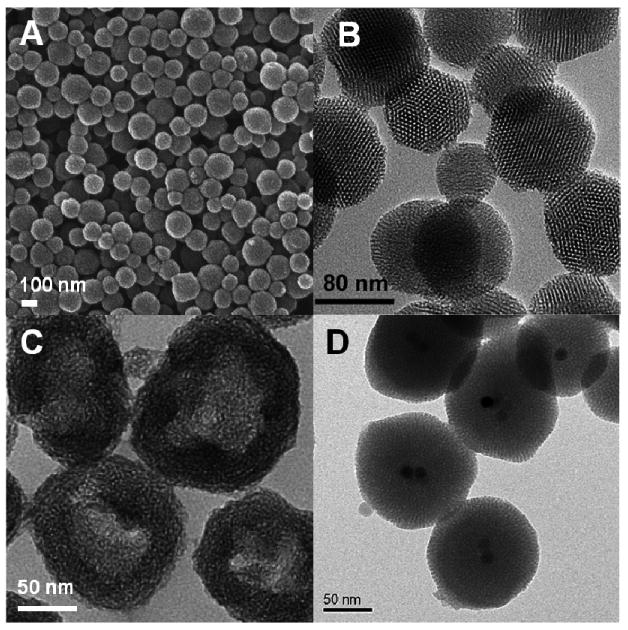
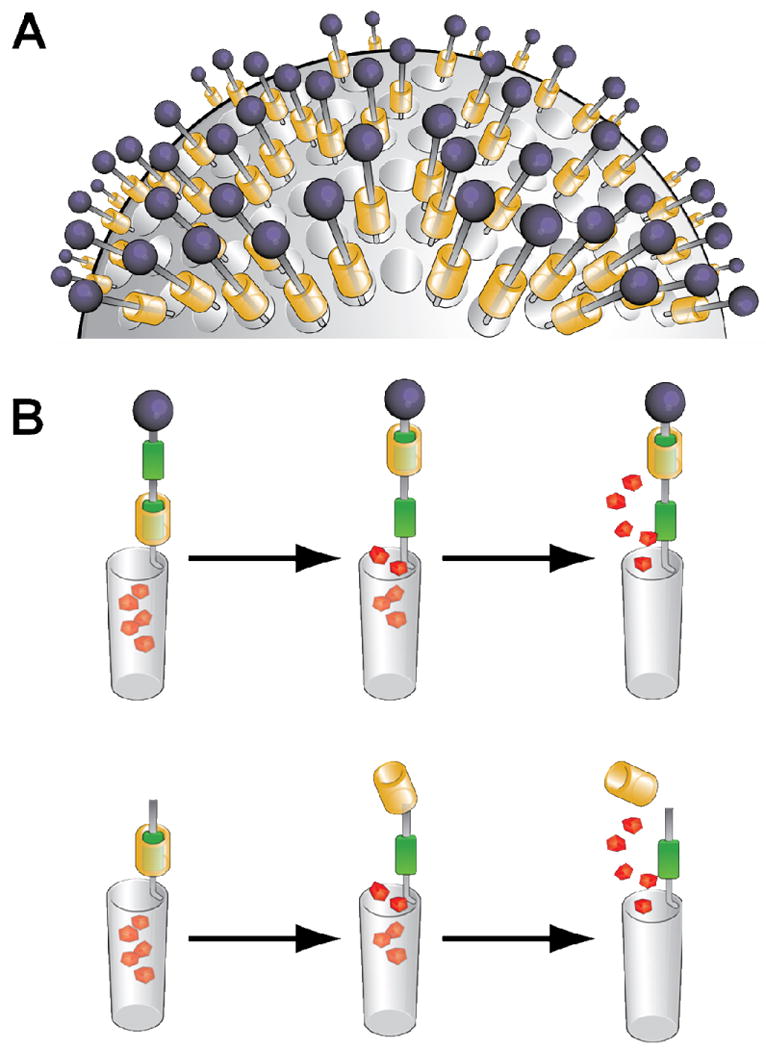
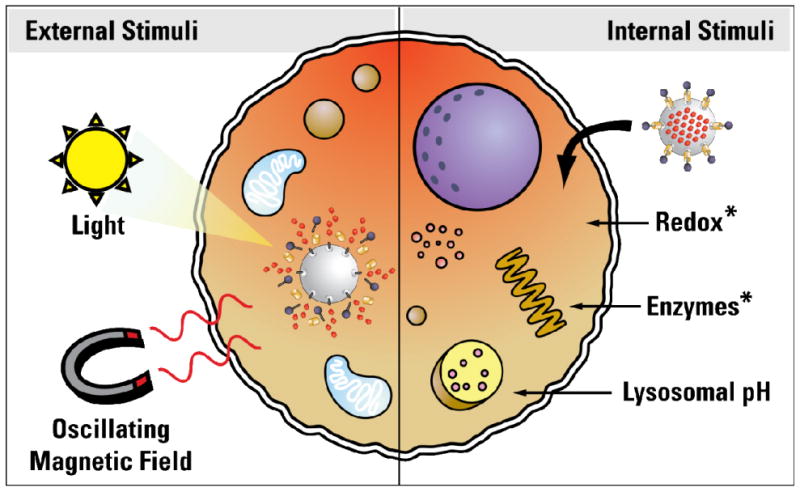
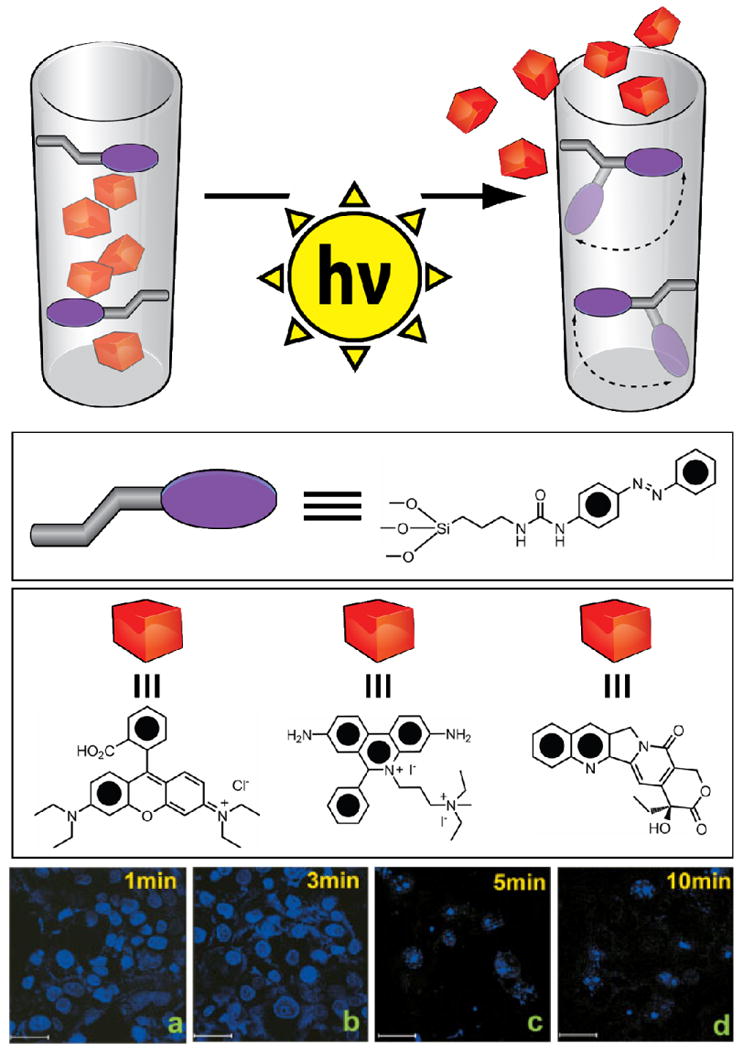
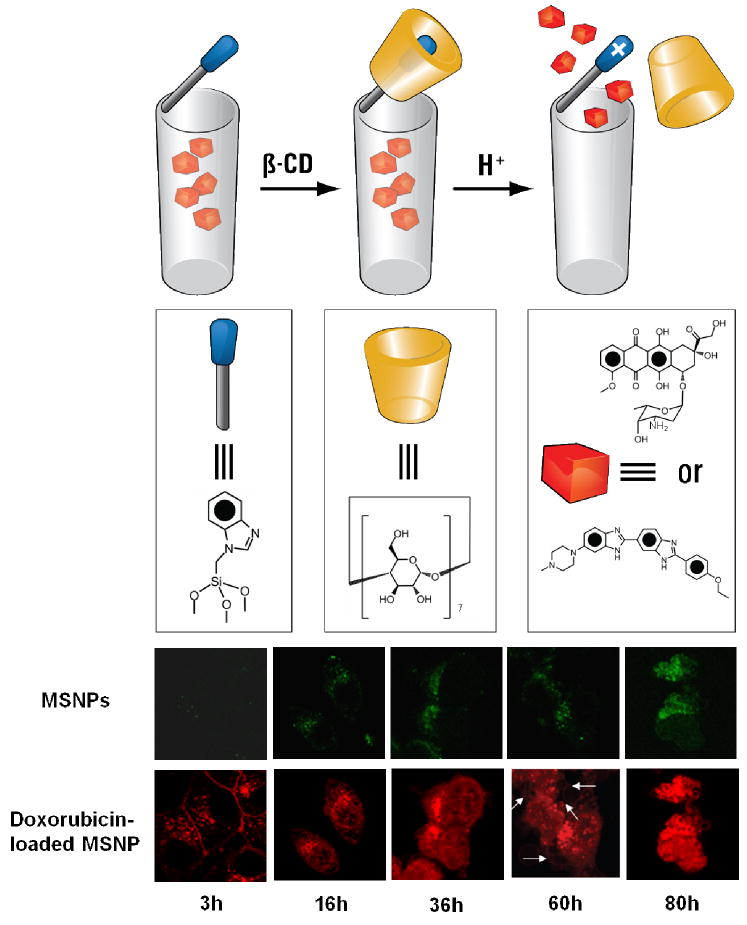
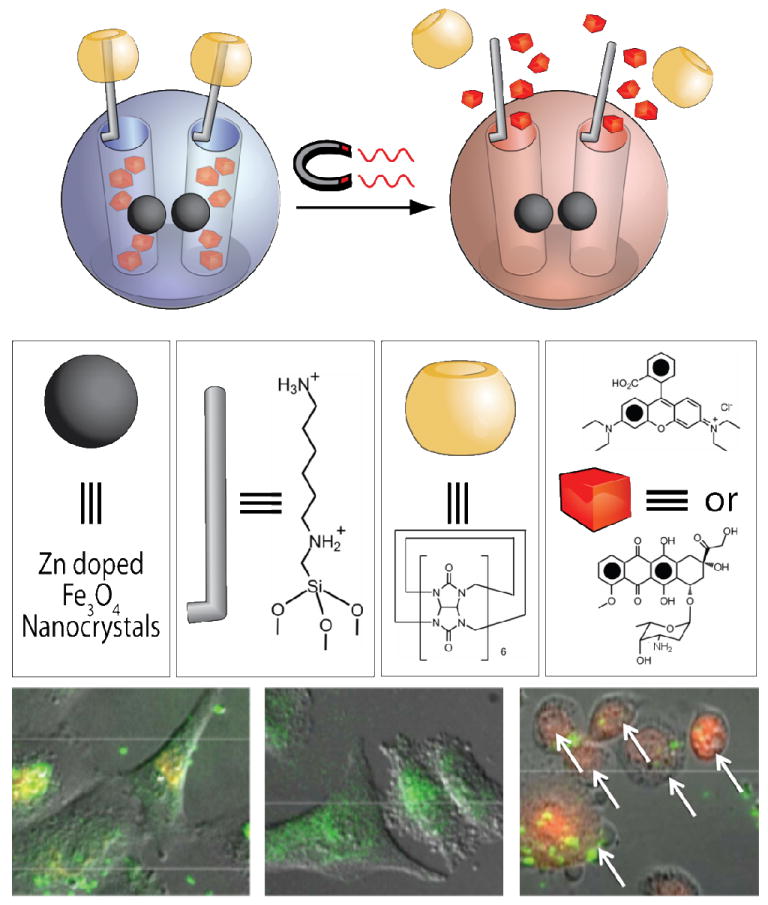
Medicine can benefit significantly from advances in nanotechnology because nanoscale assemblies promise to improve on previously established therapeutic and diagnostic regimes. Over the past decade, the use of delivery platforms has attracted attention as researchers shift their focus toward new ways to deliver therapeutic and/or diagnostic agents and away from the development of new drug candidates. Metaphorically, the use of delivery platforms in medicine can be viewed as the "bow-and-arrow" approach, where the drugs are the arrows and the delivery vehicles are the bows. Even if one possesses the best arrows that money can buy, they will not be useful if one does not have the appropriate bow to deliver the arrows to their intended location. Currently, many strategies exist for the delivery of bioactive agents within living tissue. Polymers, dendrimers, micelles, vesicles, and nanoparticles have all been investigated for their use as possible delivery vehicles. With the growth of nanomedicine, one can envisage the possibility of fabricating a theranostic vector that could release powerful therapeutics and diagnostic markers simultaneously and selectively to diseased tissue. In our design of more robust theranostic delivery systems, we have focused our attention on using mesoporous silica nanoparticles (SNPs). The payload "cargo" molecules can be stored within this robust domain, which is stable to a wide range of chemical conditions. This stability allows SNPs to be functionalized with stimulus-responsive mechanically interlocked molecules (MIMs) in the shape of bistable rotaxanes and psuedorotaxanes to yield mechanized silica nanoparticles (MSNPs). In this Account, we chronicle the evolution of various MSNPs, which came about as a result of our decade-long collaboration, and discuss advances in the synthesis of novel hybrid SNPs and the various MIMs which have been attached to their surfaces. These MIMs can be designed in such a way that they either change shape or shed off some of their parts in response to a specific stimulus, such as changes in redox potential, alterations in pH, irradiation with light, or the application of an oscillating magnetic field, allowing a theranostic payload to be released from the nanopores to a precise location at the appropiate time. We have also shown that these integrated systems can operate not only within cells, but also in live animals in response to pre-existing biological triggers. Recognizing that the theranostics of the future could offer a fresh approach to the treatment of degenerative diseases including cancer, we aim to start moving out of the chemical domain and into the biological one. Some MSNPs are already being tested in biological systems.
医学可以从纳米技术的进步中受益匪浅,因为纳米级组装有望改进以前建立的治疗和诊断方案。在过去的十年中,随着研究人员将注意力转向新的方法来输送治疗剂和/或诊断剂,而不是开发新的药物候选物,输送平台的使用引起了人们的关注。从隐喻的角度来看,在医学中使用输送平台可以被视为“弓箭”方法,其中药物是箭,输送载体是弓。即使一个人拥有最好的箭,也只有在拥有适当的弓将箭射向预定位置时,这些箭才会有用。目前,有许多策略可用于在活组织内输送生物活性药物。聚合物、树枝状大分子、胶束、囊泡和纳米颗粒都被研究过作为可能的输送载体。随着纳米医学的发展,可以设想制造一种治疗诊断载体,该载体可以同时且选择性地向病变组织释放强大的治疗剂和诊断标志物。在我们设计更稳健的治疗诊断输送系统时,我们专注于使用介孔硅纳米颗粒(SNPs)。有效载荷“货物”分子可以储存在这个稳健的区域内,该区域对广泛的化学条件稳定。这种稳定性允许 SNPs 用刺激响应机械互锁分子(MIMs)进行功能化,形成双稳态轮烷和伪轮烷,从而产生机械硅纳米颗粒(MSNPs)。在本报告中,我们记录了由于我们长达十年的合作而产生的各种 MSNPs 的发展历程,并讨论了新型杂交 SNPs 的合成以及附着在其表面的各种 MIMs 的进展。这些 MIMs 可以设计成在响应特定刺激(例如氧化还原电位的变化、pH 值的改变、光照、或施加振荡磁场)时改变形状或脱落部分结构,从而允许治疗诊断有效载荷从纳米孔释放到适当的精确位置。我们还表明,这些集成系统不仅可以在细胞内运行,还可以在活体动物中响应预先存在的生物触发因素运行。我们认识到,未来的治疗诊断学可能为治疗退行性疾病(包括癌症)提供一种新的方法,我们旨在从化学领域迈向生物学领域。一些 MSNPs 已经在生物系统中进行了测试。