Dabrowska Magdalena, Skoneczny Marek, Rode Wojciech
Nencki Institute of Experimental Biology, Polish Academy of Sciences, Pasteura 3, 02-093, Warsaw, Poland.
Tumour Biol. 2011 Oct;32(5):965-76. doi: 10.1007/s13277-011-0198-x. Epub 2011 Jun 16.
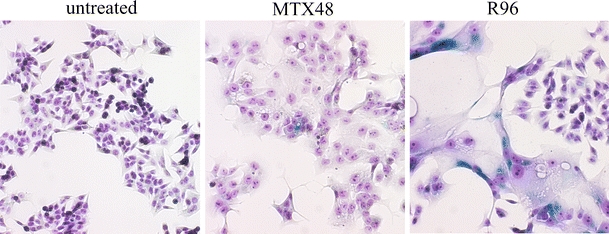
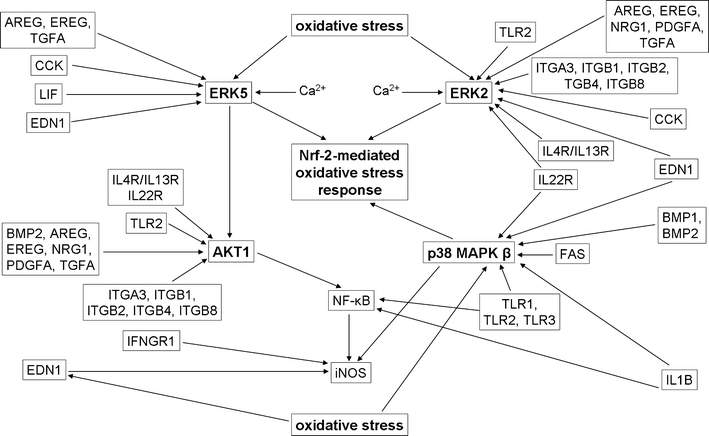
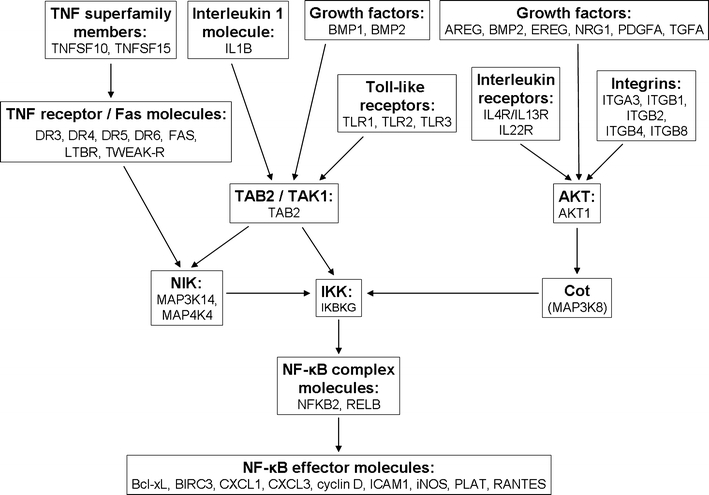
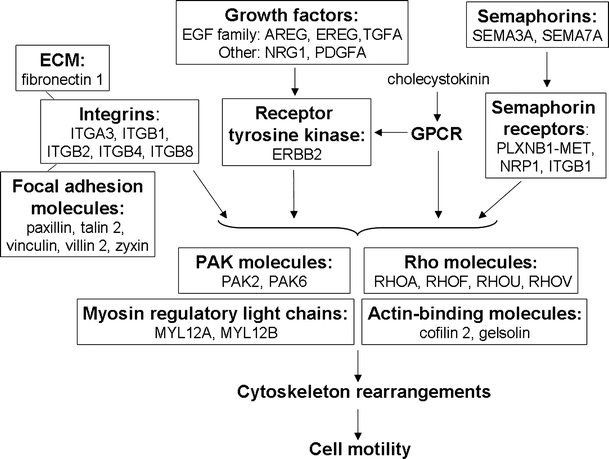
Cellular functions accompanying establishment of premature senescence in methotrexate-treated human colon cancer C85 cells are deciphered in the present study from validated competitive expression microarray data, analyzed with the use of Ingenuity Pathways Analysis (IPA) software. The nitrosative/oxidative stress, inferred from upregulated expression of inducible nitric oxide synthase (iNOS) and mitochondrial dysfunction-associated genes, including monoamine oxidases MAOA and MAOB, β-amyloid precursor protein (APP) and presenilin 1 (PSEN1), is identified as the main determinant of signaling pathways operating during senescence establishment. Activation of p53-signaling pathway is found associated with both apoptotic and autophagic components contributing to this process. Activation of nuclear factor κB (NF-κB), resulting from interferon γ (IFNγ), integrin, interleukin 1β (IL-1β), IL-4, IL-13, IL-22, Toll-like receptors (TLRs) 1, 2 and 3, growth factors and tumor necrosis factor (TNF) superfamily members signaling, is found to underpin inflammatory properties of senescent C85 cells. Upregulation of p21-activated kinases (PAK2 and PAK6), several Rho molecules and myosin regulatory light chains MYL12A and MYL12B, indicates acquisition of motility by those cells. Mitogen-activated protein kinase p38 MAPK β, extracellular signal-regulated kinases ERK2 and ERK5, protein kinase B AKT1, as well as calcium, are identified as factors coordinating signaling pathways in senescent C85 cells.
在本研究中,我们从经过验证的竞争性表达微阵列数据出发,利用 Ingenuity Pathways Analysis(IPA)软件进行分析,解读了甲氨蝶呤处理的人结肠癌 C85 细胞中伴随早衰建立的细胞功能。从诱导型一氧化氮合酶(iNOS)以及与线粒体功能障碍相关的基因(包括单胺氧化酶 MAOA 和 MAOB、β-淀粉样前体蛋白(APP)和早老素 1(PSEN1))的上调表达推断出的亚硝化/氧化应激,被确定为衰老建立过程中运作的信号通路的主要决定因素。发现 p53 信号通路的激活与促成这一过程的凋亡和自噬成分相关。由干扰素γ(IFNγ)、整合素、白细胞介素 1β(IL-1β)、IL-4、IL-13、IL-22、Toll 样受体(TLRs)1、2 和 3、生长因子以及肿瘤坏死因子(TNF)超家族成员信号传导导致的核因子κB(NF-κB)激活,被发现是衰老 C85 细胞炎症特性的基础。p21 激活激酶(PAK2 和 PAK6)、几种 Rho 分子以及肌球蛋白调节轻链 MYL12A 和 MYL12B 的上调,表明这些细胞获得了运动性。丝裂原活化蛋白激酶 p38 MAPK β、细胞外信号调节激酶 ERK2 和 ERK5、蛋白激酶 B AKT1 以及钙,被确定为协调衰老 C85 细胞中信号通路的因子。