School of Life Sciences, University of Warwick, Gibbet Hill Road, Coventry, UK.
BMC Vet Res. 2011 Jun 28;7:31. doi: 10.1186/1746-6148-7-31.
The United Kingdom (UK) government has been recording the births, deaths, and movements of cattle for the last decade. Despite reservations about the accuracy of these data, they represent a large and valuable body of information about the demographics of the UK cattle herd and its contact structure. In this article, a range of demographic data about UK cattle, and particularly their movements, are presented, as well as yearly trends in the patterns of movements.
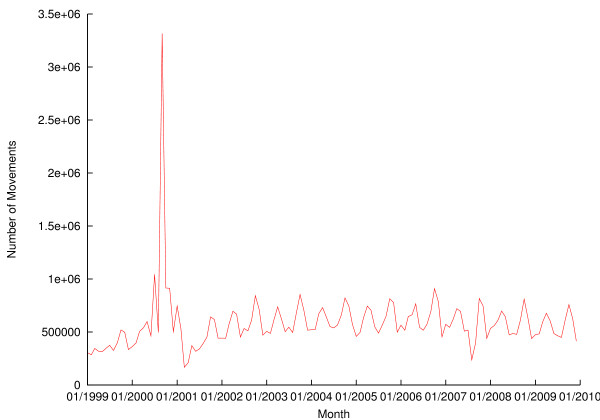
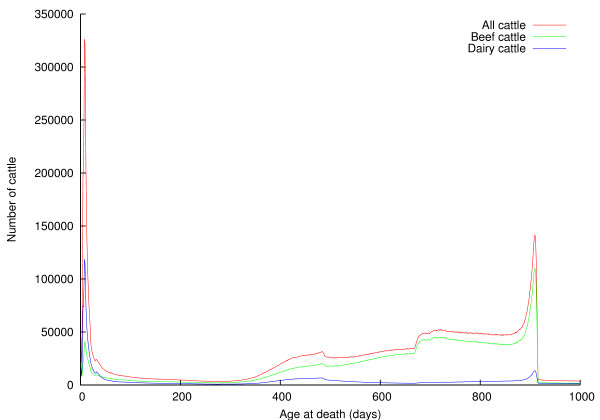
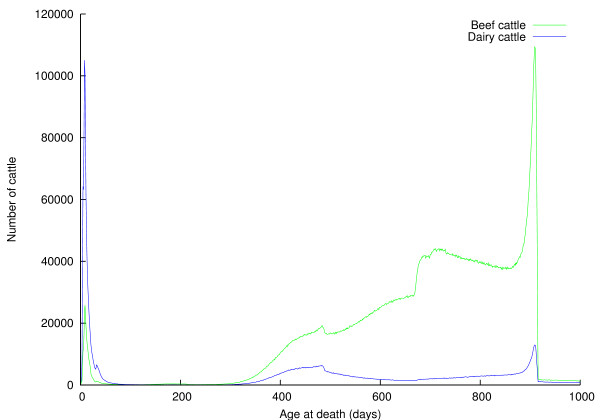
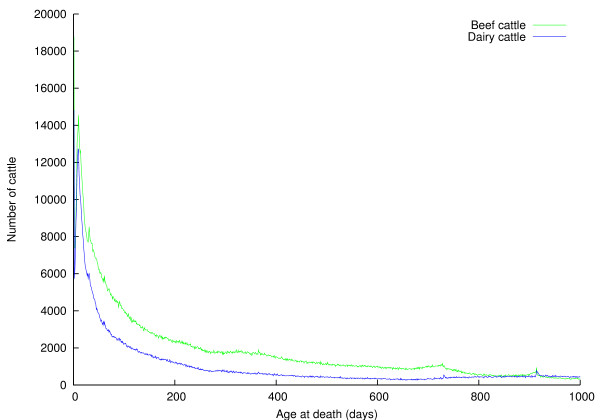
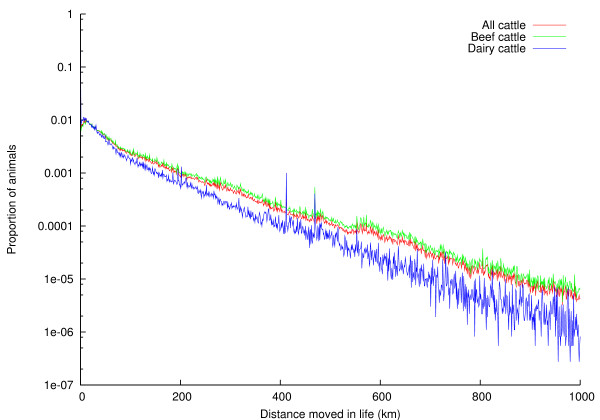
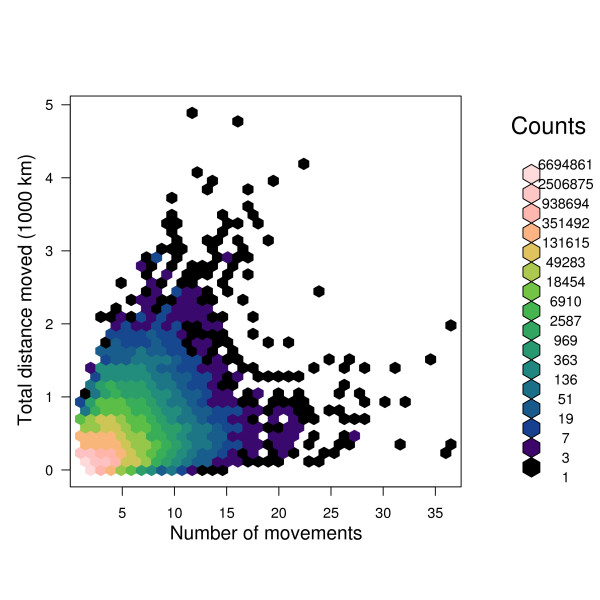
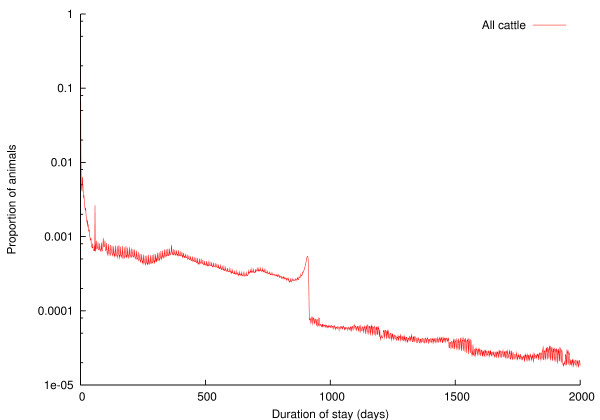
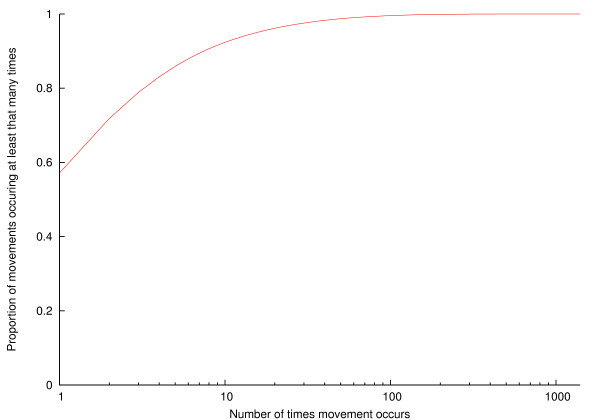
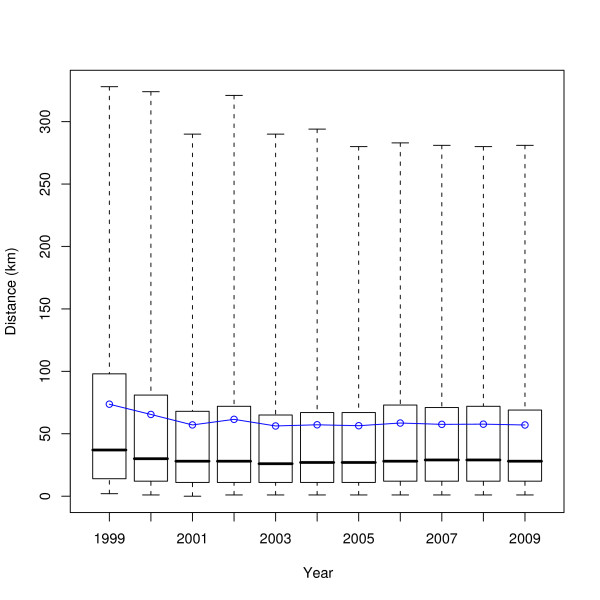
A clear seasonal pattern is evident in the number of movements of cattle, as are the reductions in movement volume due to foot and mouth disease outbreaks in 2001 and 2007. The distribution of ages of cattle at their time of death is multimodal, and the impact of the over thirty months rule is marked. Most movements occur between agricultural holdings, markets, and slaughterhouses, and there is a non-random pattern to the types of holdings movements occur between. Most animals move only a short distance and a few times in their life. Most movements between any given pair of holdings only occurred once in the last 10 years, but about a third occurred between 2 and 10 times in that period. There is no clear trend to movement patterns in the UK since 2002.
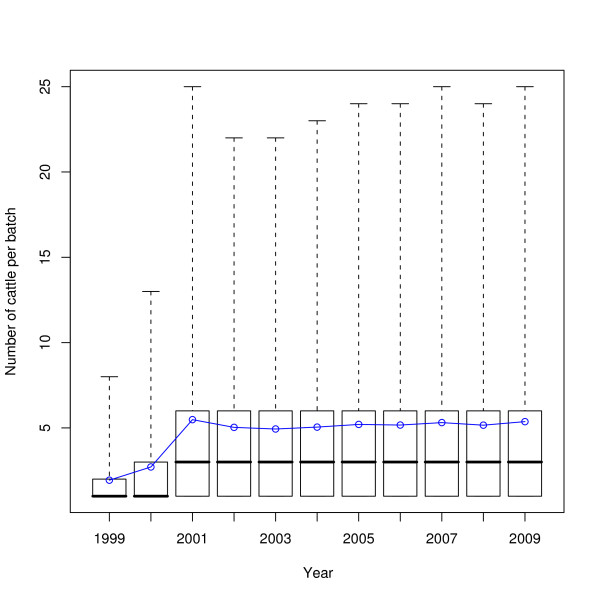
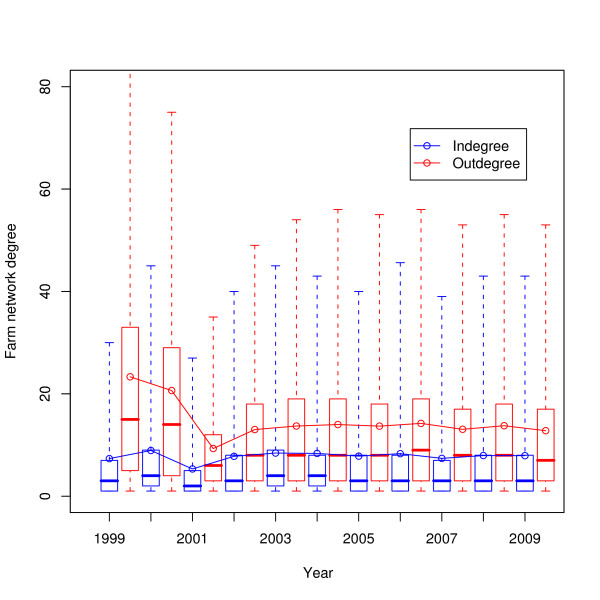
Despite a substantial number of regulatory interventions during the last decade, movement patterns show no clear trend since 2002. The observed patterns in the repeatability of movements, the types of holdings involved in movements, the distances and frequencies of cattle movements, and the batch sizes involved give an insight into the structure of the UK cattle industry, and could act as the basis for a predictive model of livestock movements in the UK.
在过去的十年中,英国政府一直在记录牛的出生、死亡和流动情况。尽管对这些数据的准确性存在保留意见,但它们代表了大量有价值的关于英国牛群人口统计学及其接触结构的信息。本文介绍了英国牛的一系列人口统计数据,特别是它们的流动情况,以及流动模式的年度趋势。
牛的流动数量明显存在季节性模式,2001 年和 2007 年口蹄疫爆发导致流动量减少也是如此。牛死亡时的年龄分布呈多峰型,30 多个月规则的影响显著。大多数流动发生在农业养殖场、市场和屠宰场之间,而且流动发生的养殖场类型之间存在非随机模式。大多数动物在其一生中只移动很短的距离和几次。在过去的 10 年中,任何一对养殖场之间的大多数流动只发生过一次,但在那段时间内,约有三分之一的流动发生了 2 到 10 次。自 2002 年以来,英国的流动模式没有明显的趋势。
尽管在过去十年中进行了大量的监管干预,但自 2002 年以来,流动模式没有明显的趋势。观察到的流动可重复性模式、参与流动的养殖场类型、牛的流动距离和频率以及涉及的批次大小,深入了解了英国牛业的结构,并可以作为英国牲畜流动预测模型的基础。