State Key Laboratory of Emerging Infectious Diseases, Hong Kong.
Research Centre of Infection and Immunology, The University of Hong Kong, Hong Kong.
Cell Biosci. 2011 Apr 19;1(1):17. doi: 10.1186/2045-3701-1-17.
Laribacter hongkongensis is associated with community-acquired gastroenteritis and traveler's diarrhea. In this study, we performed an in-depth annotation of the genes in its genome related to the various steps in the infective process, drug resistance and mobile genetic elements.
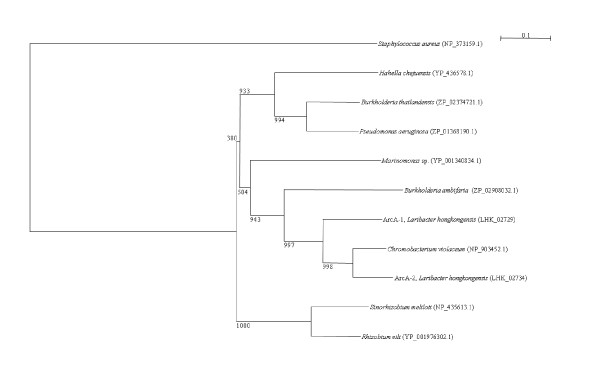
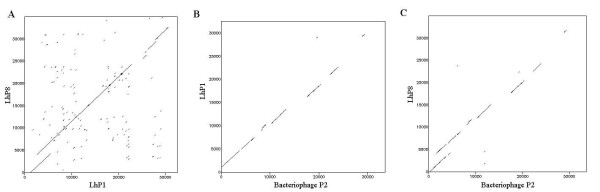
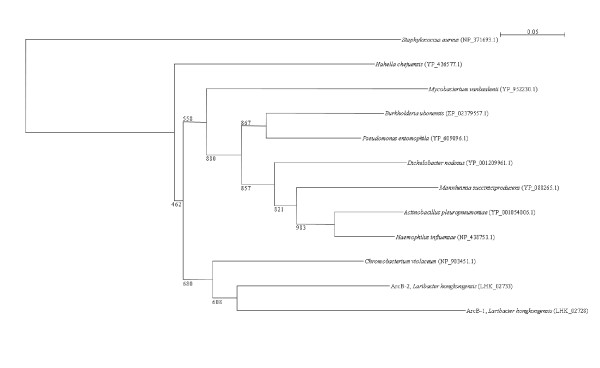
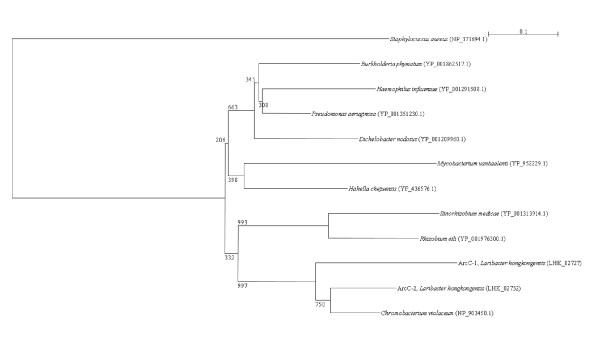
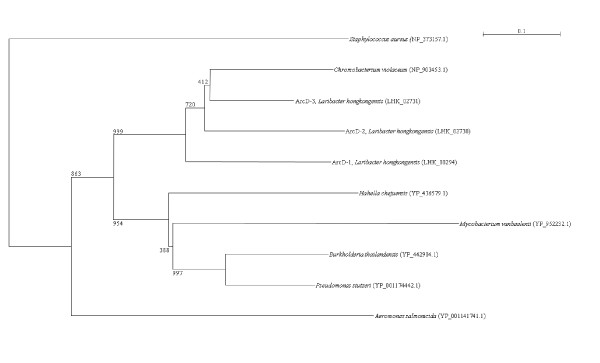
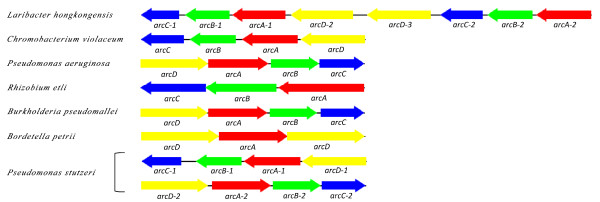
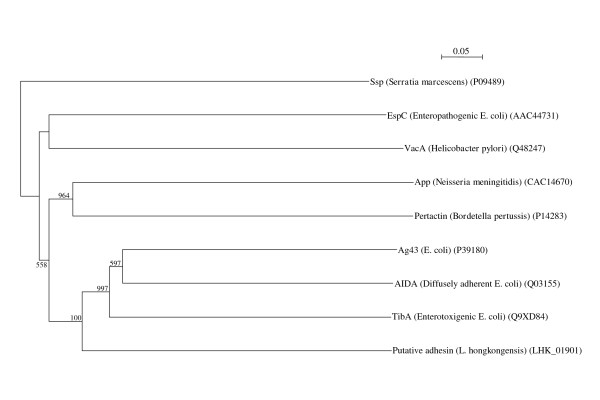
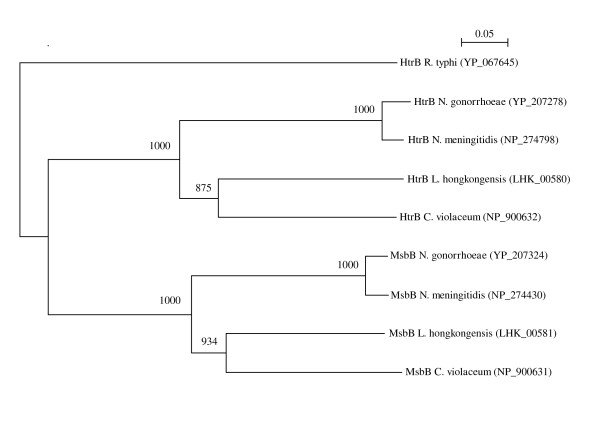
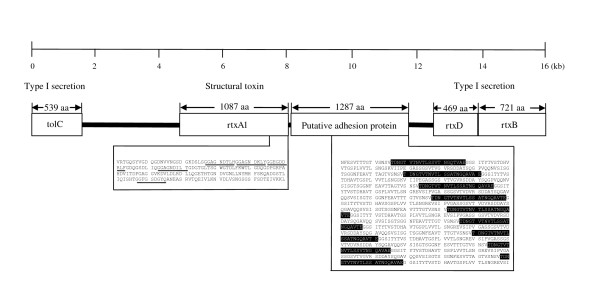
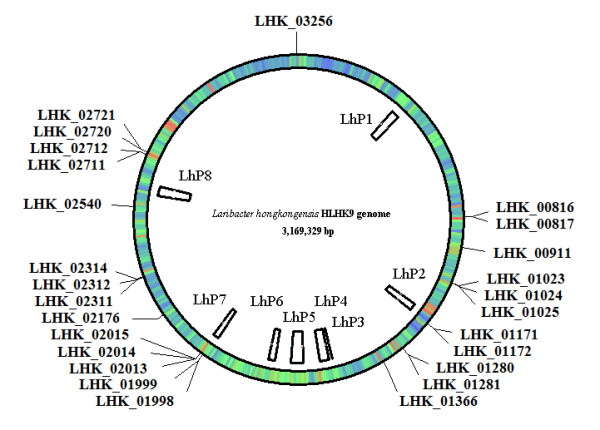
For acid and bile resistance, L. hongkongensis possessed a urease gene cassette, two arc gene clusters and bile salt efflux systems. For intestinal colonization, it possessed a putative adhesin of the autotransporter family homologous to those of diffusely adherent Escherichia coli (E. coli) and enterotoxigenic E. coli. To evade from host defense, it possessed superoxide dismutase and catalases. For lipopolysaccharide biosynthesis, it possessed the same set of genes that encode enzymes for synthesizing lipid A, two Kdo units and heptose units as E. coli, but different genes for its symmetrical acylation pattern, and nine genes for polysaccharide side chains biosynthesis. It contained a number of CDSs that encode putative cell surface acting (RTX toxin and hemolysins) and intracellular cytotoxins (patatin-like proteins) and enzymes for invasion (outer membrane phospholipase A). It contained a broad variety of antibiotic resistance-related genes, including genes related to β-lactam (n = 10) and multidrug efflux (n = 54). It also contained eight prophages, 17 other phage-related CDSs and 26 CDSs for transposases.
The L. hongkongensis genome possessed genes for acid and bile resistance, intestinal mucosa colonization, evasion of host defense and cytotoxicity and invasion. A broad variety of antibiotic resistance or multidrug resistance genes, a high number of prophages, other phage-related CDSs and CDSs for transposases, were also identified.
香港弧菌与社区获得性胃肠炎和旅行者腹泻有关。在这项研究中,我们对其基因组中与感染过程的各个步骤、耐药性和可移动遗传元件相关的基因进行了深入注释。
对于酸和胆汁抗性,L. hongkongensis 拥有一个脲酶基因盒、两个 arc 基因簇和胆汁盐外排系统。对于肠道定植,它拥有一个假定的自转运体家族黏附素,与弥漫性黏附性大肠杆菌(E. coli)和肠毒性 E. coli 同源。为了逃避宿主防御,它拥有超氧化物歧化酶和过氧化氢酶。对于脂多糖生物合成,它拥有与大肠杆菌相同的一组基因,用于合成脂质 A、两个 Kdo 单位和庚糖单位,但酰化模式的基因不同,多糖侧链生物合成的基因有 9 个。它包含许多编码细胞表面作用(RTX 毒素和溶血素)和细胞内细胞毒素(类脂肪酶蛋白)以及入侵酶(外膜磷脂酶 A)的 CDS。它包含许多抗生素耐药相关基因,包括与β-内酰胺(n = 10)和多药外排(n = 54)相关的基因。它还包含 8 个原噬菌体、17 个其他噬菌体相关 CDS 和 26 个转座酶 CDS。
L. hongkongensis 基因组拥有酸和胆汁抗性、肠道黏膜定植、逃避宿主防御和细胞毒性以及入侵的基因。还鉴定了多种抗生素耐药或多药耐药基因、大量原噬菌体、其他噬菌体相关 CDS 和转座酶 CDS。