J Community Health. 2012 Feb;37(1):48-53. doi: 10.1007/s10900-011-9414-2.
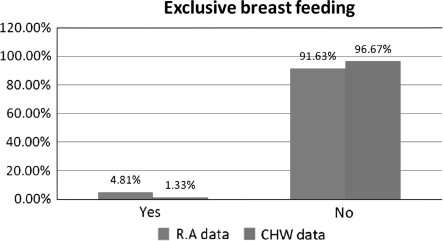
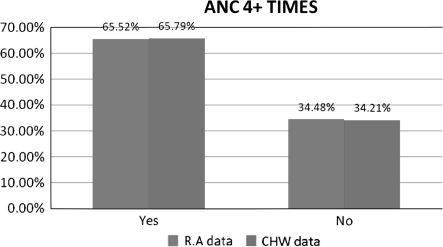
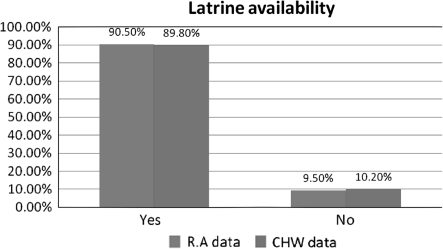
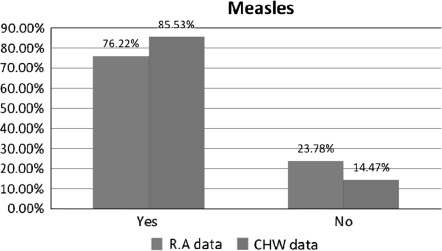
A general introduction of this article is as follows: Reliable and timely health information is an essential foundation of public health action and health systems strengthening, both nationally and internationally (Aqil et al. in Health Policy Plan 24(3): 217-228, 2009; Bradshaw et al. in initial burden of disease estimates for South Africa, 2000. South African Medical Research Council, Cape Town, 2003). The need for sound information is especially urgent in the case of emergent diseases and other acute health threats, where rapid awareness, investigation and response can save lives and prevent broader national outbreaks and even global pandemics (Aqil et al. in Health Policy Plan 24(3): 217-228, 2009). The government of Kenya, through the ministry of public health and sanitation has rolled out the community health strategy as a way of improving health care at the household level. This involves community health workers collecting health status data at the household level, which is then used for dialogue at all the levels to inform decisions and actions towards improvement in health status. A lot of health interventions have involved the community health workers in reaching out to the community, hence successfully implementing these health interventions. Large scale involvement of community health workers in government initiatives and most especially to collect health data for use in the health systems has been minimal due to the assumption that the data may not be useful to the government, because its quality is uncertain. It was therefore necessary that the validity and reliability of the data collected by community health workers be determined, and whether this kind of data can be used for planning and policy formulation for the communities from which it is collected. This would go a long way to settle speculation on whether the data collected by these workers is valid and reliable for use in determining the health status, its causes and distribution, of a community. Our general objective of this article is to investigate the validity and reliability of Community Based Information, and we deal with research question "What is the reliability of data collected at the Community level by Community health workers?". The methods which we use to find an reliable answer to this question is "Ten percent of all households visited by CHWs for data collection were recollected by a technically trained team. Test/retest method was applied to the data to establish reliability. The Kappa score, sensitivity, specificity and positive predictive values were also used to measure reliability". Finally our findings are as follows: Latrine availability and Antenatal care presented good correspondence between the two sets of data. This was also true for exclusive breast feeding indicator. Measles immunization coverage showed less consistency than the rest of the child health indicators. At last we conclude and recommend that CHWs can accurately and reliably collect household data which can be used for health decisions and actions especially in resource poor settings where other approaches to population based data are too expensive.
可靠和及时的健康信息是国家和国际公共卫生行动和卫生系统加强的重要基础(Aqil 等人,《卫生政策与规划》24(3):217-228,2009 年;Bradshaw 等人,《南非初始疾病负担估计》,2000 年。南非医学研究理事会,开普敦,2003 年)。在突发疾病和其他急性健康威胁的情况下,对健全信息的需求尤为迫切,因为快速了解、调查和应对可以挽救生命,防止更广泛的国家疫情爆发,甚至全球大流行(Aqil 等人,《卫生政策与规划》24(3):217-228,2009 年)。肯尼亚政府通过公共卫生和环境卫生部推出了社区卫生战略,以改善家庭一级的医疗保健。这包括社区卫生工作者在家庭一级收集健康状况数据,然后在所有层面进行对话,为改善健康状况做出决策和采取行动。许多卫生干预措施都涉及社区卫生工作者与社区接触,因此成功实施了这些卫生干预措施。由于人们认为这些数据可能对政府没有用处,因为其质量不确定,因此社区卫生工作者在政府倡议中大规模参与,尤其是收集卫生数据以用于卫生系统,这一情况微乎其微。因此,有必要确定社区卫生工作者收集的数据的有效性和可靠性,以及这些数据是否可用于收集数据的社区的规划和政策制定。这将有助于消除对这些工人收集的数据在确定社区健康状况、其原因和分布方面是否有效和可靠的猜测。我们这篇文章的总体目标是调查社区为基础的信息的有效性和可靠性,并研究“社区卫生工作者在社区一级收集的数据的可靠性如何?”这个研究问题。我们为回答这个问题采用的方法是“对社区卫生工作者收集数据的所有家庭中,10%的家庭由经过技术培训的团队重新进行了调查。应用测试/重测方法来确定可靠性。还使用了 Kappa 评分、灵敏度、特异性和阳性预测值来衡量可靠性”。最后,我们的发现如下:卫生设施的可用性和产前护理在两组数据之间有很好的一致性。在纯母乳喂养指标方面也是如此。麻疹免疫覆盖率的一致性低于其他儿童健康指标。最后,我们得出结论并建议,社区卫生工作者可以准确、可靠地收集家庭数据,这些数据可用于卫生决策和行动,尤其是在资源匮乏的环境中,因为其他基于人口的方法过于昂贵。