Program in Immunology, Stanford University School of Medicine, Stanford, California 94305, USA.
Nat Cell Biol. 2011 Jul 24;13(8):903-13. doi: 10.1038/ncb2285.
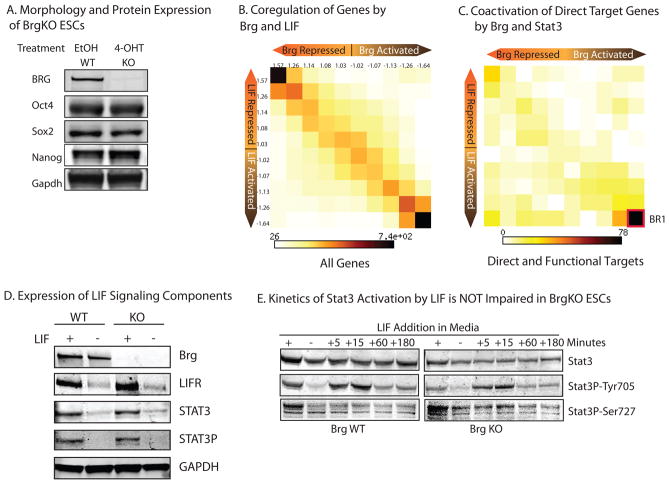
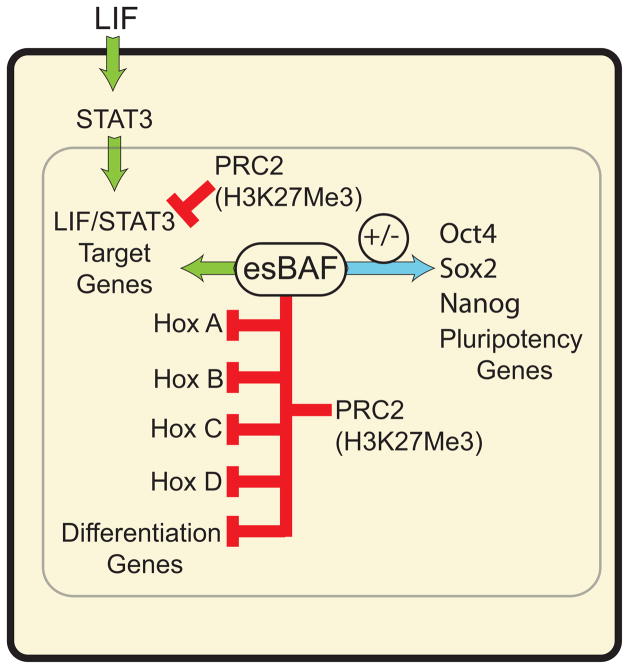
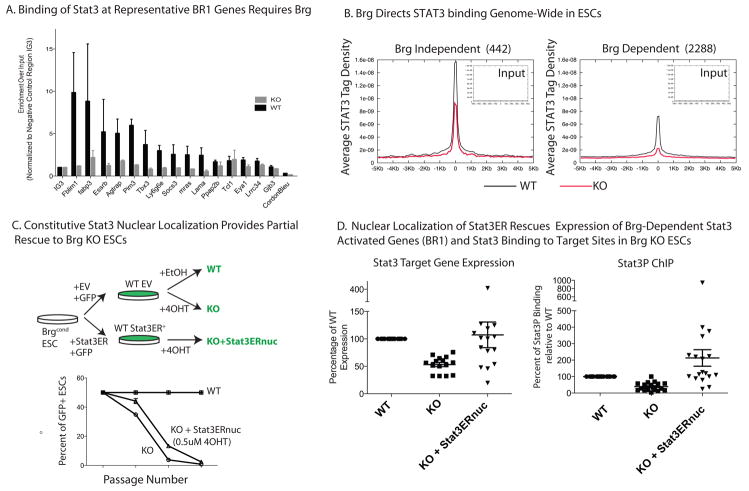
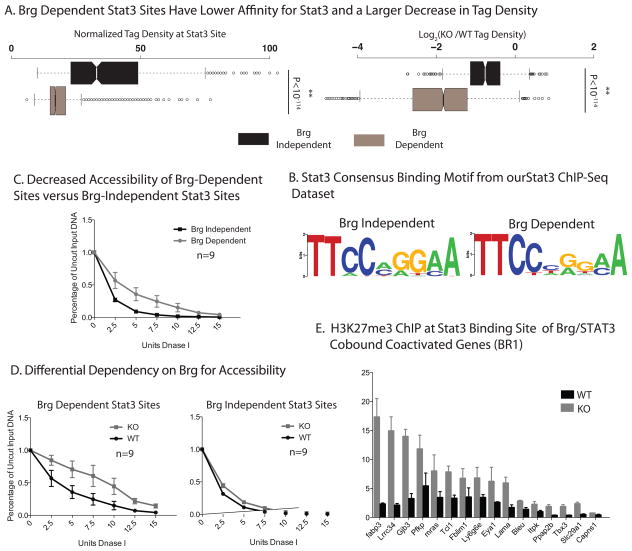
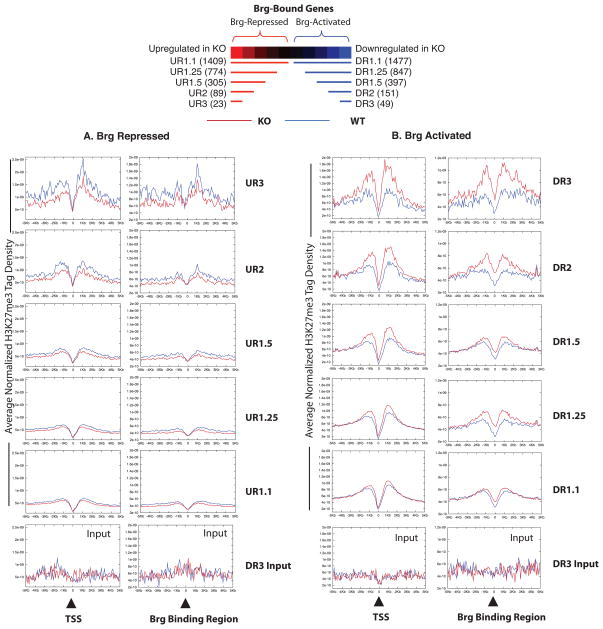
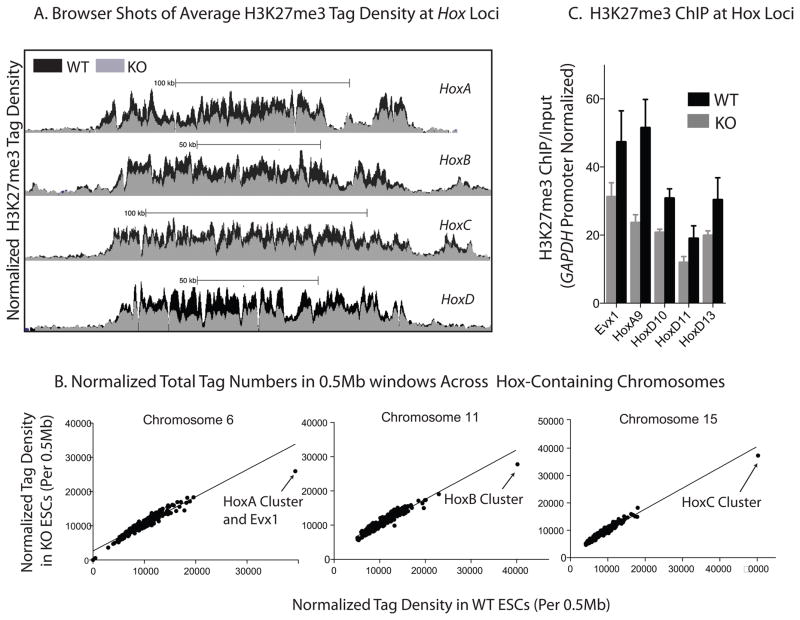
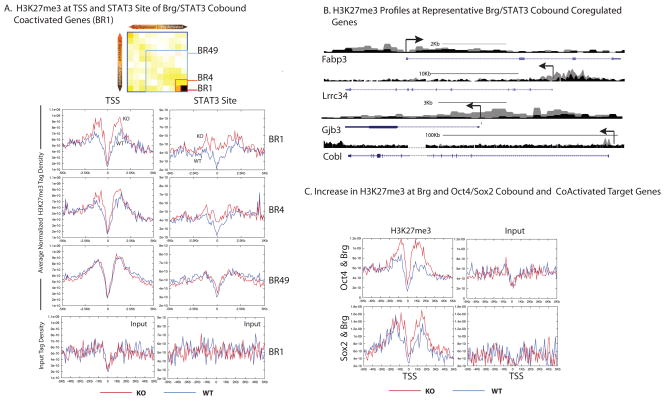
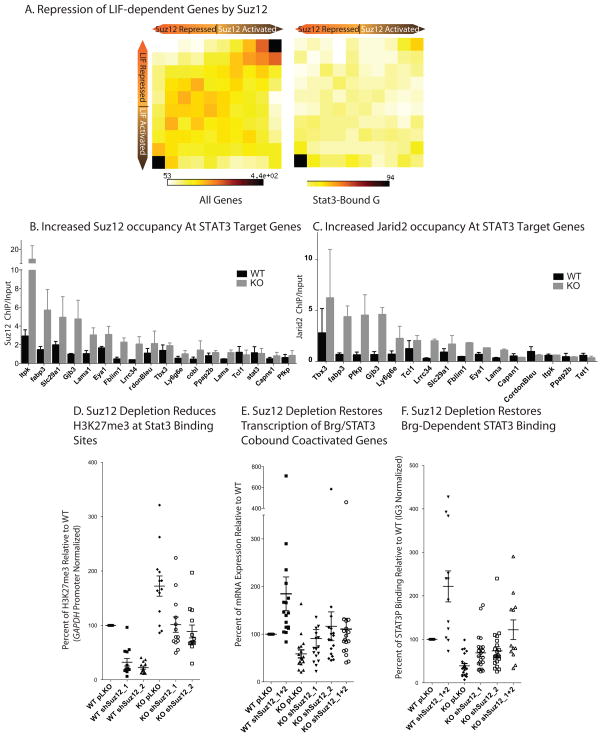
Signalling by the cytokine LIF and its downstream transcription factor, STAT3, prevents differentiation of pluripotent embryonic stem cells (ESCs). This contrasts with most cell types where STAT3 signalling induces differentiation. We find that STAT3 binding across the pluripotent genome is dependent on Brg1, the ATPase subunit of a specialized chromatin remodelling complex (esBAF) found in ESCs. Brg1 is required to establish chromatin accessibility at STAT3 binding targets, preparing these sites to respond to LIF signalling. Brg1 deletion leads to rapid polycomb (PcG) binding and H3K27me3-mediated silencing of many Brg1-activated targets genome wide, including the target genes of the LIF signalling pathway. Hence, one crucial role of Brg1 in ESCs involves its ability to potentiate LIF signalling by opposing PcG. Contrary to expectations, Brg1 also facilitates PcG function at classical PcG targets, including all four Hox loci, reinforcing their repression in ESCs. Therefore, esBAF does not simply antagonize PcG. Rather, the two chromatin regulators act both antagonistically and synergistically with the common goal of supporting pluripotency.
细胞因子 LIF 及其下游转录因子 STAT3 的信号转导可防止多能胚胎干细胞 (ESCs) 的分化。这与大多数细胞类型形成对比,在这些细胞类型中,STAT3 信号转导会诱导分化。我们发现,跨多能基因组的 STAT3 结合依赖于 Brg1,Brg1 是一种特殊染色质重塑复合物 (esBAF) 的 ATP 酶亚基,存在于 ESCs 中。Brg1 是在 STAT3 结合靶标上建立染色质可及性所必需的,为这些位点对 LIF 信号转导做出响应做准备。Brg1 的缺失会导致多梳 (PcG) 迅速结合,并通过 H3K27me3 介导广泛沉默许多 Brg1 激活的靶标,包括 LIF 信号通路的靶基因。因此,Brg1 在 ESCs 中的一个关键作用涉及它通过拮抗 PcG 来增强 LIF 信号转导的能力。与预期相反,Brg1 还促进了经典 PcG 靶标(包括所有四个 Hox 基因座)上的 PcG 功能,加强了它们在 ESCs 中的抑制作用。因此,esBAF 并非简单地拮抗 PcG。相反,这两种染色质调节剂既拮抗又协同作用,共同目标是支持多能性。