The Bionic Ear Institute and The Department of Otolaryngology, The University of Melbourne, Victoria, Australia.
PLoS One. 2011;6(7):e22358. doi: 10.1371/journal.pone.0022358. Epub 2011 Jul 15.
Recently two major manufacturers of hearing aids introduced two distinct frequency-lowering techniques that were designed to compensate in part for the perceptual effects of high-frequency hearing impairments. The Widex "Audibility Extender" is a linear frequency transposition scheme, whereas the Phonak "SoundRecover" scheme employs nonlinear frequency compression. Although these schemes process sound signals in very different ways, studies investigating their use by both adults and children with hearing impairment have reported significant perceptual benefits. However, the modifications that these innovative schemes apply to sound signals have not previously been described or compared in detail.
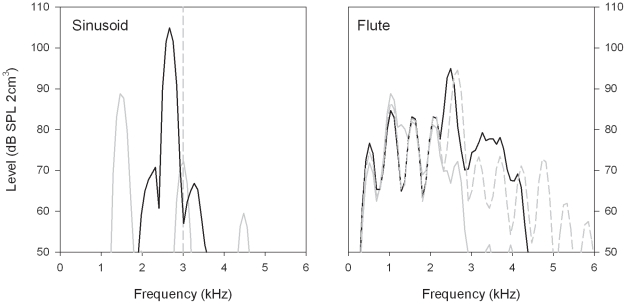
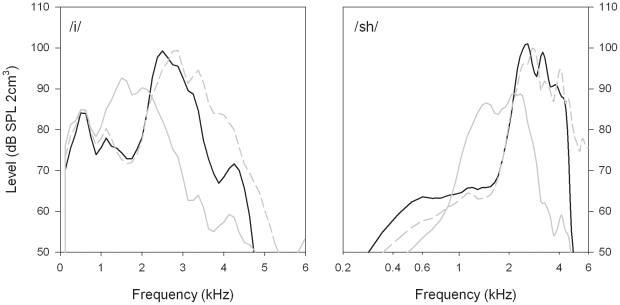
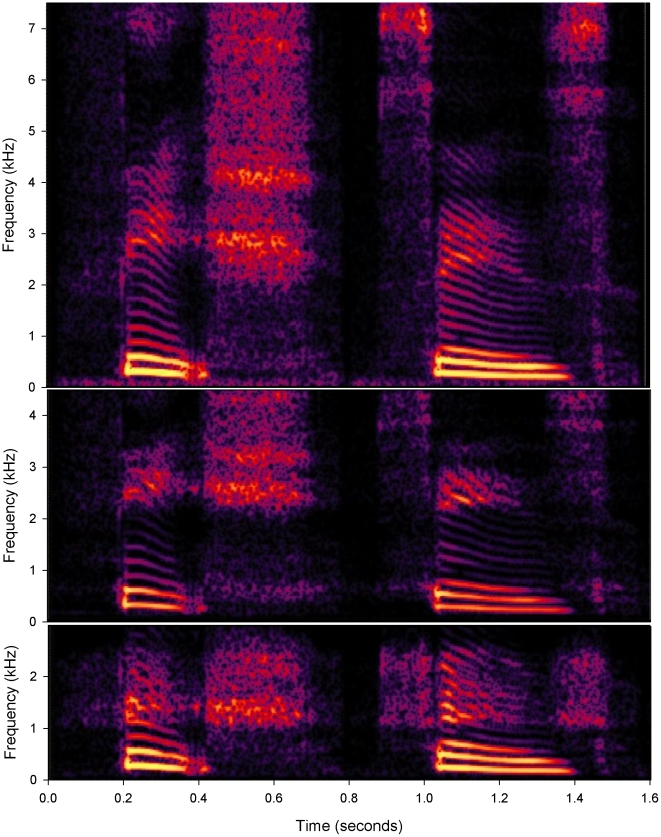
The main aim of the present study was to analyze these schemes'technical performance by measuring outputs from each type of hearing aid with the frequency-lowering functions enabled and disabled. The input signals included sinusoids, flute sounds, and speech material. Spectral analyses were carried out on the output signals produced by the hearing aids in each condition.
The results of the analyses confirmed that each scheme was effective at lowering certain high-frequency acoustic signals, although both techniques also distorted some signals. Most importantly, the application of either frequency-lowering scheme would be expected to improve the audibility of many sounds having salient high-frequency components. Nevertheless, considerably different perceptual effects would be expected from these schemes, even when each hearing aid is fitted in accordance with the same audiometric configuration of hearing impairment. In general, these findings reinforce the need for appropriate selection and fitting of sound-processing schemes in modern hearing aids to suit the characteristics and preferences of individual listeners.
最近,两家主要的助听器制造商推出了两种截然不同的降频技术,旨在部分补偿高频听力损失的感知效应。Widex 的“可听度扩展器”是一种线性频率转换方案,而 Phonak 的“声音恢复器”则采用非线性频率压缩。尽管这些方案以非常不同的方式处理声音信号,但研究表明,这些方案对听力受损的成人和儿童都有显著的感知益处。然而,这些创新方案对声音信号的修改以前没有被详细描述或比较过。
本研究的主要目的是通过测量启用和禁用每种类型的助听器的降频功能后的助听器输出,来分析这些方案的技术性能。输入信号包括正弦波、长笛声和语音材料。对助听器在每种情况下产生的输出信号进行了频谱分析。
分析结果证实,每种方案都能有效地降低某些高频声信号,但两种技术也会对一些信号造成失真。最重要的是,无论使用哪种降频方案,都有望提高许多具有显著高频成分的声音的可听度。然而,即使每个助听器都按照相同的听力损失听力配置进行适配,这些方案也会产生截然不同的感知效果。总的来说,这些发现强调了在现代助听器中选择和适配适当的声音处理方案以适应个体听众的特点和偏好的必要性。