Sina Trauma Research Center, Tehran University of Medical Sciences, Tehran, Iran.
BMC Public Health. 2011 Jul 31;11:608. doi: 10.1186/1471-2458-11-608.
Fatal injuries are at the top of the injury pyramid; however, non-fatal injuries are quite common and impose huge medical expenses on the population. Relying on hospital data will underestimate the incidence of non-fatal injuries. The aim of this study was to estimate the annual incidence and out of pocket medical expenses of all injuries in urban population of Tehran (the capital city of Iran).
Using the cluster random sampling approach, a household survey of residents of greater Tehran was performed on April 2008. At randomly selected residential locations, interviewers asked one adult person to report all injuries which have occurred during the past year for all household members, as well as the type of injury, place of occurrence, the activity, cause of accidents resulting in injuries, the amount of out of pocket medical expenses for injury, and whether they referred to hospital.
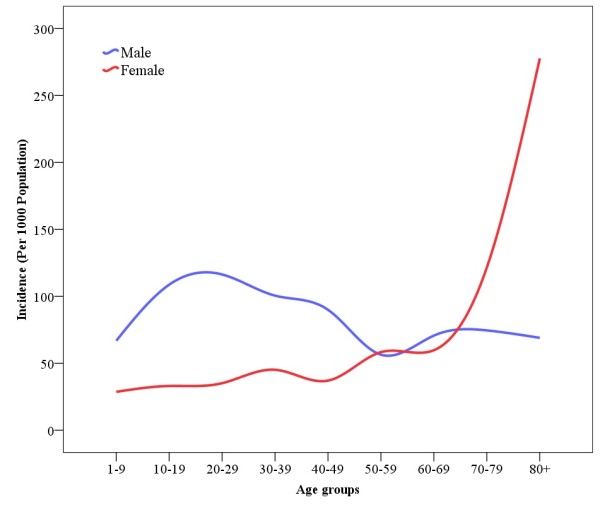
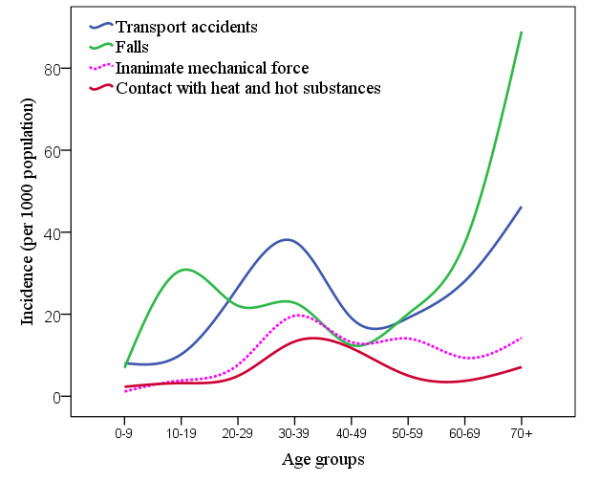
This study included 2,450 households residing in Tehran during 2007-8. The annual incidence of all injuries was 188.7 (180.7-196.9), significant injuries needing any medical care was 68.8 (63.7-74.2), fractures was 19.3 (16.6 - 22.4), and injuries resulted in hospitalization was 16.7 (14.2 - 19.6) per 1000 population. The annual incidence of fatal injuries was 33 (7-96) per 100,000 Population. In children aged 15 or less, the annual incidence of all injuries was 137.2 (120.0 - 155.9), significant injuries needing any medical care was 64.2 (52.2 - 78.0), fractures was 21.8 (15.0 - 30.7), and injuries resulted in hospitalization was 6.8 (3.3 - 12.5) per 1000 population. The mean out of pocket medical expense for injuries was 19.9 USD.
This population based study showed that the real incidence of non-fatal injuries in the capital of Iran is more than the formal hospital-based estimates. These injuries impose non trivial medical and indirect cost on the community. The out of pocket medical expense of non-fatal injuries to Tehran population is estimated as 27 million USD per year. Effective strategies should be considered to minimize these injuries and decrease the great financial burden to public and the health system.
致命伤害处于伤害金字塔的顶端;然而,非致命伤害也很常见,给人群带来了巨大的医疗费用。仅依靠医院数据会低估非致命伤害的发生率。本研究旨在估计德黑兰(伊朗首都)城市人口中非致命伤害的年发生率和自付医疗费用。
采用整群随机抽样方法,于 2008 年 4 月对大德黑兰地区的居民进行了家庭调查。在随机选择的居住地点,调查员要求一名成年人报告过去一年中所有家庭成员发生的所有伤害情况,以及伤害类型、发生地点、活动、导致伤害的事故原因、伤害的自付医疗费用金额,以及他们是否去医院就诊。
本研究包括 2007-2008 年居住在德黑兰的 2450 户家庭。所有伤害的年发生率为 188.7(180.7-196.9),需要任何医疗护理的严重伤害发生率为 68.8(63.7-74.2),骨折发生率为 19.3(16.6-22.4),住院治疗的伤害发生率为 16.7(14.2-19.6)每 1000 人。致命伤害的年发生率为 33(7-96)每 100000 人。在 15 岁或以下的儿童中,所有伤害的年发生率为 137.2(120.0-155.9),需要任何医疗护理的严重伤害发生率为 64.2(52.2-78.0),骨折发生率为 21.8(15.0-30.7),住院治疗的伤害发生率为 6.8(3.3-12.5)每 1000 人。伤害的平均自付医疗费用为 19.9 美元。
这项基于人群的研究表明,伊朗首都的非致命伤害实际发生率高于基于医院的正式估计。这些伤害给社区带来了不小的医疗和间接费用。德黑兰人口的非致命伤害自付医疗费用估计为每年 2700 万美元。应考虑采取有效策略,尽量减少这些伤害,并减轻对公共和卫生系统的巨大经济负担。