Department of Epidemiology, Johns Hopkins Bloomberg School of Public, Health, Baltimore, Maryland 21205, USA.
Nat Commun. 2011 Aug 9;2:423. doi: 10.1038/ncomms1432.
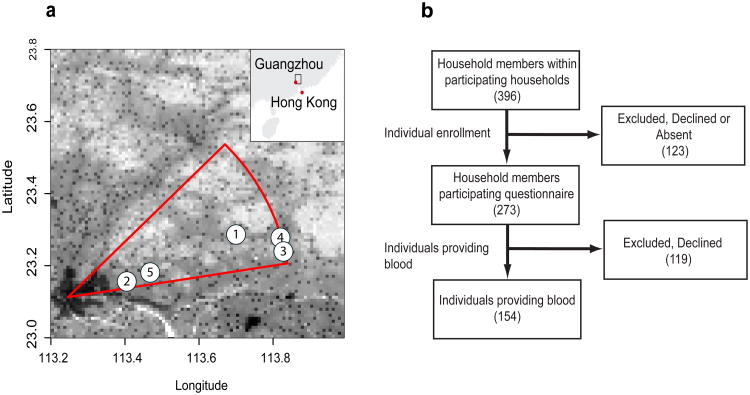
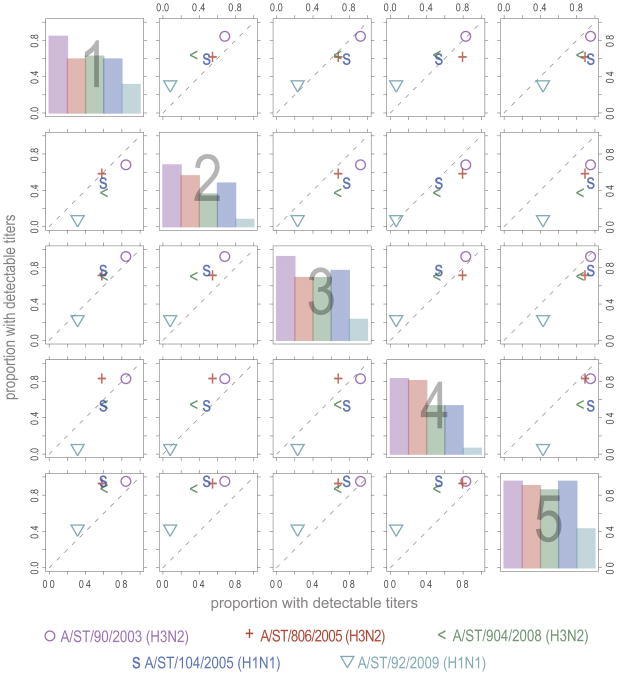
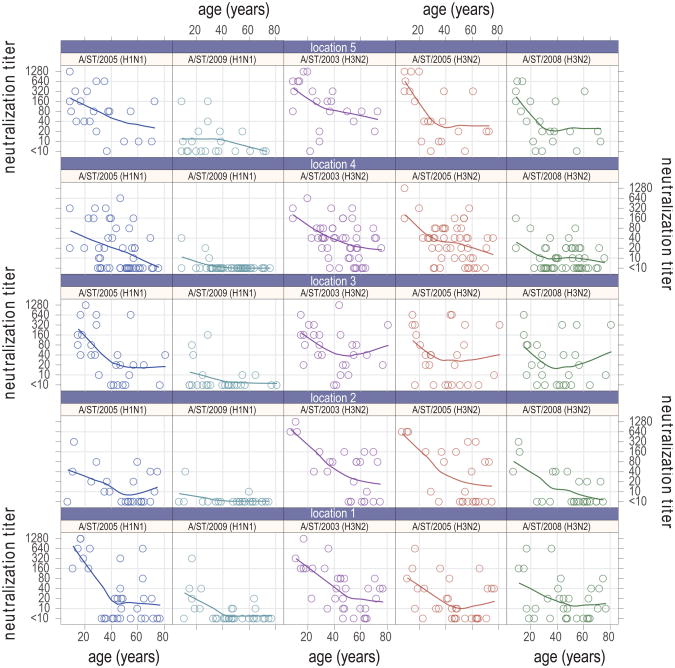
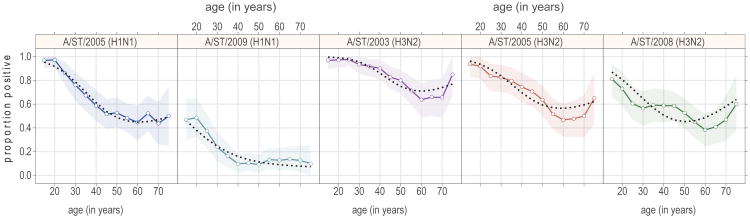
Variation in influenza incidence between locations is commonly observed on large spatial scales. It is unclear whether such variation occurs on smaller spatial scales and whether it is the result of heterogeneities in population demographics or more subtle differences in population structure and connectivity. Here we show that significant differences in immunity to influenza A viruses among communities in China are not explained by differences in population demographics. We randomly selected households from five randomly selected locations near Guangzhou, China to answer a questionnaire and provide a blood sample for serological testing against five recently circulating influenza viruses. We find a significant reduction in the frequency of detectable neutralization titers with increasing age, levelling off in older age groups. There are significant differences between locations in age, employment status, vaccination history, household size and housing conditions. However, after adjustment, significant variations in the frequency of detectable neutralization titers persists between locations. These results suggest there are characteristics of communities that drive influenza transmission dynamics apart from individual and household level risk factors, and that such factors have effects independent of strain.
在大的空间尺度上,通常可以观察到流感发病率在不同地点之间存在差异。目前尚不清楚这种差异是否发生在较小的空间尺度上,以及这种差异是由于人口统计学特征的异质性还是人口结构和连通性的更微妙差异所致。在这里,我们发现中国社区之间对甲型流感病毒的免疫存在显著差异,这不能用人口统计学特征的差异来解释。我们随机选择了来自中国广州附近的五个随机地点的家庭,让他们回答一份问卷,并提供一份血清样本,以检测五种最近流行的流感病毒。我们发现,随着年龄的增长,可检测中和效价的频率显著降低,在老年组中趋于平稳。不同地点之间在年龄、就业状况、疫苗接种史、家庭规模和住房条件方面存在显著差异。然而,在调整后,不同地点之间可检测中和效价的频率仍存在显著差异。这些结果表明,除了个人和家庭层面的风险因素外,社区的某些特征也会影响流感传播动态,而且这些因素的影响独立于毒株。