Wileman Harriet, Mishra Arun
Pfizer Ltd, United Kingdom.
Perspect Clin Res. 2010 Apr;1(2):51-6.
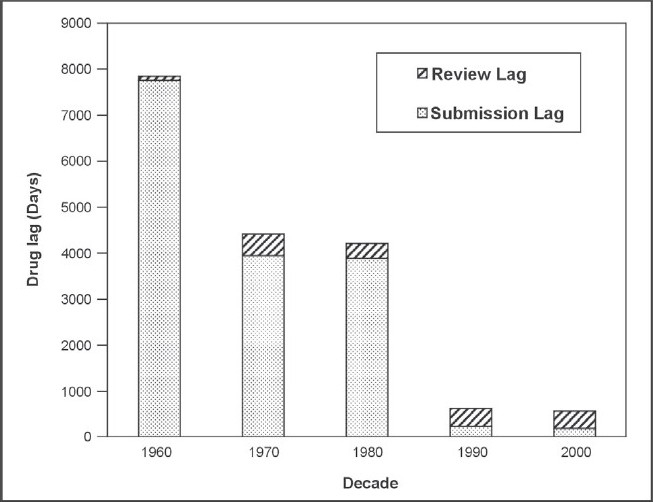
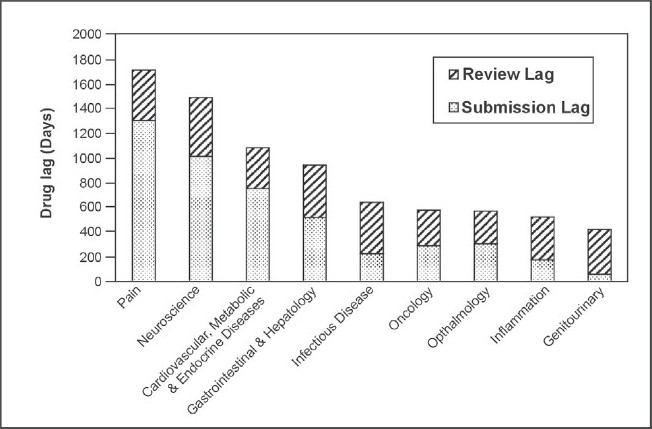
There have been numerous investigations targeted at identifying whether a drug lag exists in the mature markets of the US, EU and Japan. This work focuses on the emerging markets because of the potential they hold for the future of the pharmaceutical industry as a consequence of rapid economic and political development.The aims of this work are to ascertain whether a drug lag exists in the emerging markets and how it has changed over time from the 1960s to the 2000s. It will also highlight key regulatory barriers which may contribute to drug lag.The date of the marketing authorisation (MA) approval by the US Food and Drug Administration (FDA) was used as a reference point. A comparison against the company database regarding emerging market specific approval enabled the difference in time and thus the drug lag for that particular market to be calculated.This work concludes that the overall relative drug lag in the emerging markets has decreased over time and that there are seven key regulatory barriers which need to be targeted in order to make further improvements; 'Western Approval', local clinical development (LCD), Certificate of Pharmaceutical Product (CPP), Good Manufacturing Practice (GMP), pricing approval, document authentication and harmonisation.
已经有许多调查旨在确定在美国、欧盟和日本等成熟市场是否存在药物滞后现象。这项工作聚焦于新兴市场,因为这些市场由于经济和政治的快速发展,对制药行业的未来具有潜力。这项工作的目的是确定新兴市场是否存在药物滞后现象,以及从20世纪60年代到21世纪初,这种现象如何随时间变化。它还将突出可能导致药物滞后的关键监管障碍。以美国食品药品监督管理局(FDA)批准上市许可(MA)的日期作为参考点。通过与公司数据库中关于新兴市场特定批准情况进行比较,能够计算出时间差异,进而得出特定市场的药物滞后情况。这项工作得出结论,新兴市场总体相对药物滞后现象随时间有所减少,并且有七个关键监管障碍需要加以应对,以便进一步改进;即“西方批准”、当地临床开发(LCD)、药品证书(CPP)、良好生产规范(GMP)、定价批准、文件认证和协调统一。