Environmental Health Sciences, Johns Hopkins Bloomberg School of Public Health, 615 N, Wolfe Street, Baltimore, Maryland 21205, USA.
Environ Health. 2011 Aug 12;10:72. doi: 10.1186/1476-069X-10-72.
Community exposures to environmental contaminants from industrial scale dairy operations are poorly understood. The purpose of this study was to evaluate the impact of dairy operations on nearby communities by assessing airborne contaminants (particulate matter, ammonia, and cow allergen, Bos d 2) associated with dairy operations inside and outside homes.
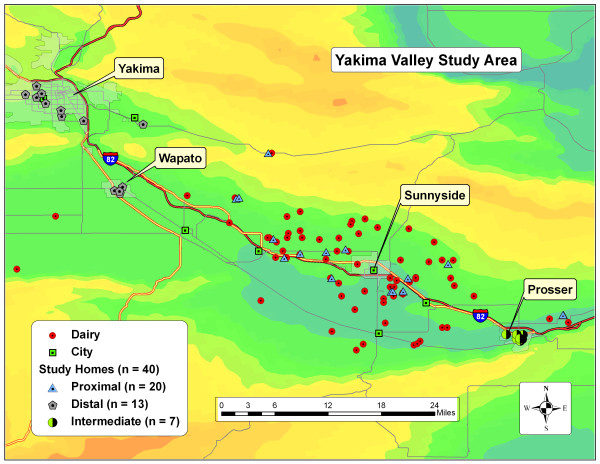
The study was conducted in 40 homes in the Yakima Valley, Washington State where over 61 dairies operate.
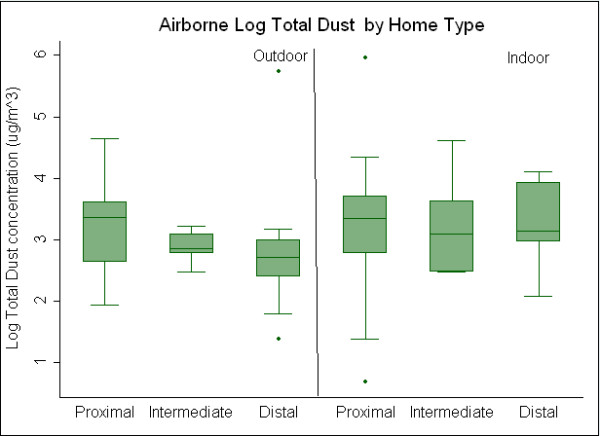
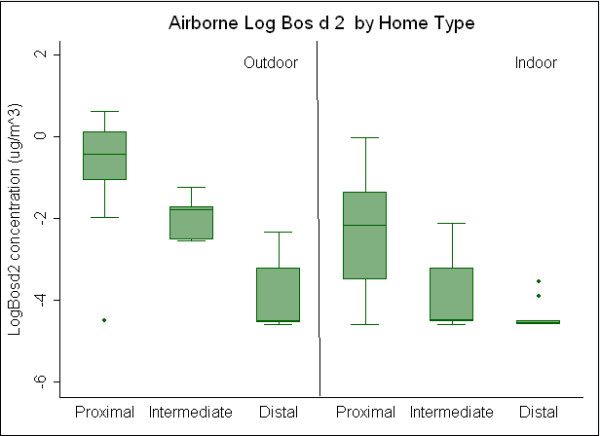
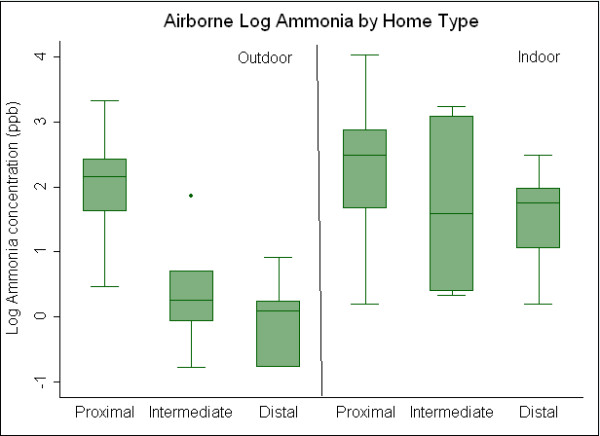
A concentration gradient was observed showing that airborne contaminants are significantly greater at homes within one-quarter mile (0.4 km) of dairy facilities, outdoor Bos d 2, ammonia, and TD were 60, eight, and two times higher as compared to homes greater than three miles (4.8 km) away. In addition median indoor airborne Bos d 2 and ammonia concentrations were approximately 10 and two times higher in homes within one-quarter mile (0.4 km) compared to homes greater than three miles (4.8 km) away.
These findings demonstrate that dairy operations increase community exposures to agents with known human health effects. This study also provides evidence that airborne biological contaminants (i.e. cow allergen) associated with airborne particulate matter are statistically elevated at distances up to three miles (4.8 km) from dairy operations.
人们对工业规模奶制品生产经营活动导致的社区环境污染暴露情况知之甚少。本研究旨在通过评估与奶制品生产经营活动相关的室内外空气污染物(颗粒物、氨和奶牛过敏原 Bos d 2),来评估奶制品生产经营活动对附近社区的影响。
该研究在华盛顿州雅基马谷的 40 户家庭中进行,该地区有超过 61 家奶牛场。
研究结果显示,在距离奶牛场不到四分之一英里(0.4 公里)的家庭中,空气传播污染物的浓度明显更高,室外 Bos d 2、氨和总尘埃的浓度分别是距离奶牛场超过三英里(4.8 公里)的家庭的 60 倍、8 倍和 2 倍。此外,在距离奶牛场不到四分之一英里(0.4 公里)的家庭中,室内空气传播的 Bos d 2 和氨浓度中位数分别比距离奶牛场超过三英里(4.8 公里)的家庭高约 10 倍和 2 倍。
这些发现表明,奶制品生产经营活动增加了社区暴露于已知对人类健康有影响的因素的风险。本研究还提供了证据表明,与空气颗粒物相关的空气传播生物污染物(即奶牛过敏原)在距离奶牛场三英里(4.8 公里)范围内的浓度呈统计学升高。