Department of Clinical Infection, Microbiology and Immunology, Institute of Infection and Global Health, University of Liverpool, United Kingdom.
PLoS Pathog. 2011 Aug;7(8):e1002175. doi: 10.1371/journal.ppat.1002175. Epub 2011 Aug 11.
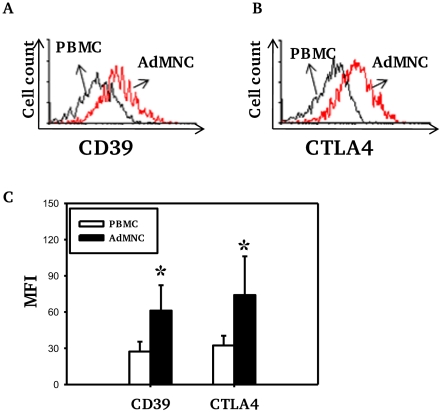
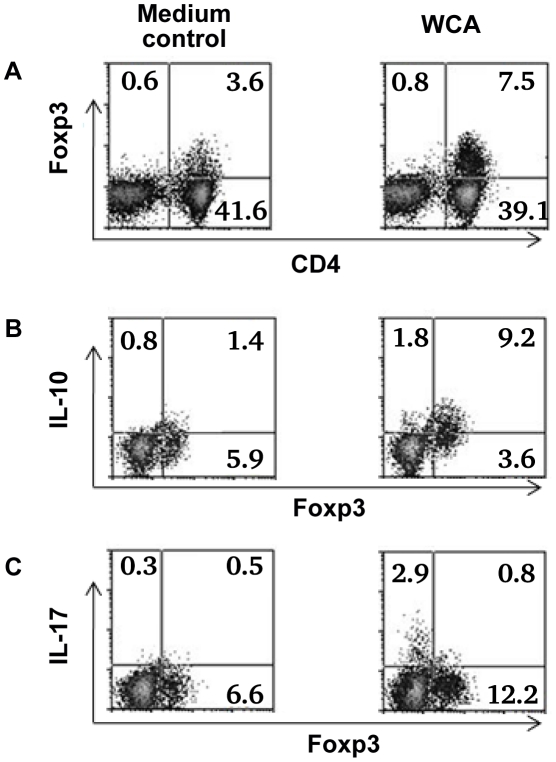
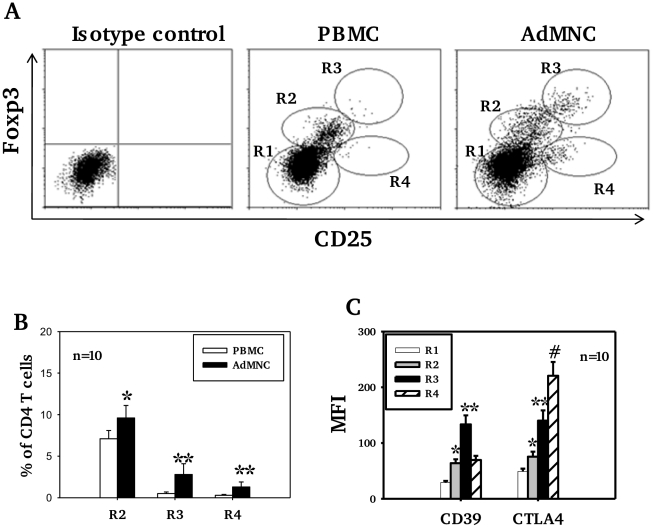
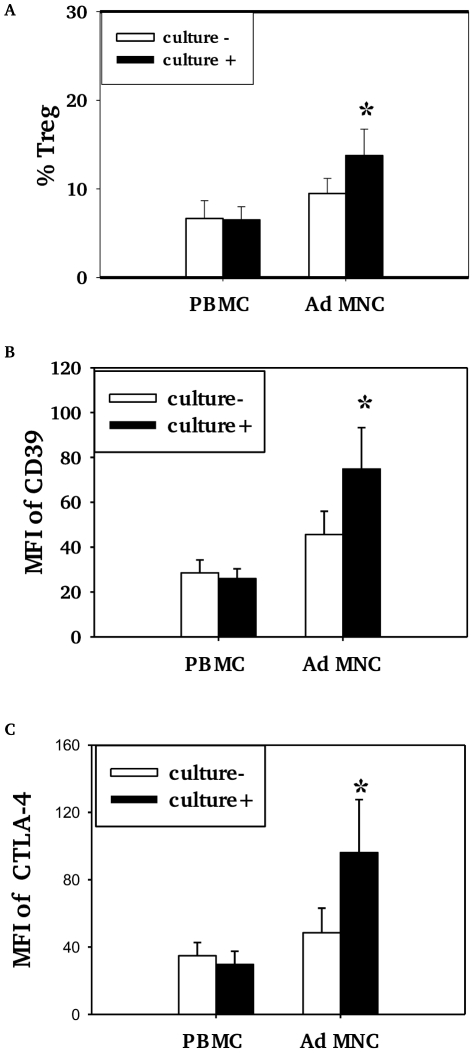
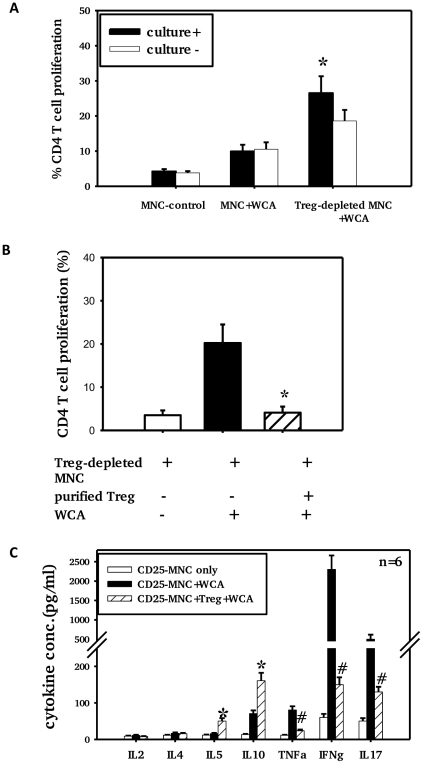
Regulatory T cells (Treg) diminish immune responses to microbial infection, which may contribute to preventing inflammation-related local tissue damage and autoimmunity but may also contribute to chronicity of infection. Nasopharyngeal carriage of pneumococcus is common in young children and can persist for long periods but it is unknown whether the presence of Treg in the nasopharynx contributes to this persistence. We have investigated the numbers and activities of Foxp3+Treg in adenoidal tissues and their association with pneumococcal carriage in children. Expression of Treg cell-related markers including Foxp3, CD25, CD39, CD127 and CLTA4 were analysed by flow-cytometry in adenoidal mononuclear cells (MNC) and PBMC from children. Unfractionated MNC or Treg-depleted MNC were stimulated with a pneumococcal whole cell antigen (WCA) and T cell proliferation measured. Cytokine production by MNC was measured using a cytometric bead array. Higher numbers of CD25(high)Foxp3(high) Treg expressing higher CD39 and CTLA4 were found in adenoidal MNC than in PBMC. Children with pneumococcus positive nasopharyngeal cultures had higher proportions of Treg and expressed higher levels of CD39 and CTLA-4 than those who were culture negative (-). WCA induced adenoidal Treg proliferation which produce IL10 but not IL17, and CD4 T cell proliferation in Treg-depleted MNC was greater in pneumococcal culture positive than negative children. Significant numbers of Treg with an effector/memory phenotype which possess a potent inhibitory effect, exist in adenoidal tissue. The association of pneumococcal carriage with an increased frequency of adenoidal Treg suggests that Treg in nasal-associated lymphoid tissue (NALT) may contribute to the persistence of pneumococcus in children. Further studies to determine what component and mechanisms are involved in the promotion of Treg in NALT may lead to novel therapeutic or vaccination strategy against upper respiratory infection.
调节性 T 细胞(Treg)可降低对微生物感染的免疫反应,这可能有助于防止炎症相关的局部组织损伤和自身免疫,但也可能导致感染的慢性化。鼻咽部携带肺炎球菌在幼儿中很常见,并且可以持续很长时间,但目前尚不清楚鼻咽部 Treg 的存在是否有助于这种持续性。我们研究了腺样体组织中 Foxp3+Treg 的数量和活性及其与儿童肺炎球菌携带的关系。通过流式细胞术分析了腺样体单核细胞(MNC)和儿童 PBMC 中 Treg 相关标志物的表达,包括 Foxp3、CD25、CD39、CD127 和 CLTA4。用肺炎球菌全细胞抗原(WCA)刺激未分选的 MNC 或 Treg 耗尽的 MNC,并测量 T 细胞增殖。使用细胞因子珠阵列测量 MNC 的细胞因子产生。与 PBMC 相比,腺样体 MNC 中发现 CD25(高)Foxp3(高)Treg 的数量更高,表达更高水平的 CD39 和 CTLA4。鼻咽部培养阳性的儿童比培养阴性的儿童具有更高比例的 Treg,并且表达更高水平的 CD39 和 CTLA-4(-)。WCA 诱导腺样体 Treg 增殖,产生 IL10 但不产生 IL17,并且在肺炎球菌培养阳性的儿童中,Treg 耗尽的 MNC 中 CD4 T 细胞增殖更大。具有强大抑制作用的效应器/记忆表型的 Treg 数量众多,存在于腺样体组织中。肺炎球菌携带与腺样体 Treg 频率增加相关,提示鼻相关淋巴组织(NALT)中的 Treg 可能有助于儿童肺炎球菌的持续存在。进一步研究确定 NALT 中促进 Treg 的成分和机制可能会导致针对上呼吸道感染的新型治疗或疫苗接种策略。