Hayes Jasmeet Pannu, Morey Rajendra A, Petty Christopher M, Seth Srishti, Smoski Moria J, McCarthy Gregory, Labar Kevin S
National Center for PTSD, VA Boston Healthcare System Boston, MA, USA.
Front Hum Neurosci. 2010 Dec 22;4:230. doi: 10.3389/fnhum.2010.00230. eCollection 2010.
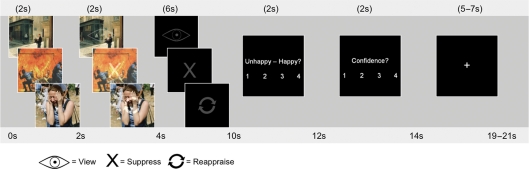
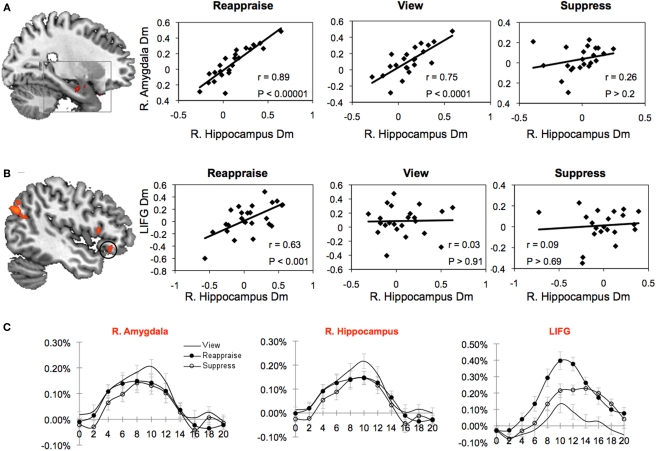
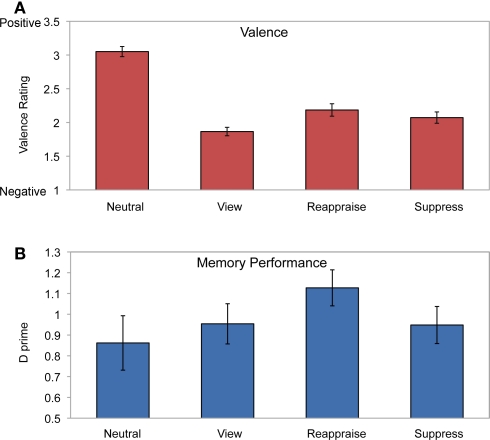
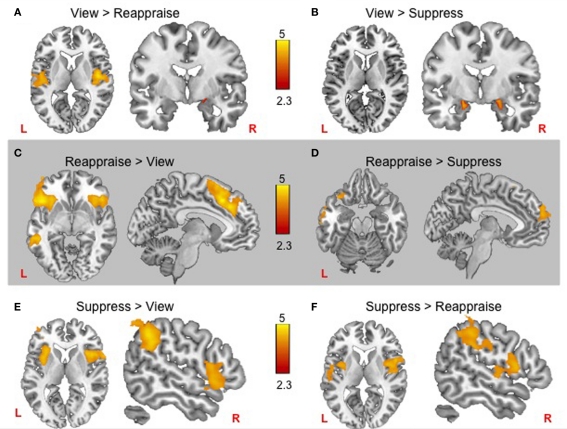
During times of emotional stress, individuals often engage in emotion regulation to reduce the experiential and physiological impact of negative emotions. Interestingly, emotion regulation strategies also influence memory encoding of the event. Cognitive reappraisal is associated with enhanced memory while expressive suppression is associated with impaired explicit memory of the emotional event. However, the mechanism by which these emotion regulation strategies affect memory is unclear. We used event-related fMRI to investigate the neural mechanisms that give rise to memory formation during emotion regulation. Twenty-five participants viewed negative pictures while alternately engaging in cognitive reappraisal, expressive suppression, or passive viewing. As part of the subsequent memory design, participants returned to the laboratory two weeks later for a surprise memory test. Behavioral results showed a reduction in negative affect and a retention advantage for reappraised stimuli relative to the other conditions. Imaging results showed that successful encoding during reappraisal was uniquely associated with greater co-activation of the left inferior frontal gyrus, amygdala, and hippocampus, suggesting a possible role for elaborative encoding of negative memories. This study provides neurobehavioral evidence that engaging in cognitive reappraisal is advantageous to both affective and mnemonic processes.
在情绪应激期间,个体常常进行情绪调节以减轻负面情绪的体验和生理影响。有趣的是,情绪调节策略也会影响该事件的记忆编码。认知重评与记忆增强相关,而表达抑制与对情绪事件的外显记忆受损相关。然而,这些情绪调节策略影响记忆的机制尚不清楚。我们使用事件相关功能磁共振成像来研究情绪调节过程中产生记忆形成的神经机制。25名参与者观看负面图片,同时交替进行认知重评、表达抑制或被动观看。作为后续记忆设计的一部分,参与者两周后返回实验室进行意外记忆测试。行为结果显示,与其他条件相比,重评刺激的负面影响减少且具有记忆保持优势。成像结果表明,重评期间的成功编码与左侧额下回、杏仁核和海马体的更强共同激活独特相关,这表明对负面记忆进行精细化编码可能发挥了作用。本研究提供了神经行为学证据,表明进行认知重评对情感和记忆过程均有益处。