Division of Plant and Crop Sciences, University of Nottingham, Loughborough, United Kingdom.
PLoS One. 2011;6(9):e24606. doi: 10.1371/journal.pone.0024606. Epub 2011 Sep 14.
There are compelling economic and environmental reasons to reduce our reliance on inorganic phosphate (Pi) fertilisers. Better management of Pi fertiliser applications is one option to improve the efficiency of Pi fertiliser use, whilst maintaining crop yields. Application rates of Pi fertilisers are traditionally determined from analyses of soil or plant tissues. Alternatively, diagnostic genes with altered expression under Pi limiting conditions that suggest a physiological requirement for Pi fertilisation, could be used to manage Pifertiliser applications, and might be more precise than indirect measurements of soil or tissue samples.
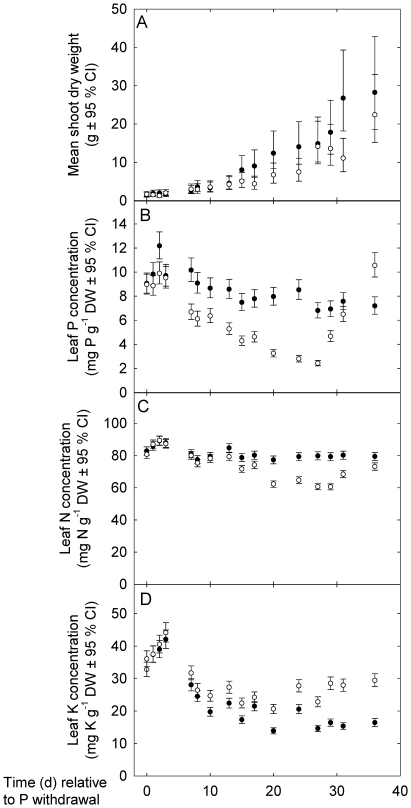
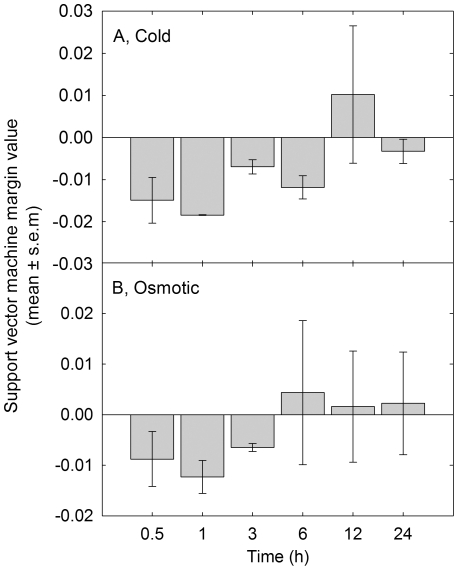
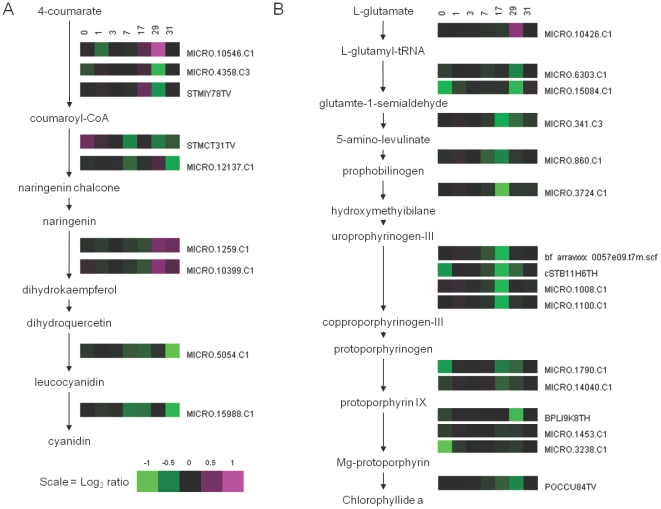
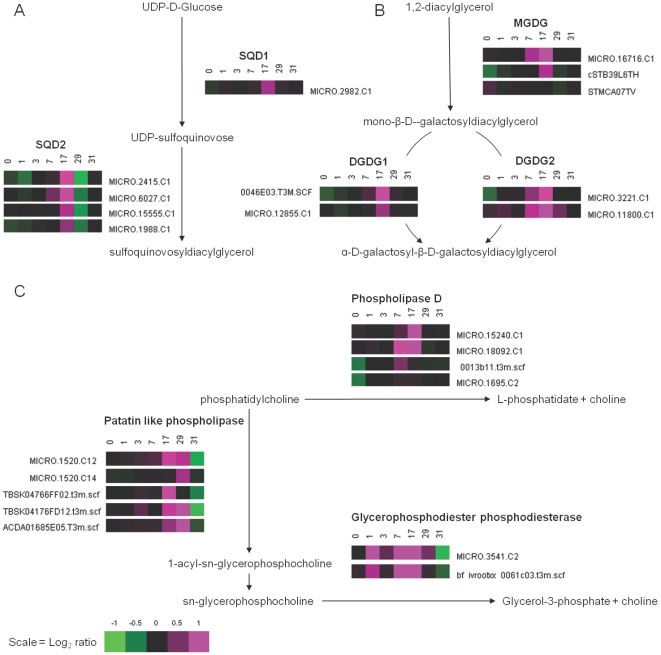
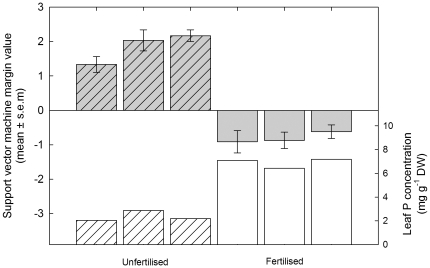
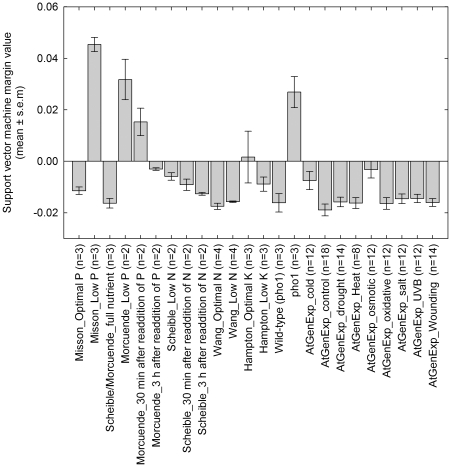
We grew potato (Solanum tuberosum L.) plants hydroponically, under glasshouse conditions, to control their nutrient status accurately. Samples of total leaf RNA taken periodically after Pi was removed from the nutrient solution were labelled and hybridised to potato oligonucleotide arrays. A total of 1,659 genes were significantly differentially expressed following Pi withdrawal. These included genes that encode proteins involved in lipid, protein, and carbohydrate metabolism, characteristic of Pi deficient leaves and included potential novel roles for genes encoding patatin like proteins in potatoes. The array data were analysed using a support vector machine algorithm to identify groups of genes that could predict the Pi status of the crop. These groups of diagnostic genes were tested using field grown potatoes that had either been fertilised or unfertilised. A group of 200 genes could correctly predict the Pi status of field grown potatoes.
This paper provides a proof-of-concept demonstration for using microarrays and class prediction tools to predict the Pi status of a field grown potato crop. There is potential to develop this technology for other biotic and abiotic stresses in field grown crops. Ultimately, a better understanding of crop stresses may improve our management of the crop, improving the sustainability of agriculture.
减少对无机磷酸盐 (Pi) 肥料的依赖具有强烈的经济和环境原因。更好地管理 Pi 肥料的应用是提高 Pi 肥料使用效率的一种选择,同时保持作物产量。Pi 肥料的应用率传统上是根据土壤或植物组织的分析来确定的。或者,可以使用在 Pi 限制条件下表达发生改变的、提示对 Pi 施肥有生理需求的诊断基因来管理 Pi 肥料的应用,这可能比土壤或组织样本的间接测量更精确。
我们在温室条件下用水培法种植马铃薯 (Solanum tuberosum L.) 植物,以准确控制其养分状况。从营养液中去除 Pi 后定期采集的总叶 RNA 样本进行标记,并与马铃薯寡核苷酸阵列杂交。在 Pi 被去除后,有 1659 个基因的表达发生了显著差异。这些基因包括参与脂质、蛋白质和碳水化合物代谢的蛋白质编码基因,这是 Pi 缺乏叶片的特征,包括编码马铃薯类脂酶蛋白的基因在马铃薯中的潜在新作用。使用支持向量机算法对阵列数据进行分析,以识别可以预测作物 Pi 状态的基因群。使用已经施肥或未施肥的田间生长的马铃薯测试了这些诊断基因群。一组 200 个基因可以正确预测田间生长的马铃薯的 Pi 状态。
本文提供了一个使用微阵列和分类预测工具来预测田间生长的马铃薯作物 Pi 状态的概念验证演示。有可能为田间生长的作物中的其他生物和非生物胁迫开发这项技术。最终,更好地了解作物胁迫可能会改善我们对作物的管理,提高农业的可持续性。