Department of Biological Sciences, University of Delaware, Newark, Delaware, United States of America.
PLoS One. 2011;6(9):e24785. doi: 10.1371/journal.pone.0024785. Epub 2011 Sep 16.
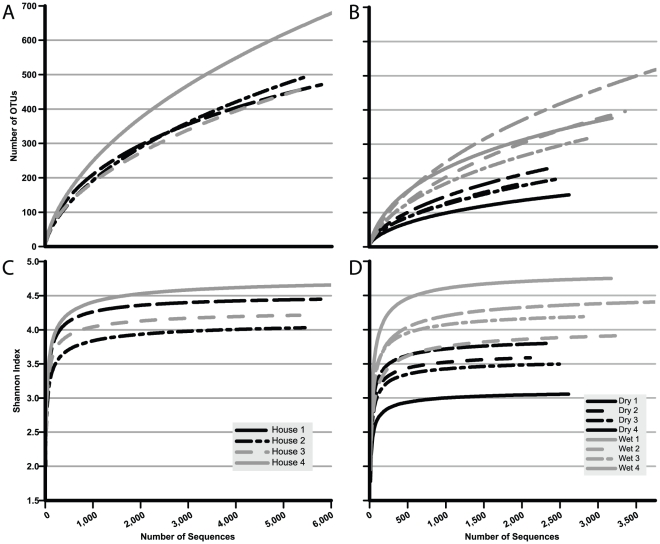
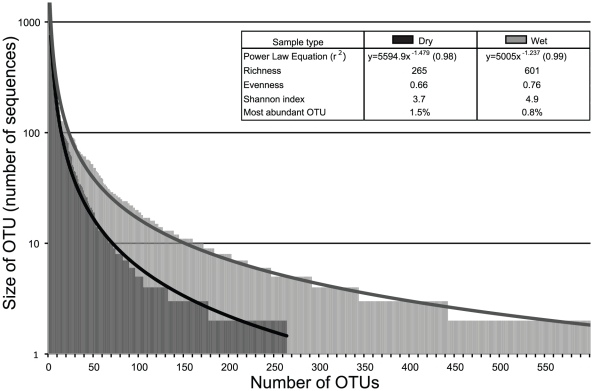
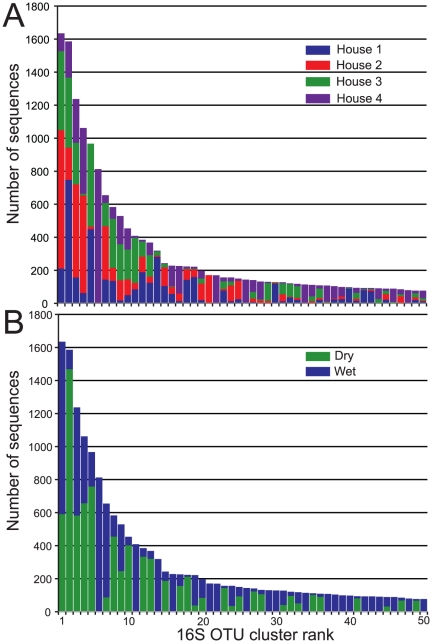
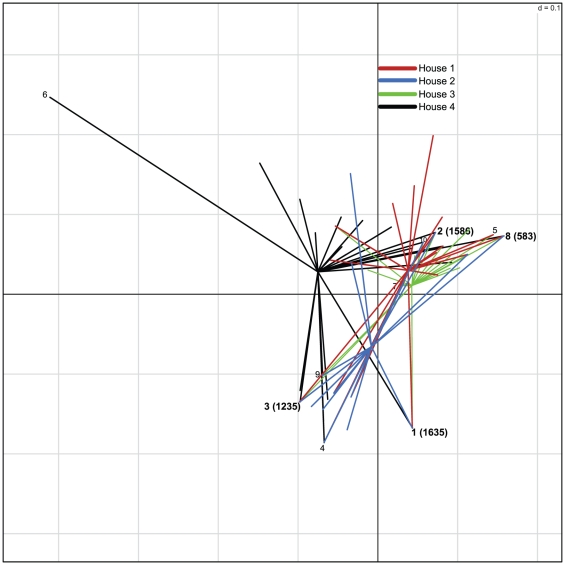
Viral and bacterial pathogens are a significant economic concern to the US broiler industry and the ecological epicenter for poultry pathogens is the mixture of bedding material, chicken excrement and feathers that comprises the litter of a poultry house. This study used high-throughput sequencing to assess the richness and diversity of poultry litter bacterial communities, and to look for connections between these communities and the environmental characteristics of a poultry house including its history of gangrenous dermatitis (GD). Cluster analysis of 16S rRNA gene sequences revealed differences in the distribution of bacterial phylotypes between Wet and Dry litter samples and between houses. Wet litter contained greater diversity with 90% of total bacterial abundance occurring within the top 214 OTU clusters. In contrast, only 50 clusters accounted for 90% of Dry litter bacterial abundance. The sixth largest OTU cluster across all samples classified as an Arcobacter sp., an emerging human pathogen, occurring in only the Wet litter samples of a house with a modern evaporative cooling system. Ironically, the primary pathogenic clostridial and staphylococcal species associated with GD were not found in any house; however, there were thirteen 16S rRNA gene phylotypes of mostly gram-positive phyla that were unique to GD-affected houses and primarily occurred in Wet litter samples. Overall, the poultry house environment appeared to substantially impact the composition of litter bacterial communities and may play a key role in the emergence of food-borne pathogens.
病毒和细菌病原体是美国肉鸡产业的重大经济关注点,而禽病的生态中心是垫料、鸡粪和羽毛的混合物,这些物质构成了禽舍的垫料。本研究使用高通量测序来评估禽舍垫料中细菌群落的丰富度和多样性,并寻找这些群落与禽舍环境特征之间的联系,包括其坏疽性皮炎(GD)病史。16S rRNA 基因序列的聚类分析显示,湿垫料和干垫料样本以及不同禽舍之间的细菌型分布存在差异。湿垫料中含有更多的多样性,90%的总细菌丰度存在于前 214 个 OTU 簇中。相比之下,只有 50 个簇占干垫料细菌丰度的 90%。所有样本中第六大 OTU 簇被归类为弧菌属(Arcobacter),一种新兴的人类病原体,仅出现在具有现代蒸发冷却系统的禽舍的湿垫料样本中。具有讽刺意味的是,与 GD 相关的主要致病性梭状芽孢杆菌和葡萄球菌种并未在任何禽舍中发现;然而,有 13 个 16S rRNA 基因的细菌型主要是革兰氏阳性菌,它们是 GD 感染禽舍所特有的,主要存在于湿垫料样本中。总体而言,禽舍环境似乎对垫料中细菌群落的组成有很大影响,并且可能在食源性病原体的出现中发挥关键作用。