Wong K T, Ong K C
Department of Pathology, Faculty of Medicine, University of Malaya, 50603 Kuala Lumpur, Malaysia.
Patholog Res Int. 2011;2011:567248. doi: 10.4061/2011/567248. Epub 2011 Sep 26.
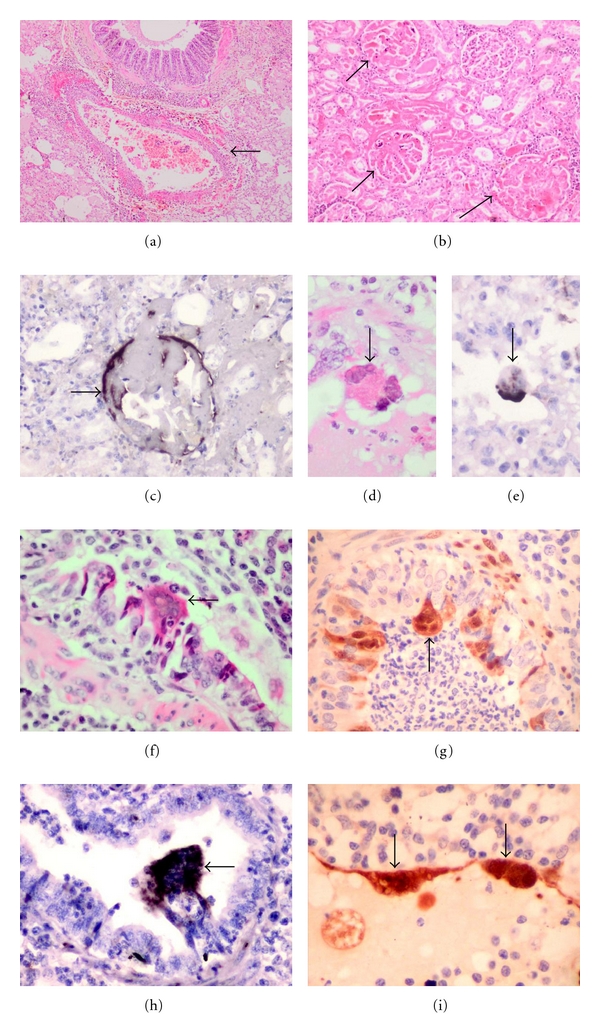
Zoonoses as causes of human infections have been increasingly reported, and many of these are viruses that cause central nervous system infections. This paper focuses on the henipaviruses (family Paramyxoviridae, genus henipavirus) that have recently emerged to cause severe encephalitis and systemic infection in humans and animals in the Asia-Pacific region. The pathological features in the human infections comprise vasculopathy (vasculitis, endothelial multinucleated syncytia, thrombosis, etc.) and parenchymal cell infection in the central nervous system, lung, kidney, and other major organs. Most animals naturally or experimentally infected show more or less similar features confirming the dual pathogenetic mechanism of vasculopathy-associated microinfarction and direct extravascular parenchymal cell infection as causes of tissue injury. The most promising animal models include the hamster, ferret, squirrel monkey, and African green monkey. With increasing evidence of infection in the natural hosts, the pteropid bats and, hence, probable future outbreaks in many more countries, a greater awareness of henipavirus infection in both humans and animals is imperative.
人畜共患病作为人类感染的病因已被越来越多地报道,其中许多是引起中枢神经系统感染的病毒。本文重点关注副粘病毒科亨尼帕病毒属的亨尼帕病毒,这些病毒最近在亚太地区出现,可导致人类和动物发生严重脑炎和全身感染。人类感染的病理特征包括血管病变(血管炎、内皮多核巨细胞、血栓形成等)以及中枢神经系统、肺、肾和其他主要器官的实质细胞感染。大多数自然感染或实验感染的动物表现出或多或少相似的特征,证实了血管病变相关微梗死和血管外实质细胞直接感染作为组织损伤原因的双重发病机制。最有前景的动物模型包括仓鼠、雪貂、松鼠猴和非洲绿猴。随着自然宿主翼手目蝙蝠感染证据的增加,以及可能在更多国家爆发疫情,提高对人类和动物中亨尼帕病毒感染的认识势在必行。