Centre for Bioinformatics, Imperial College London, London SW7 2AZ, UK.
Nat Commun. 2011 Oct 4;2:489. doi: 10.1038/ncomms1496.
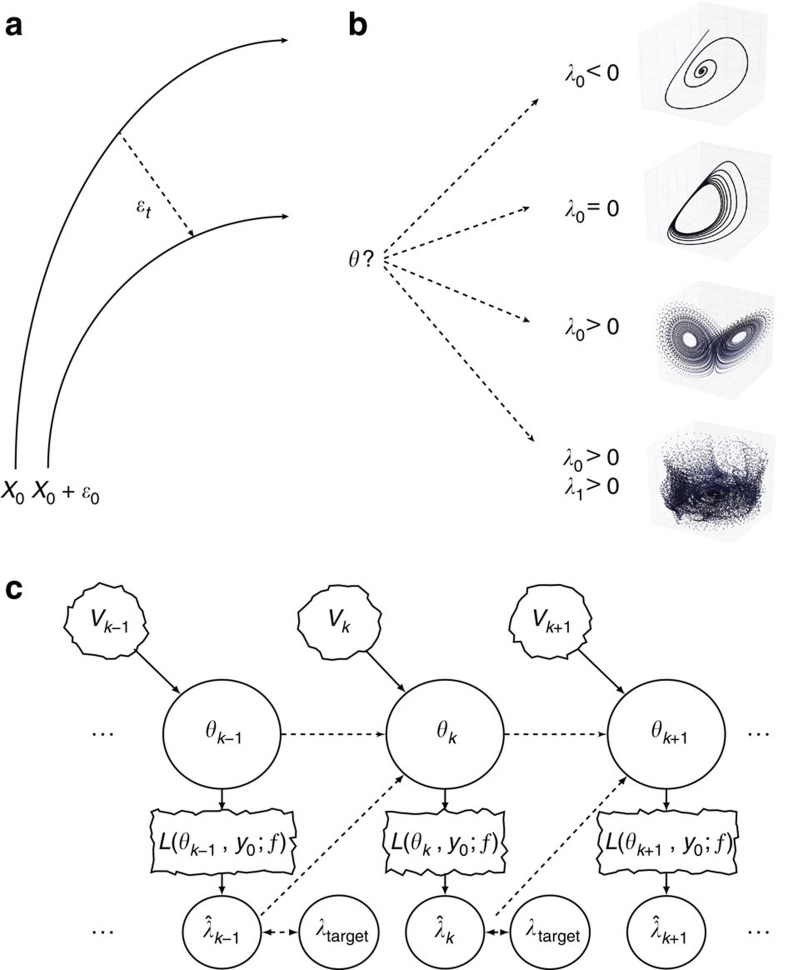
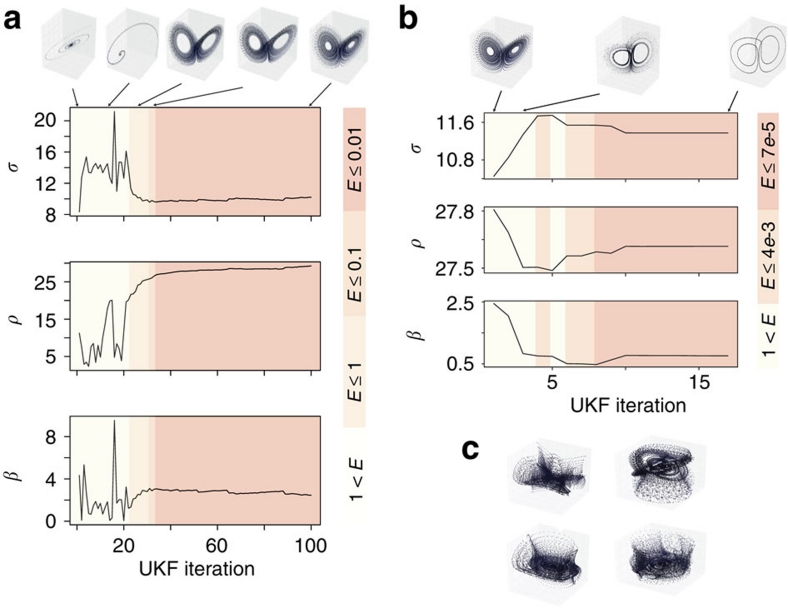
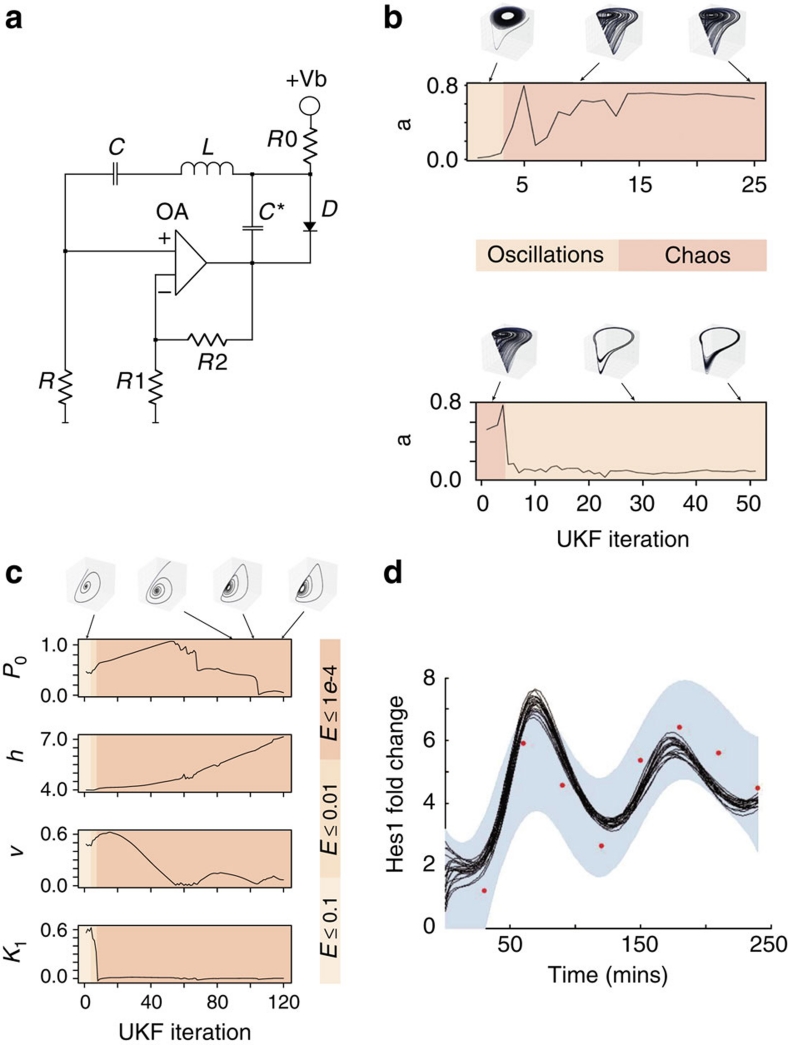
Chaos and oscillations continue to capture the interest of both the scientific and public domains. Yet despite the importance of these qualitative features, most attempts at constructing mathematical models of such phenomena have taken an indirect, quantitative approach, for example, by fitting models to a finite number of data points. Here we develop a qualitative inference framework that allows us to both reverse-engineer and design systems exhibiting these and other dynamical behaviours by directly specifying the desired characteristics of the underlying dynamical attractor. This change in perspective from quantitative to qualitative dynamics, provides fundamental and new insights into the properties of dynamical systems.
混沌和振荡继续引起科学界和公众的兴趣。然而,尽管这些定性特征很重要,但大多数构建此类现象的数学模型的尝试都采取了间接的定量方法,例如,通过将模型拟合到有限数量的数据点。在这里,我们开发了一个定性推理框架,通过直接指定基础动态吸引子的所需特性,允许我们对表现出这些和其他动态行为的系统进行反向工程和设计。这种从定量动态到定性动态的视角转变,为动态系统的特性提供了基本的和新的见解。