1Programmes de biologie moléculaire, Faculté de Médecine, Université deMontréal, Montréal, Québec, Canada.
BMC Cancer. 2011 Oct 12;11:443. doi: 10.1186/1471-2407-11-443.
Nck1 and Nck2 adaptor proteins are involved in signaling pathways mediating proliferation, cytoskeleton organization and integrated stress response. Overexpression of Nck1 in fibroblasts has been shown to be oncogenic. Through the years this concept has been challenged and the consensus is now that overexpression of either Nck cooperates with strong oncogenes to transform cells. Therefore, variations in Nck expression levels in transformed cells could endorse cancer progression.
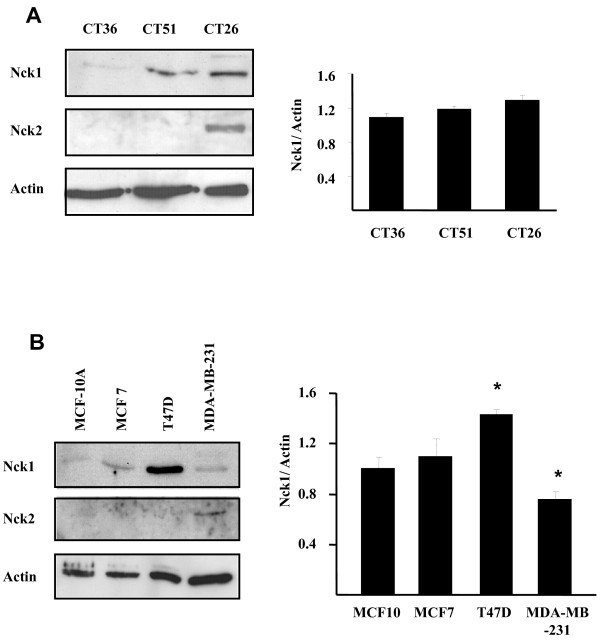
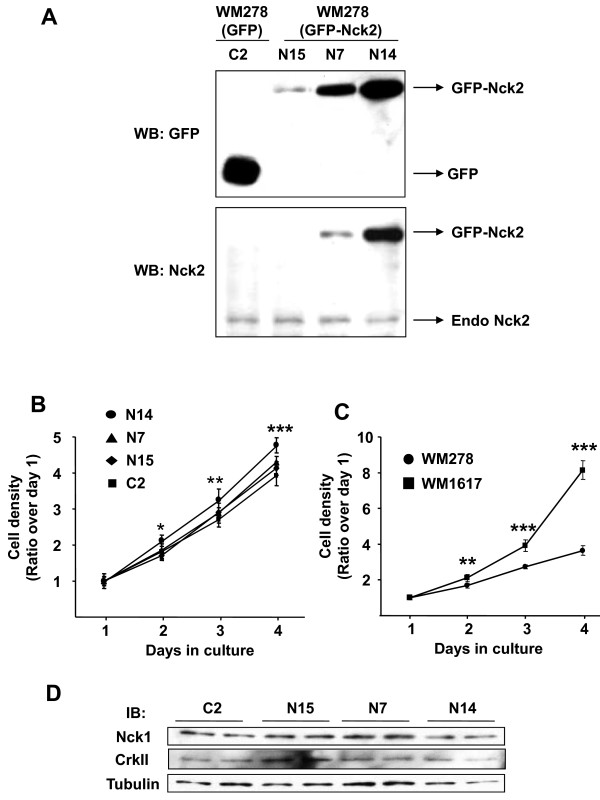
Expression of Nck1 and Nck2 proteins in various cancer cell lines at different stages of progression were analyzed by western blots. We created human primary melanoma cell lines overexpressing GFP-Nck2 and investigated their ability to proliferate along with metastatic characteristics such as migration and invasion. By western blot analysis, we compared levels of proteins phosphorylated on tyrosine as well as cadherins and integrins in human melanoma cells overexpressing or not Nck2. Finally, in mice we assessed tumor growth rate of human melanoma cells expressing increasing levels of Nck2.
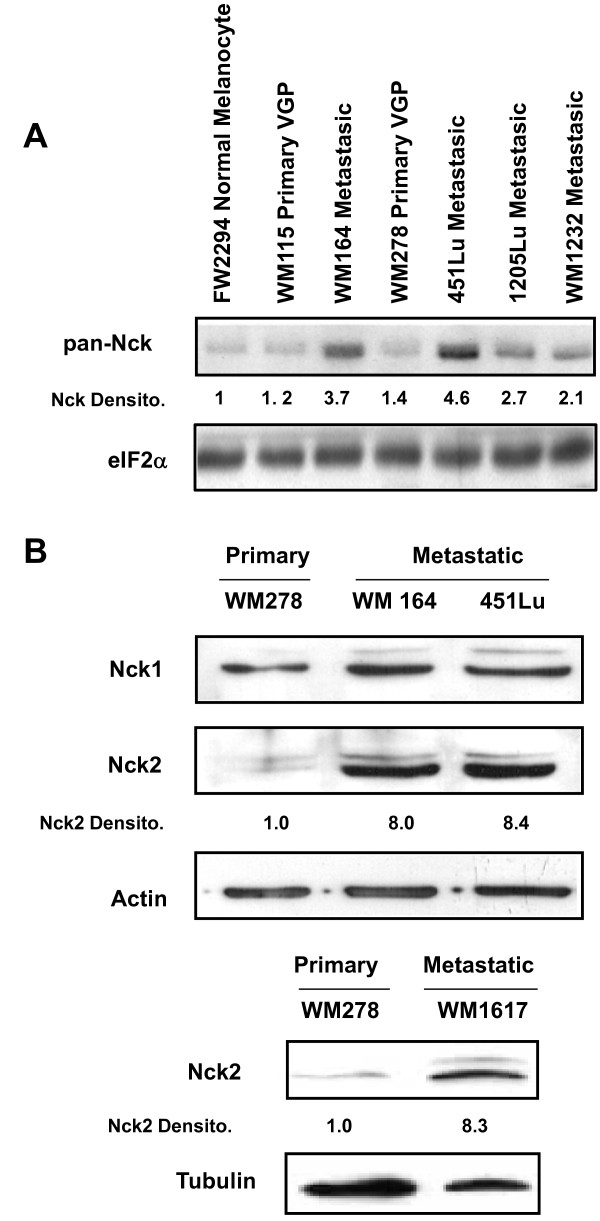
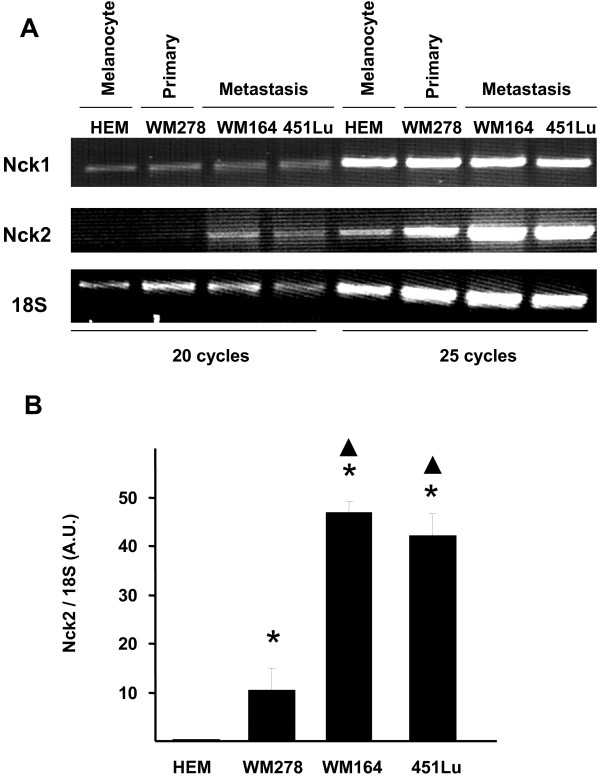
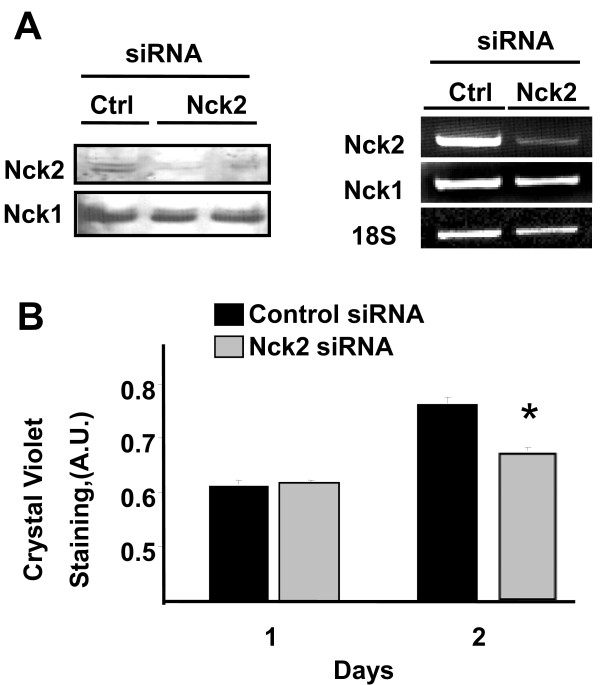
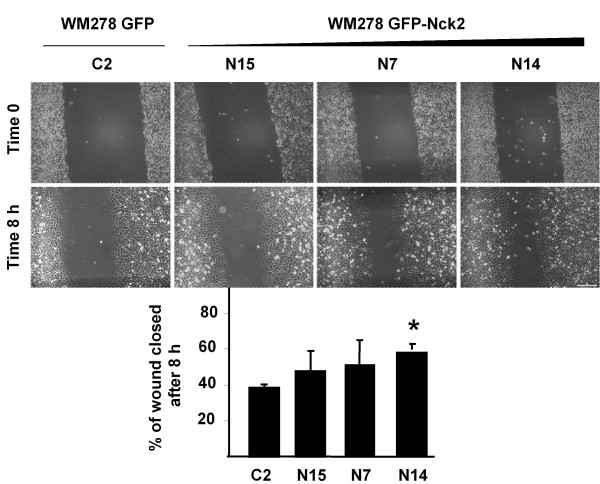
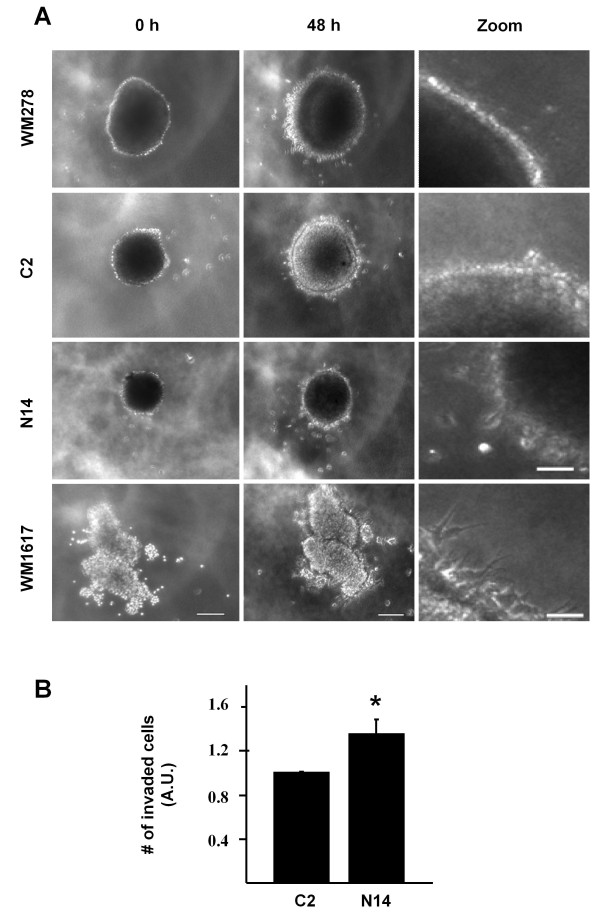
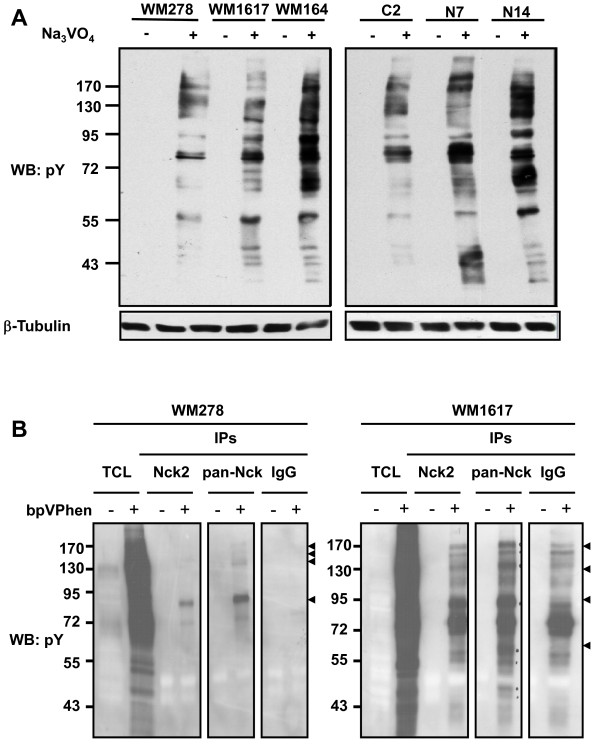
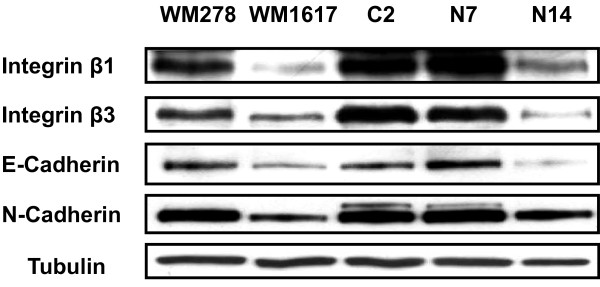
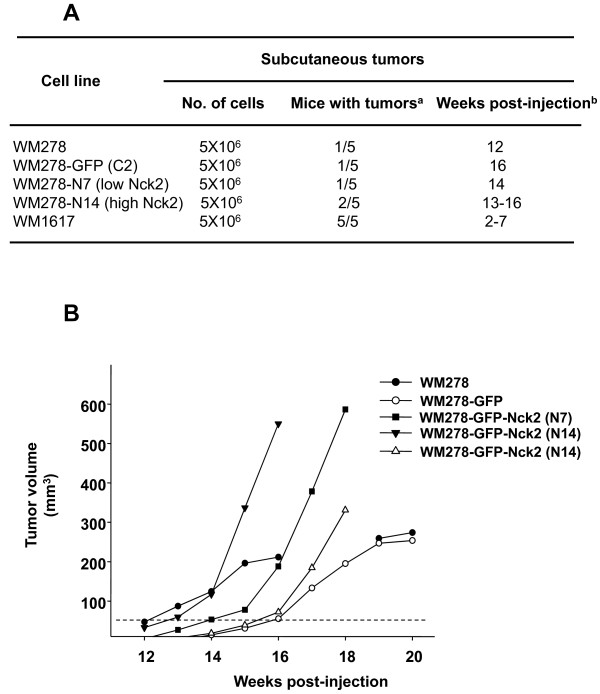
We found that expression of Nck2 is consistently increased in various metastatic cancer cell lines compared with primary counterparts. Particularly, we observed significant higher levels of Nck2 protein and mRNA, as opposed to no change in Nck1, in human metastatic melanoma cell lines compared with non-metastatic melanoma and normal melanocytes. We demonstrated the involvement of Nck2 in proliferation, migration and invasion in human melanoma cells. Moreover, we discovered that Nck2 overexpression in human primary melanoma cells correlates with higher levels of proteins phosphorylated on tyrosine residues, assembly of Nck2-dependent pY-proteins-containing molecular complexes and downregulation of cadherins and integrins. Importantly, we uncovered that injection of Nck2-overexpressing human primary melanoma cells into mice increases melanoma-derived tumor growth rate.
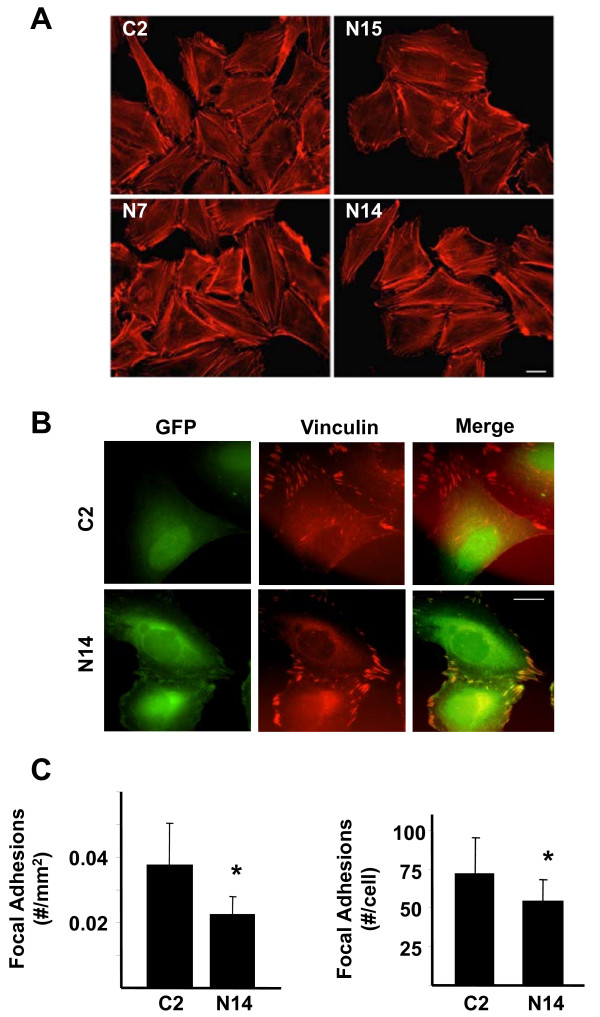
Collectively, our data indicate that Nck2 effectively influences human melanoma phenotype progression. At the molecular level, we propose that Nck2 in human primary melanoma promotes the formation of molecular complexes regulating proliferation and actin cytoskeleton dynamics by modulating kinases or phosphatases activities that results in increased levels of proteins phosphorylated on tyrosine residues. This study provides new insights regarding cancer progression that could impact on the therapeutic strategies targeting cancer.
Nck1 和 Nck2 衔接蛋白参与介导增殖、细胞骨架组织和整合应激反应的信号通路。已有研究表明,成纤维细胞中 Nck1 的过表达具有致癌性。多年来,这一概念一直受到挑战,现在的共识是,Nck 的过表达与强致癌基因合作转化细胞。因此,转化细胞中 Nck 表达水平的变化可能会促进癌症的进展。
通过 Western blot 分析不同进展阶段的各种癌细胞系中 Nck1 和 Nck2 蛋白的表达。我们构建了过表达 GFP-Nck2 的人原发性黑素瘤细胞系,并研究了它们的增殖能力以及迁移和侵袭等转移特征。通过 Western blot 分析,我们比较了过表达或不表达 Nck2 的人黑素瘤细胞中酪氨酸磷酸化蛋白以及钙粘蛋白和整合素的水平。最后,在小鼠中,我们评估了表达不同水平 Nck2 的人黑素瘤细胞的肿瘤生长速度。
我们发现,与相应的原发性细胞相比,Nck2 在各种转移性癌细胞系中的表达始终增加。特别是,与非转移性黑素瘤和正常黑素细胞相比,我们观察到人类转移性黑素瘤细胞系中 Nck2 蛋白和 mRNA 的水平显著升高,而 Nck1 则没有变化。我们证明了 Nck2 参与了人黑素瘤细胞的增殖、迁移和侵袭。此外,我们发现人原发性黑素瘤细胞中 Nck2 的过表达与酪氨酸残基磷酸化蛋白、Nck2 依赖性 pY 蛋白包含的分子复合物的组装以及钙粘蛋白和整合素的下调相关。重要的是,我们发现向小鼠注射过表达 Nck2 的人原发性黑素瘤细胞会增加黑素瘤来源的肿瘤生长速度。
总的来说,我们的数据表明 Nck2 有效地影响了人黑素瘤表型的进展。在分子水平上,我们提出 Nck2 在人原发性黑素瘤中通过调节激酶或磷酸酶的活性来促进调节增殖和肌动蛋白细胞骨架动力学的分子复合物的形成,从而导致酪氨酸残基磷酸化蛋白水平的增加。这项研究为癌症进展提供了新的见解,可能会影响针对癌症的治疗策略。