Department of Biochemistry and Molecular Pharmacology, University of Massachusetts Medical School, Worcester, Massachusetts 01605, USA.
Department of Pediatrics, University of Rochester, Rochester, NY 14627, USA.
Viruses. 2010 Nov;2(11):2509-2535. doi: 10.3390/v2112509. Epub 2010 Nov 12.
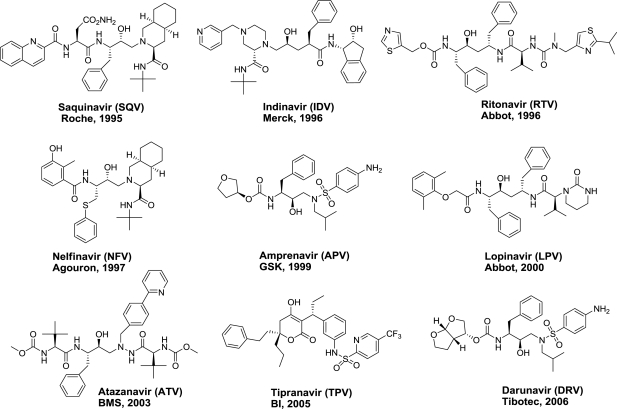
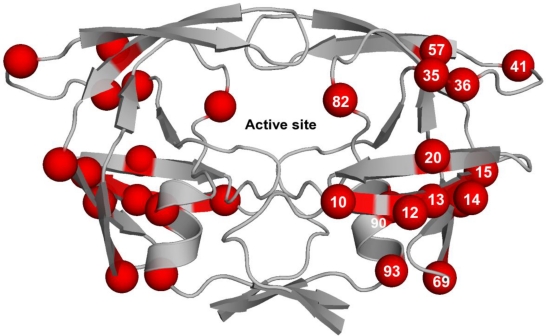
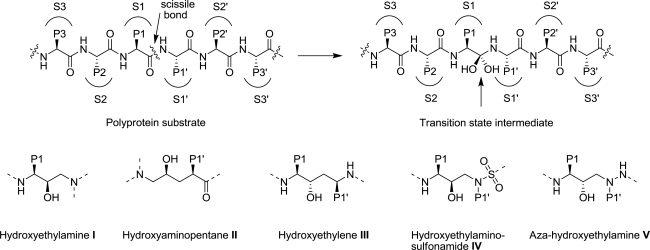
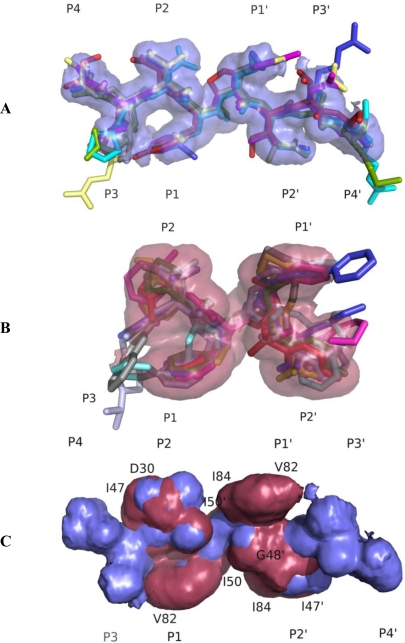
HIV-1 protease is one of the major antiviral targets in the treatment of patients infected with HIV-1. The nine FDA approved HIV-1 protease inhibitors were developed with extensive use of structure-based drug design, thus the atomic details of how the inhibitors bind are well characterized. From this structural understanding the molecular basis for drug resistance in HIV-1 protease can be elucidated. Selected mutations in response to therapy and diversity between clades in HIV-1 protease have altered the shape of the active site, potentially altered the dynamics and even altered the sequence of the cleavage sites in the Gag polyprotein. All of these interdependent changes act in synergy to confer drug resistance while simultaneously maintaining the fitness of the virus. New strategies, such as incorporation of the substrate envelope constraint to design robust inhibitors that incorporate details of HIV-1 protease's function and decrease the probability of drug resistance, are necessary to continue to effectively target this key protein in HIV-1 life cycle.
HIV-1 蛋白酶是治疗 HIV-1 感染患者的主要抗病毒靶标之一。九种获得 FDA 批准的 HIV-1 蛋白酶抑制剂的开发都广泛应用了基于结构的药物设计,因此抑制剂结合的原子细节得到了很好的描述。从这种结构理解中,可以阐明 HIV-1 蛋白酶中药物耐药性的分子基础。针对治疗的选择突变以及 HIV-1 蛋白酶中不同群之间的多样性改变了活性位点的形状,可能改变了动力学,甚至改变了 Gag 多蛋白中切割位点的序列。所有这些相互依存的变化协同作用,赋予了耐药性,同时保持了病毒的适应性。需要新的策略,例如将底物包膜约束纳入设计中,以设计出稳健的抑制剂,这些抑制剂包含了 HIV-1 蛋白酶功能的细节,并降低了药物耐药性的可能性,从而继续有效地针对 HIV-1 生命周期中的这个关键蛋白。