Department of Medicine, Radboud University Nijmegen Medical Centre, Nijmegen, The Netherlands.
PLoS One. 2011;6(10):e25998. doi: 10.1371/journal.pone.0025998. Epub 2011 Oct 5.
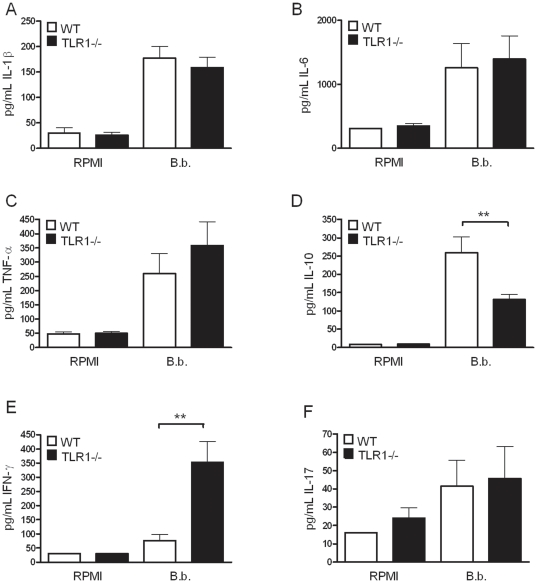
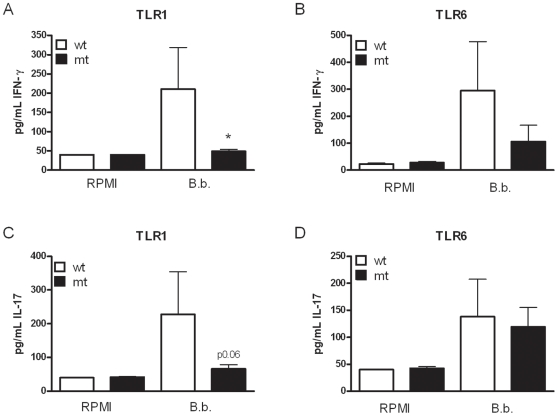
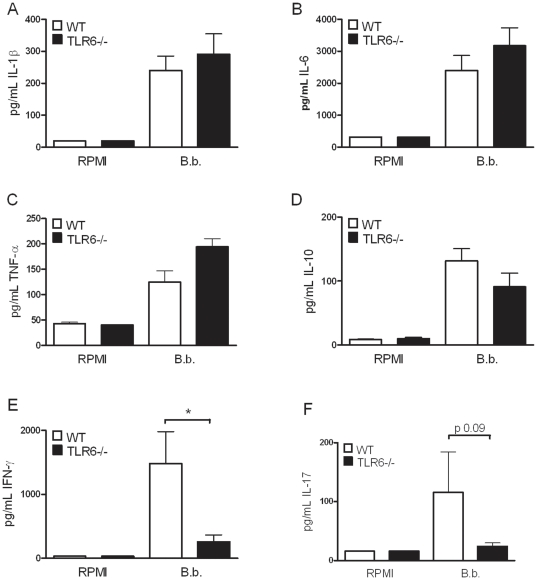
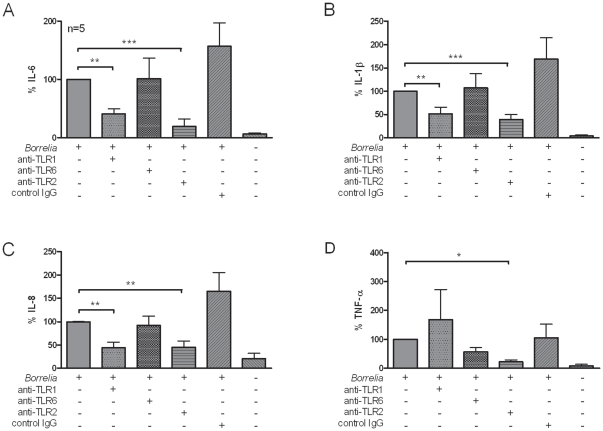
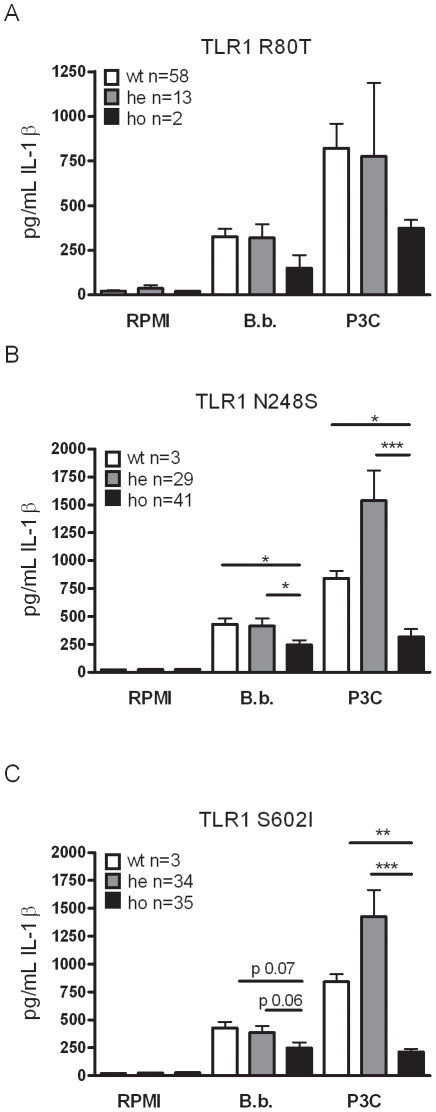
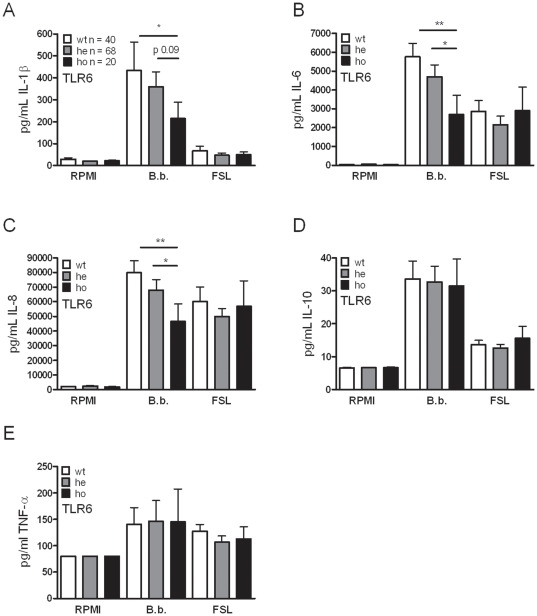
After infection with Borrelia species, the risk for developing Lyme disease varies significantly between individuals. Recognition of Borrelia by the immune system is mediated by pattern recognition receptors (PRRs), such as TLRs. While TLR2 is the main recognition receptor for Borrelia spp., little is known about the role of TLR1 and TLR6, which both can form functionally active heterodimers with TLR2. Here we investigated the recognition of Borrelia by both murine and human TLR1 and TLR6. Peritoneal macrophages from TLR1- and TLR6- gene deficient mice were isolated and exposed to Borrelia. Human PBMCs were stimulated with Borrelia with or without specific TLR1 and TLR6 blocking using specific antibodies. Finally, the functional consequences of TLR polymorphisms on Borrelia-induced cytokine production were assessed. Splenocytes isolated from both TLR1-/- and TLR6-/- mice displayed a distorted Th1/Th2 cytokine balance after stimulation with B.burgdorferi, while no differences in pro-inflammatory cytokine production were observed. In contrast, blockade of TLR1 with specific neutralizing antibodies led to decreased cytokine production by human PBMCs after exposure to B.burgdorferi. Blockade of human TLR6 did not lead to suppression of cytokine production. When PBMCs from healthy individuals bearing polymorphisms in TLR1 were exposed to B.burgdorferi, a remarkably decreased in vitro cytokine production was observed in comparison to wild-type controls. TLR6 polymorphisms lead to a minor modified cytokine production. This study indicates a dominant role for TLR1/TLR2 heterodimers in the induction of the early inflammatory response by Borrelia spirochetes in humans.
感染伯氏疏螺旋体后,个体患莱姆病的风险差异很大。免疫系统对伯氏疏螺旋体的识别是由模式识别受体(PRRs)介导的,如 TLRs。虽然 TLR2 是伯氏疏螺旋体的主要识别受体,但 TLR1 和 TLR6 的作用知之甚少,它们都可以与 TLR2 形成功能活跃的异二聚体。在这里,我们研究了 TLR1 和 TLR6 对伯氏疏螺旋体的识别。从 TLR1 和 TLR6 基因缺失的小鼠中分离出腹腔巨噬细胞,并暴露于伯氏疏螺旋体中。用伯氏疏螺旋体刺激人 PBMCs,同时使用特异性 TLR1 和 TLR6 阻断抗体进行特异性阻断。最后,评估 TLR 多态性对伯氏疏螺旋体诱导细胞因子产生的功能后果。用 B.burgdorferi 刺激 TLR1-/-和 TLR6-/-小鼠的脾细胞后,显示出扭曲的 Th1/Th2 细胞因子平衡,而未观察到促炎细胞因子产生的差异。相比之下,用特异性中和抗体阻断 TLR1 会导致人 PBMCs 暴露于 B.burgdorferi 后细胞因子产生减少。阻断人 TLR6 不会导致细胞因子产生受到抑制。当来自携带 TLR1 多态性的健康个体的 PBMCs 暴露于 B.burgdorferi 时,与野生型对照相比,体外细胞因子产生明显减少。TLR6 多态性导致细胞因子产生的轻微改变。这项研究表明 TLR1/TLR2 异二聚体在伯氏疏螺旋体诱导人类早期炎症反应中起主导作用。