• 文献检索
  • 文档翻译
  • 深度研究
  • 学术资讯
  • Suppr Zotero 插件Zotero 插件
  • 邀请有礼
  • 套餐&价格
  • 历史记录
应用&插件
Suppr Zotero 插件Zotero 插件浏览器插件Mac 客户端Windows 客户端微信小程序
定价
高级版会员购买积分包购买API积分包
服务
文献检索文档翻译深度研究API 文档MCP 服务
关于我们
关于 Suppr公司介绍联系我们用户协议隐私条款
关注我们

Suppr 超能文献

核心技术专利:CN118964589B侵权必究
粤ICP备2023148730 号-1Suppr @ 2026

文献检索

告别复杂PubMed语法,用中文像聊天一样搜索,搜遍4000万医学文献。AI智能推荐,让科研检索更轻松。

立即免费搜索

文件翻译

保留排版,准确专业,支持PDF/Word/PPT等文件格式,支持 12+语言互译。

免费翻译文档

深度研究

AI帮你快速写综述,25分钟生成高质量综述,智能提取关键信息,辅助科研写作。

立即免费体验

大鼠和小鼠的非肿瘤性鼻病变。

Nonneoplastic nasal lesions in rats and mice.

作者信息

Monticello T M, Morgan K T, Uraih L

机构信息

Chemical Industry Institute of Toxicology, Research Triangle Park, NC 27709.

出版信息

Environ Health Perspect. 1990 Apr;85:249-74. doi: 10.1289/ehp.85-1568333.

DOI:10.1289/ehp.85-1568333
PMID:2200665
原文链接:https://pmc.ncbi.nlm.nih.gov/articles/PMC1568333/
Abstract

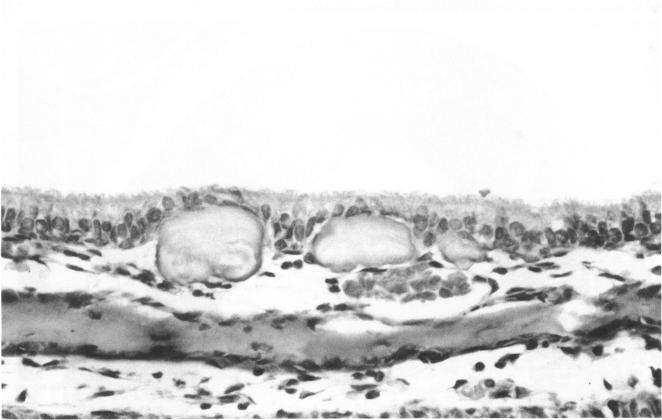
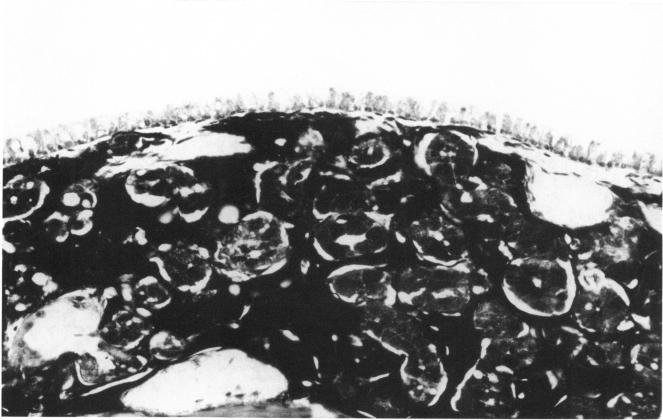
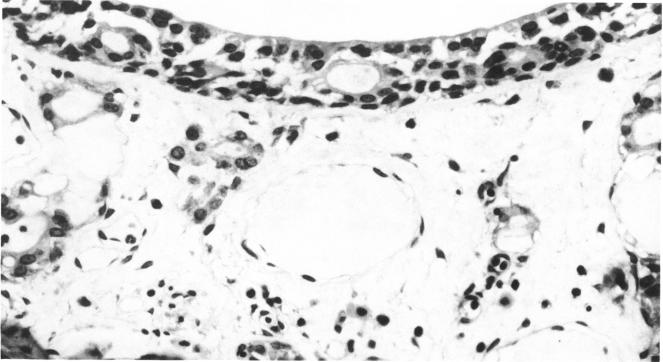
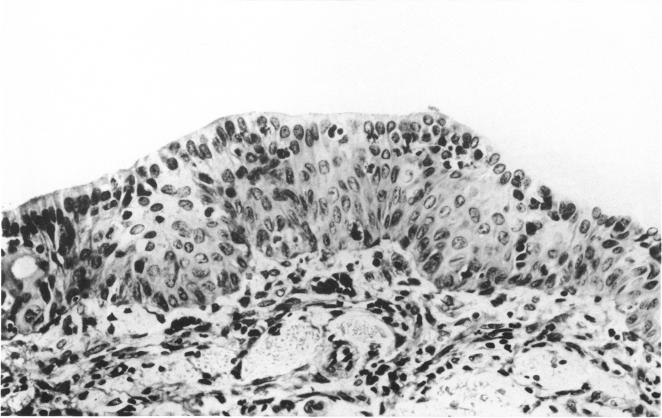
Rodents are commonly used for inhalation toxicology studies, but until recently the nasal passages have often been overlooked or only superficially examined. The rodent nose is a complex organ in which toxicant-induced lesions may vary, depending on the test compound. A working knowledge of rodent nasal anatomy and histology is essential for the proper evaluation of these responses. Lack of a systematic approach for examining rodent nasal tissue has led to a paucity of information regarding nonneoplastic lesions in the rodent nose. Therefore, slides from the National Toxicology Program (NTP) and the Chemical Industry Institute of Toxicology (CIIT) were examined, and the literature was reviewed to assemble the spectrum of nonneoplastic rodent nasal pathology. Presented are lesions associated with the various types of epithelia lining the rodent nasal cavity plus lesions involving accessory nasal structures. Even though there are anatomic and physiologic differences between the rodent and human nose, both rats and mice provide valuable animal models for the study of nasal epithelial toxicity, following administration of chemical compounds.

摘要

啮齿动物常用于吸入毒理学研究,但直到最近,鼻腔通常被忽视或仅进行了表面检查。啮齿动物的鼻子是一个复杂的器官,其中毒物诱导的损伤可能因受试化合物而异。掌握啮齿动物鼻腔解剖学和组织学的实用知识对于正确评估这些反应至关重要。缺乏检查啮齿动物鼻腔组织的系统方法导致有关啮齿动物鼻子非肿瘤性病变的信息匮乏。因此,对来自国家毒理学计划(NTP)和化学工业毒理学研究所(CIIT)的玻片进行了检查,并查阅了文献以汇总非肿瘤性啮齿动物鼻腔病理学的范围。本文介绍了与啮齿动物鼻腔内衬的各种上皮类型相关的病变以及涉及鼻腔附属结构的病变。尽管啮齿动物和人类的鼻子在解剖学和生理学上存在差异,但在给予化合物后,大鼠和小鼠都是研究鼻上皮毒性的有价值的动物模型。
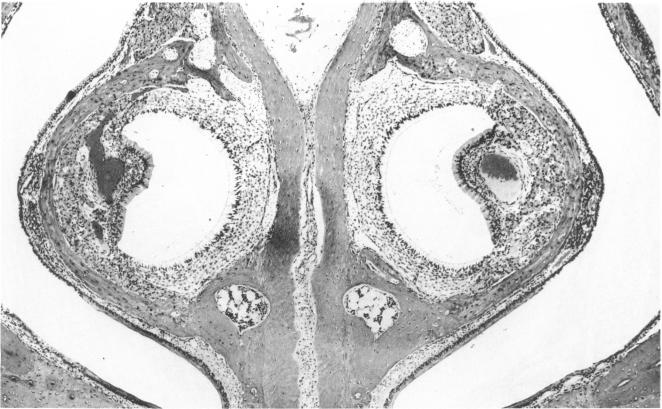
https://cdn.ncbi.nlm.nih.gov/pmc/blobs/5ebc/1568333/c3b6f36b9cad/envhper00418-0265-b.jpg
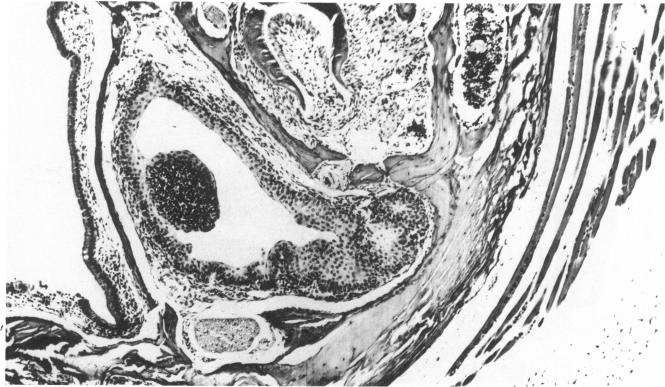
https://cdn.ncbi.nlm.nih.gov/pmc/blobs/5ebc/1568333/d79765962154/envhper00418-0247-a.jpg
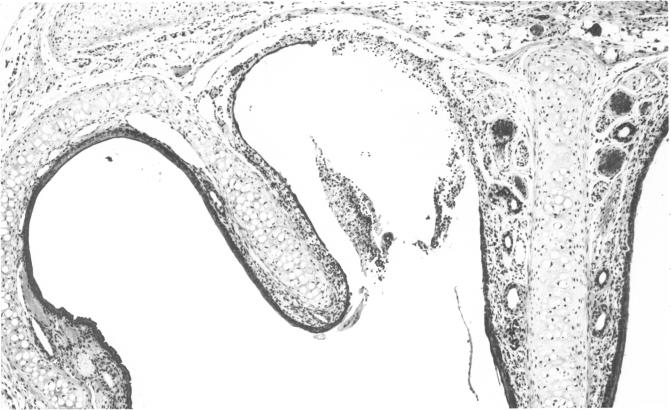
https://cdn.ncbi.nlm.nih.gov/pmc/blobs/5ebc/1568333/c6f2c294759e/envhper00418-0247-b.jpg
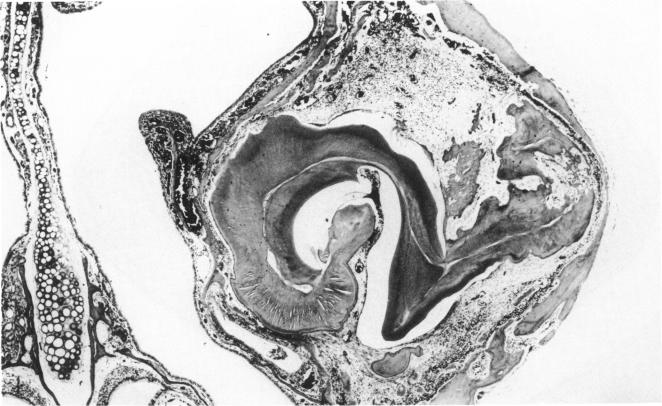
https://cdn.ncbi.nlm.nih.gov/pmc/blobs/5ebc/1568333/6769ea1e3123/envhper00418-0248-a.jpg
https://cdn.ncbi.nlm.nih.gov/pmc/blobs/5ebc/1568333/9c2fee6756e6/envhper00418-0248-b.jpg
https://cdn.ncbi.nlm.nih.gov/pmc/blobs/5ebc/1568333/f491ebef8c64/envhper00418-0249-a.jpg
https://cdn.ncbi.nlm.nih.gov/pmc/blobs/5ebc/1568333/53b3ed8a3a17/envhper00418-0249-b.jpg
https://cdn.ncbi.nlm.nih.gov/pmc/blobs/5ebc/1568333/66e3608c06e4/envhper00418-0250-a.jpg
https://cdn.ncbi.nlm.nih.gov/pmc/blobs/5ebc/1568333/4759d6da0ff1/envhper00418-0250-b.jpg
https://cdn.ncbi.nlm.nih.gov/pmc/blobs/5ebc/1568333/144d7c89f1c3/envhper00418-0251-a.jpg
https://cdn.ncbi.nlm.nih.gov/pmc/blobs/5ebc/1568333/128668a68888/envhper00418-0251-b.jpg
https://cdn.ncbi.nlm.nih.gov/pmc/blobs/5ebc/1568333/eeec896290bc/envhper00418-0252-a.jpg
https://cdn.ncbi.nlm.nih.gov/pmc/blobs/5ebc/1568333/3af1c4dd2db1/envhper00418-0252-b.jpg
https://cdn.ncbi.nlm.nih.gov/pmc/blobs/5ebc/1568333/ad351fffca48/envhper00418-0253-a.jpg
https://cdn.ncbi.nlm.nih.gov/pmc/blobs/5ebc/1568333/33f066c3a870/envhper00418-0253-b.jpg
https://cdn.ncbi.nlm.nih.gov/pmc/blobs/5ebc/1568333/7571c9524767/envhper00418-0254-a.jpg
https://cdn.ncbi.nlm.nih.gov/pmc/blobs/5ebc/1568333/c5dca269755a/envhper00418-0254-b.jpg
https://cdn.ncbi.nlm.nih.gov/pmc/blobs/5ebc/1568333/3e02d3793b57/envhper00418-0255-a.jpg
https://cdn.ncbi.nlm.nih.gov/pmc/blobs/5ebc/1568333/fe97ce94d7c0/envhper00418-0255-b.jpg
https://cdn.ncbi.nlm.nih.gov/pmc/blobs/5ebc/1568333/ece844aa78ed/envhper00418-0256-a.jpg
https://cdn.ncbi.nlm.nih.gov/pmc/blobs/5ebc/1568333/fbae34395e74/envhper00418-0256-b.jpg
https://cdn.ncbi.nlm.nih.gov/pmc/blobs/5ebc/1568333/6d6dc92207a2/envhper00418-0257-a.jpg
https://cdn.ncbi.nlm.nih.gov/pmc/blobs/5ebc/1568333/69747a7c67a0/envhper00418-0257-b.jpg
https://cdn.ncbi.nlm.nih.gov/pmc/blobs/5ebc/1568333/51c3757112bc/envhper00418-0258-a.jpg
https://cdn.ncbi.nlm.nih.gov/pmc/blobs/5ebc/1568333/3c24179ad94d/envhper00418-0258-b.jpg
https://cdn.ncbi.nlm.nih.gov/pmc/blobs/5ebc/1568333/a2bfd30b2b5f/envhper00418-0259-a.jpg
https://cdn.ncbi.nlm.nih.gov/pmc/blobs/5ebc/1568333/9824b65c823e/envhper00418-0259-b.jpg
https://cdn.ncbi.nlm.nih.gov/pmc/blobs/5ebc/1568333/bca4820e27ef/envhper00418-0260-a.jpg
https://cdn.ncbi.nlm.nih.gov/pmc/blobs/5ebc/1568333/c4025674fdc9/envhper00418-0260-b.jpg
https://cdn.ncbi.nlm.nih.gov/pmc/blobs/5ebc/1568333/41fb1923292f/envhper00418-0261-a.jpg
https://cdn.ncbi.nlm.nih.gov/pmc/blobs/5ebc/1568333/f10ed91e00ca/envhper00418-0261-b.jpg
https://cdn.ncbi.nlm.nih.gov/pmc/blobs/5ebc/1568333/658ace38411d/envhper00418-0262-a.jpg
https://cdn.ncbi.nlm.nih.gov/pmc/blobs/5ebc/1568333/bee4e8bdac9f/envhper00418-0262-b.jpg
https://cdn.ncbi.nlm.nih.gov/pmc/blobs/5ebc/1568333/f8c811d57235/envhper00418-0263-a.jpg
https://cdn.ncbi.nlm.nih.gov/pmc/blobs/5ebc/1568333/78f8961f1c11/envhper00418-0263-b.jpg
https://cdn.ncbi.nlm.nih.gov/pmc/blobs/5ebc/1568333/e45bd03410d9/envhper00418-0264-a.jpg
https://cdn.ncbi.nlm.nih.gov/pmc/blobs/5ebc/1568333/25942d92debb/envhper00418-0264-b.jpg
https://cdn.ncbi.nlm.nih.gov/pmc/blobs/5ebc/1568333/189df1483d5a/envhper00418-0265-a.jpg
https://cdn.ncbi.nlm.nih.gov/pmc/blobs/5ebc/1568333/c3b6f36b9cad/envhper00418-0265-b.jpg
https://cdn.ncbi.nlm.nih.gov/pmc/blobs/5ebc/1568333/d79765962154/envhper00418-0247-a.jpg
https://cdn.ncbi.nlm.nih.gov/pmc/blobs/5ebc/1568333/c6f2c294759e/envhper00418-0247-b.jpg
https://cdn.ncbi.nlm.nih.gov/pmc/blobs/5ebc/1568333/6769ea1e3123/envhper00418-0248-a.jpg
https://cdn.ncbi.nlm.nih.gov/pmc/blobs/5ebc/1568333/9c2fee6756e6/envhper00418-0248-b.jpg
https://cdn.ncbi.nlm.nih.gov/pmc/blobs/5ebc/1568333/f491ebef8c64/envhper00418-0249-a.jpg
https://cdn.ncbi.nlm.nih.gov/pmc/blobs/5ebc/1568333/53b3ed8a3a17/envhper00418-0249-b.jpg
https://cdn.ncbi.nlm.nih.gov/pmc/blobs/5ebc/1568333/66e3608c06e4/envhper00418-0250-a.jpg
https://cdn.ncbi.nlm.nih.gov/pmc/blobs/5ebc/1568333/4759d6da0ff1/envhper00418-0250-b.jpg
https://cdn.ncbi.nlm.nih.gov/pmc/blobs/5ebc/1568333/144d7c89f1c3/envhper00418-0251-a.jpg
https://cdn.ncbi.nlm.nih.gov/pmc/blobs/5ebc/1568333/128668a68888/envhper00418-0251-b.jpg
https://cdn.ncbi.nlm.nih.gov/pmc/blobs/5ebc/1568333/eeec896290bc/envhper00418-0252-a.jpg
https://cdn.ncbi.nlm.nih.gov/pmc/blobs/5ebc/1568333/3af1c4dd2db1/envhper00418-0252-b.jpg
https://cdn.ncbi.nlm.nih.gov/pmc/blobs/5ebc/1568333/ad351fffca48/envhper00418-0253-a.jpg
https://cdn.ncbi.nlm.nih.gov/pmc/blobs/5ebc/1568333/33f066c3a870/envhper00418-0253-b.jpg
https://cdn.ncbi.nlm.nih.gov/pmc/blobs/5ebc/1568333/7571c9524767/envhper00418-0254-a.jpg
https://cdn.ncbi.nlm.nih.gov/pmc/blobs/5ebc/1568333/c5dca269755a/envhper00418-0254-b.jpg
https://cdn.ncbi.nlm.nih.gov/pmc/blobs/5ebc/1568333/3e02d3793b57/envhper00418-0255-a.jpg
https://cdn.ncbi.nlm.nih.gov/pmc/blobs/5ebc/1568333/fe97ce94d7c0/envhper00418-0255-b.jpg
https://cdn.ncbi.nlm.nih.gov/pmc/blobs/5ebc/1568333/ece844aa78ed/envhper00418-0256-a.jpg
https://cdn.ncbi.nlm.nih.gov/pmc/blobs/5ebc/1568333/fbae34395e74/envhper00418-0256-b.jpg
https://cdn.ncbi.nlm.nih.gov/pmc/blobs/5ebc/1568333/6d6dc92207a2/envhper00418-0257-a.jpg
https://cdn.ncbi.nlm.nih.gov/pmc/blobs/5ebc/1568333/69747a7c67a0/envhper00418-0257-b.jpg
https://cdn.ncbi.nlm.nih.gov/pmc/blobs/5ebc/1568333/51c3757112bc/envhper00418-0258-a.jpg
https://cdn.ncbi.nlm.nih.gov/pmc/blobs/5ebc/1568333/3c24179ad94d/envhper00418-0258-b.jpg
https://cdn.ncbi.nlm.nih.gov/pmc/blobs/5ebc/1568333/a2bfd30b2b5f/envhper00418-0259-a.jpg
https://cdn.ncbi.nlm.nih.gov/pmc/blobs/5ebc/1568333/9824b65c823e/envhper00418-0259-b.jpg
https://cdn.ncbi.nlm.nih.gov/pmc/blobs/5ebc/1568333/bca4820e27ef/envhper00418-0260-a.jpg
https://cdn.ncbi.nlm.nih.gov/pmc/blobs/5ebc/1568333/c4025674fdc9/envhper00418-0260-b.jpg
https://cdn.ncbi.nlm.nih.gov/pmc/blobs/5ebc/1568333/41fb1923292f/envhper00418-0261-a.jpg
https://cdn.ncbi.nlm.nih.gov/pmc/blobs/5ebc/1568333/f10ed91e00ca/envhper00418-0261-b.jpg
https://cdn.ncbi.nlm.nih.gov/pmc/blobs/5ebc/1568333/658ace38411d/envhper00418-0262-a.jpg
https://cdn.ncbi.nlm.nih.gov/pmc/blobs/5ebc/1568333/bee4e8bdac9f/envhper00418-0262-b.jpg
https://cdn.ncbi.nlm.nih.gov/pmc/blobs/5ebc/1568333/f8c811d57235/envhper00418-0263-a.jpg
https://cdn.ncbi.nlm.nih.gov/pmc/blobs/5ebc/1568333/78f8961f1c11/envhper00418-0263-b.jpg
https://cdn.ncbi.nlm.nih.gov/pmc/blobs/5ebc/1568333/e45bd03410d9/envhper00418-0264-a.jpg
https://cdn.ncbi.nlm.nih.gov/pmc/blobs/5ebc/1568333/25942d92debb/envhper00418-0264-b.jpg
https://cdn.ncbi.nlm.nih.gov/pmc/blobs/5ebc/1568333/189df1483d5a/envhper00418-0265-a.jpg
https://cdn.ncbi.nlm.nih.gov/pmc/blobs/5ebc/1568333/c3b6f36b9cad/envhper00418-0265-b.jpg

相似文献

1
Nonneoplastic nasal lesions in rats and mice.大鼠和小鼠的非肿瘤性鼻病变。
Environ Health Perspect. 1990 Apr;85:249-74. doi: 10.1289/ehp.85-1568333.
2
The nose revisited: a brief review of the comparative structure, function, and toxicologic pathology of the nasal epithelium.重访鼻子:鼻腔上皮的比较结构、功能及毒理病理学简要综述
Toxicol Pathol. 2006;34(3):252-69. doi: 10.1080/01926230600713475.
3
Toxicology and carcinogenesis studies of diethylamine (CAS No. 109-89-7) in F344/N rats and B6C3F1 mice (inhalation studies).二乙胺(CAS编号:109 - 89 - 7)在F344/N大鼠和B6C3F1小鼠中的毒理学及致癌性研究(吸入研究)
Natl Toxicol Program Tech Rep Ser. 2011 Oct(566):1-174.
4
NTP Toxicology and Carcinogenesis Studies of Isobutyraldehyde (CAS No. 78-84-2) in F344/N Rats and B6C3F1 Mice (Inhalation Studies).NTP对F344/N大鼠和B6C3F1小鼠进行异丁醛(CAS编号:78-84-2)的毒理学和致癌性研究(吸入研究)
Natl Toxicol Program Tech Rep Ser. 1999 Feb;472:1-242.
5
Pathology Working Group review of selected upper respiratory tract lesions in rats and mice.病理学工作组对大鼠和小鼠特定上呼吸道病变的审查。
Environ Health Perspect. 1990 Apr;85:331-52. doi: 10.1289/ehp.85-1568315.
6
Comparative pathology of the nasal mucosa in laboratory animals exposed to inhaled irritants.暴露于吸入性刺激物的实验动物鼻黏膜的比较病理学
Environ Health Perspect. 1990 Apr;85:231-8. doi: 10.1289/ehp.85-1568334.
7
Toxicology and carcinogenesis studies of propargyl alcohol (CAS No. 107-19-7) in F344/N rats and B6C3F1 mice (inhalation studies).丙炔醇(CAS编号:107-19-7)在F344/N大鼠和B6C3F1小鼠中的毒理学和致癌性研究(吸入研究)
Natl Toxicol Program Tech Rep Ser. 2008 Sep(552):1-172.
8
Nonneoplastic changes in the olfactory epithelium--experimental studies.
Environ Health Perspect. 1990 Apr;85:275-89. doi: 10.1289/ehp.85-1568318.
9
Morphology of nasal lesions induced in Osborne-Mendel rats and B6C3F1 mice by chronic inhalation of allyl glycidyl ether.慢性吸入烯丙基缩水甘油醚诱导奥斯本-孟德尔大鼠和B6C3F1小鼠鼻腔病变的形态学
Toxicol Pathol. 1992;20(3 Pt 1):416-25. doi: 10.1177/019262339202000311.
10
NTP Toxicology and Carcinogenesis Studies of 1,2-Epoxybutane (CAS No. 106-88-7) in F344/N Rats and B6C3F1 Mice (Inhalation Studies).1,2-环氧丁烷(化学物质登记号:106-88-7)对F344/N大鼠和B6C3F1小鼠的毒理学及致癌性研究(吸入研究)
Natl Toxicol Program Tech Rep Ser. 1988 Mar;329:1-176.

引用本文的文献

1
Comparative toxicity study of three surface-modified titanium dioxide nanoparticles following subacute inhalation.三种表面改性二氧化钛纳米颗粒亚急性吸入后的比较毒性研究
Part Fibre Toxicol. 2025 Feb 24;22(1):5. doi: 10.1186/s12989-025-00620-1.
2
Histopathology of incidental non-neoplastic findings in transgenic CByB6F1-Tg(HRAS)2Jic mice used in toxicity studies.用于毒性研究的转基因CByB6F1-Tg(HRAS)2Jic小鼠中偶发性非肿瘤性病变的组织病理学
J Toxicol Pathol. 2025 Jan;38(1):93-111. doi: 10.1293/tox.2024-0037. Epub 2024 Nov 20.
3
Impact of whole-body versus nose-only inhalation exposure systems on systemic, respiratory, and cardiovascular endpoints in a 2-month cigarette smoke exposure study in the ApoE mouse model.

本文引用的文献

1
Morphology of nasal-cavity tumours in rats after chronic inhalation of 1,2-dibromo-3-chloropropane.大鼠长期吸入1,2-二溴-3-氯丙烷后鼻腔肿瘤的形态学
Br J Cancer. 1980 Nov;42(5):772-81. doi: 10.1038/bjc.1980.311.
2
Morphological and histochemical aspects of the nasal glands in the rat.大鼠鼻腺的形态学和组织化学特征
Anat Anz. 1981;149(1):51-63.
3
Respiratory tract tumours in hamsters exposed to acetaldehyde vapour alone or simultaneously to benzo(a)pyrene or diethylnitrosamine.单独暴露于乙醛蒸汽或同时暴露于苯并(a)芘或二乙基亚硝胺的仓鼠呼吸道肿瘤。
全身暴露与仅鼻腔暴露吸入系统对载脂蛋白 E 基因敲除小鼠 2 个月香烟烟雾暴露模型中系统性、呼吸和心血管终点的影响。
J Appl Toxicol. 2021 Oct;41(10):1598-1619. doi: 10.1002/jat.4149. Epub 2021 Apr 6.
4
Nonproliferative and Proliferative Lesions of the Ratand Mouse Special Sense Organs(Ocular [eye and glands], Olfactory and Otic).大鼠和小鼠特殊感觉器官(眼[眼睛和腺体]、嗅觉和听觉)的非增殖性和增殖性病变
J Toxicol Pathol. 2018;31(3 Suppl):97S-214S. doi: 10.1293/tox.31.97S. Epub 2018 Jul 28.
Eur J Cancer Clin Oncol. 1982 Jan;18(1):13-31. doi: 10.1016/0277-5379(82)90020-7.
4
Inhalation toxicity of acetaldehyde in rats. I. Acute and subacute studies.大鼠吸入乙醛的毒性。I. 急性和亚急性研究。
Toxicology. 1982;23(4):293-307. doi: 10.1016/0300-483x(82)90068-3.
5
Respiratory pathology in rats and mice after inhalation of 1,2-dibromo-3-chloropropane or 1,2 dibromoethane for 13 weeks.大鼠和小鼠吸入1,2 - 二溴 - 3 - 氯丙烷或1,2 - 二溴乙烷13周后的呼吸道病理学
Arch Toxicol. 1980 Dec;46(3-4):233-40. doi: 10.1007/BF00310439.
6
Carcinogenicity of formaldehyde in rats and mice after long-term inhalation exposure.长期吸入暴露后甲醛对大鼠和小鼠的致癌性。
Cancer Res. 1983 Sep;43(9):4382-92.
7
Ultrastructural characteristics of carcinogen-induced dysplastic changes in tracheal epithelium.致癌物诱导的气管上皮发育异常变化的超微结构特征
Am J Pathol. 1980 Jan;98(1):83-100.
8
Histopathologic examination of the rat nasal cavity.大鼠鼻腔的组织病理学检查。
Fundam Appl Toxicol. 1981 Jul-Aug;1(4):309-12. doi: 10.1016/s0272-0590(81)80037-1.
9
Respiratory tract lesions induced by sensory irritants at the RD50 concentration.在半数反应剂量(RD50)浓度下,由感觉刺激物引起的呼吸道损伤。
Toxicol Appl Pharmacol. 1984 Jul;74(3):417-29. doi: 10.1016/0041-008x(84)90295-3.
10
Surface topography and distribution of cell types in the rat nasal respiratory epithelium: scanning electron microscopic observations.大鼠鼻呼吸上皮细胞类型的表面形貌及分布:扫描电子显微镜观察
Am J Anat. 1984 Apr;169(4):425-36. doi: 10.1002/aja.1001690405.