Li Ko-Jen, Wu Cheng-Han, Hsieh Song-Chou, Lu Ming-Chi, Tsai Chang-Youh, Yu Chia-Li
Department of Internal Medicine, National Taiwan University Hospital and National Taiwan University College of Medicine, 7 Chung-Shan South Road, Taipei 100, Taiwan.
Clin Dev Immunol. 2012;2012:548516. doi: 10.1155/2012/548516. Epub 2011 Oct 11.
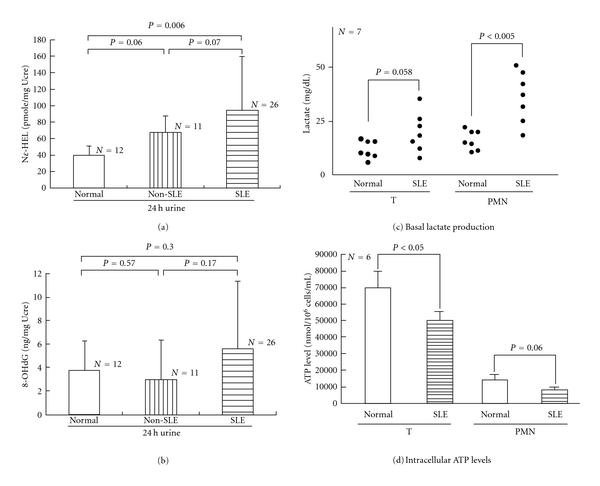
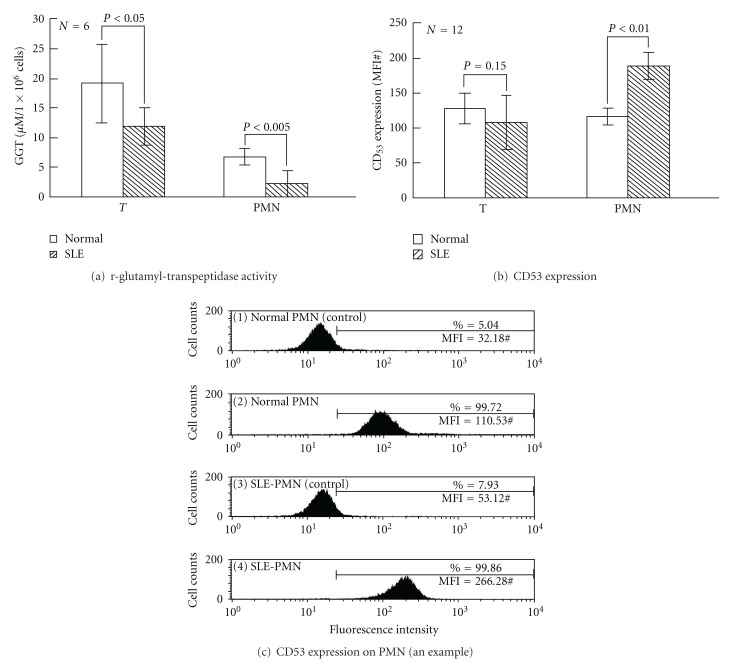
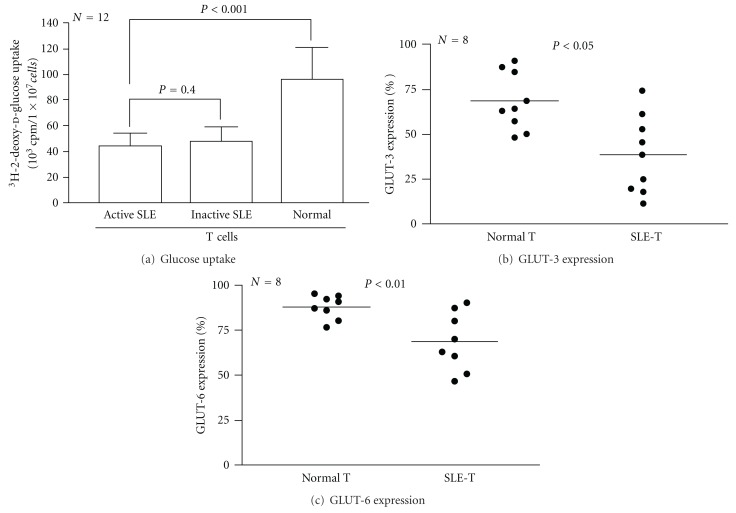
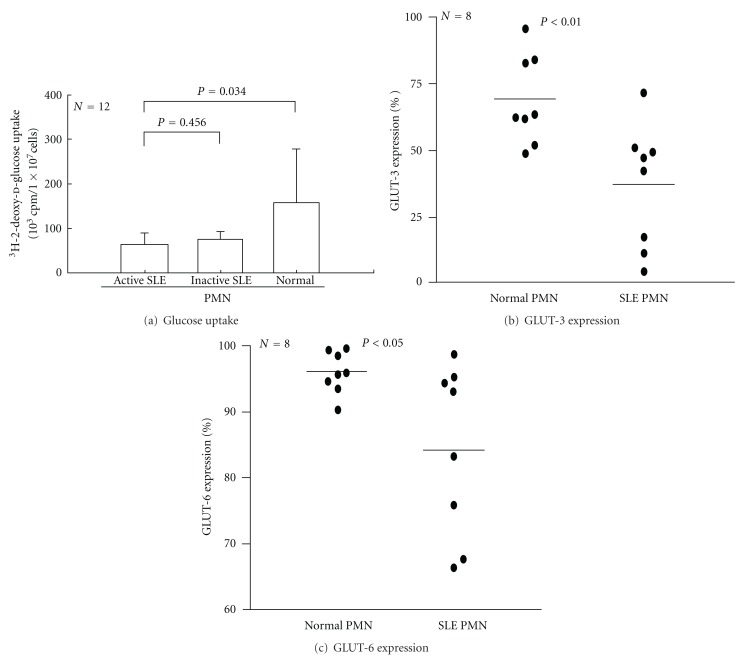
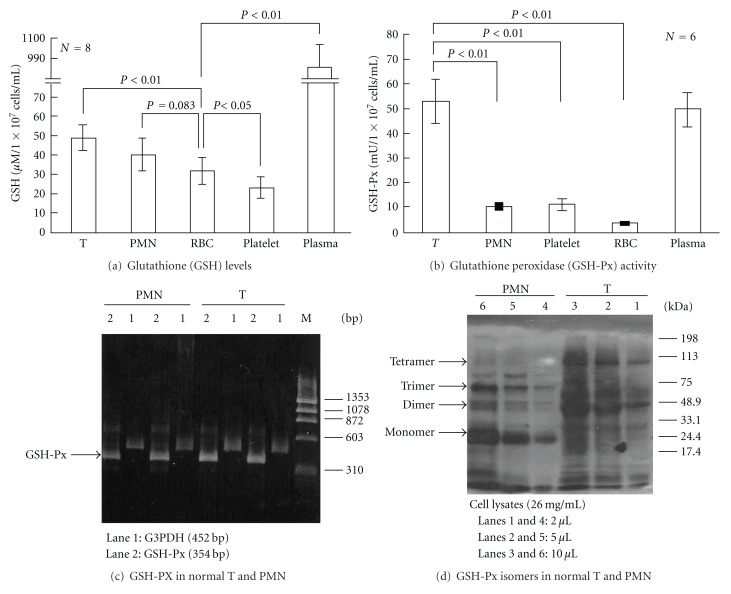
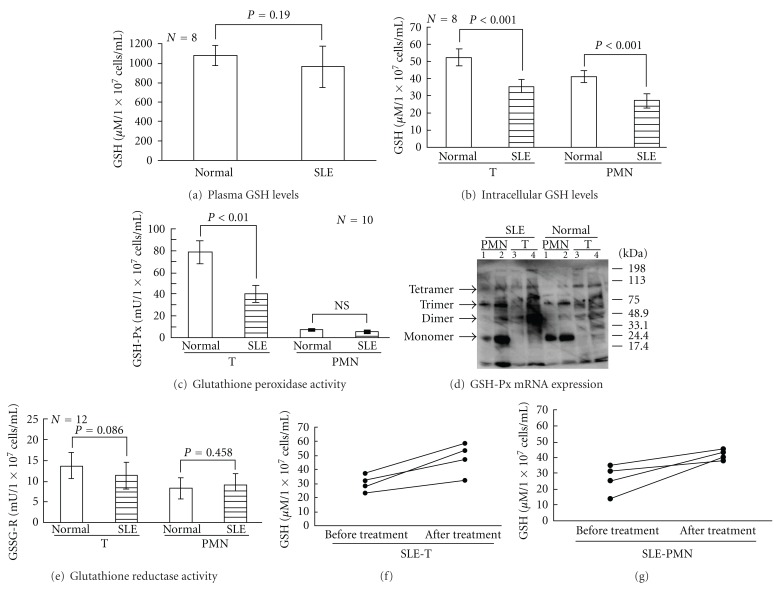
Urinary excretion of N-benzoyl-glycyl-Nε-(hexanonyl)lysine, a biomarker of oxidative stress, was higher in 26 patients with active systemic lupus erythematosus (SLE) than in 11 non-SLE patients with connective tissue diseases and in 14 healthy volunteers. We hypothesized that increased oxidative stress in active SLE might be attributable to deranged bioenergetics, defective reduction-oxidation (redox) capacity, or other factors. We demonstrated that, compared to normal cells, T lymphocytes (T) and polymorphonuclear neutrophils (PMN) of active SLE showed defective expression of facilitative glucose transporters GLUT-3 and GLUT-6, which led to increased intracellular basal lactate and decreased ATP production. In addition, the redox capacity, including intracellular GSH levels and the enzyme activity of glutathione peroxidase (GSH-Px) and γ-glutamyl-transpeptidase (GGT), was decreased in SLE-T. Compared to normal cells, SLE-PMN showed decreased intracellular GSH levels, and GGT enzyme activity was found in SLE-PMN and enhanced expression of CD53, a coprecipitating molecule for GGT. We conclude that deranged cellular bioenergetics and defective redox capacity in T and PMN are responsible for cellular immune dysfunction and are related to increased oxidative stress in active SLE patients.
氧化应激生物标志物N-苯甲酰甘氨酰-Nε-(己酰基)赖氨酸的尿排泄量,在26例活动性系统性红斑狼疮(SLE)患者中高于11例结缔组织病非SLE患者及14名健康志愿者。我们推测,活动性SLE中氧化应激增加可能归因于生物能量紊乱、还原-氧化(redox)能力缺陷或其他因素。我们证明,与正常细胞相比,活动性SLE的T淋巴细胞(T)和多形核中性粒细胞(PMN)表现出易化葡萄糖转运蛋白GLUT-3和GLUT-6表达缺陷,这导致细胞内基础乳酸增加和ATP生成减少。此外,SLE-T中的redox能力,包括细胞内谷胱甘肽(GSH)水平以及谷胱甘肽过氧化物酶(GSH-Px)和γ-谷氨酰转肽酶(GGT)的酶活性均降低。与正常细胞相比,SLE-PMN的细胞内GSH水平降低,且在SLE-PMN中发现GGT酶活性及GGT共沉淀分子CD53的表达增强。我们得出结论,T和PMN中细胞生物能量紊乱及redox能力缺陷是细胞免疫功能障碍的原因,且与活动性SLE患者氧化应激增加有关。