Shanghai Science and Technology Museum, Shanghai, People's Republic of China.
PLoS One. 2011;6(10):e25483. doi: 10.1371/journal.pone.0025483. Epub 2011 Oct 10.
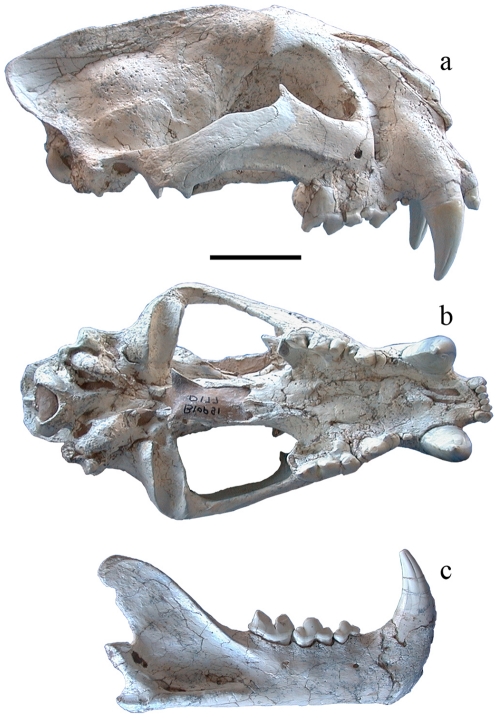
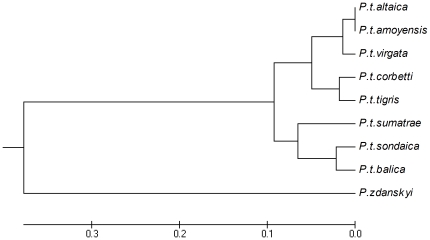
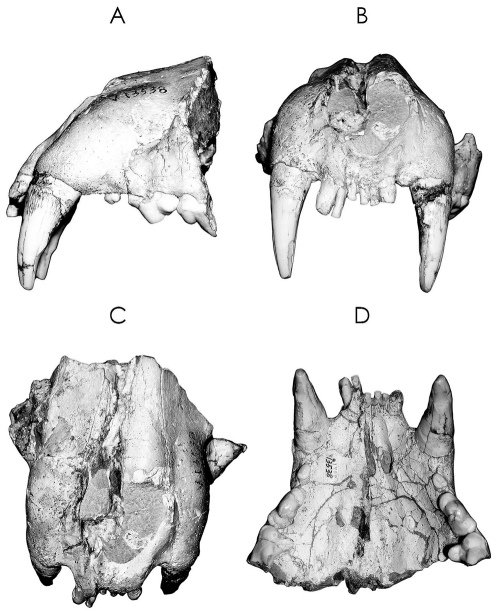
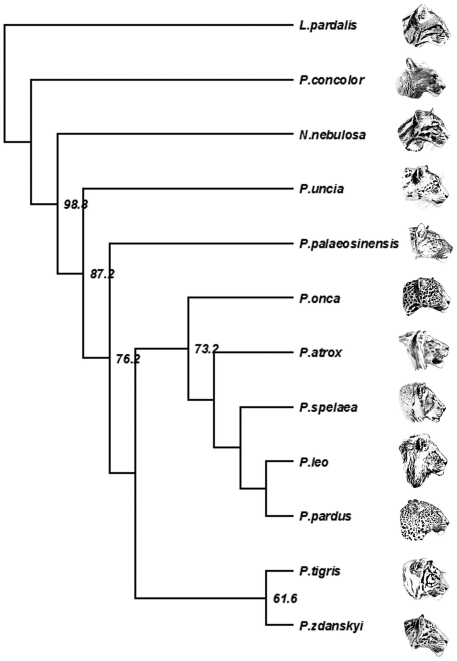
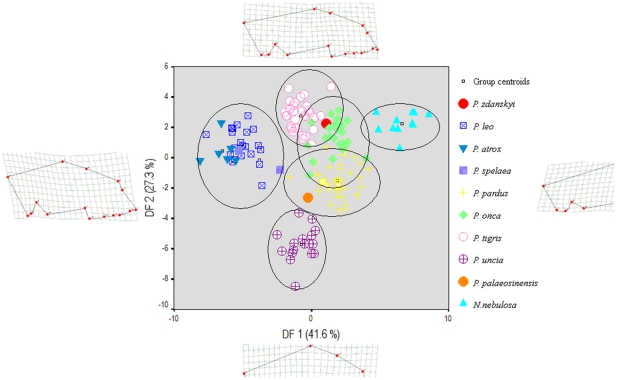
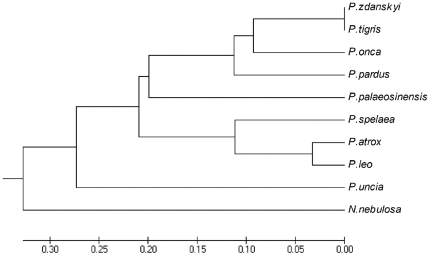
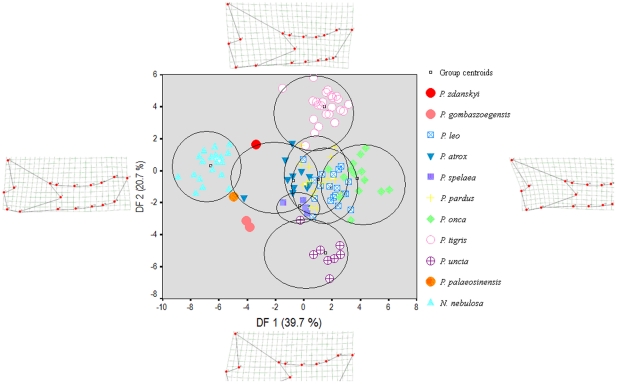
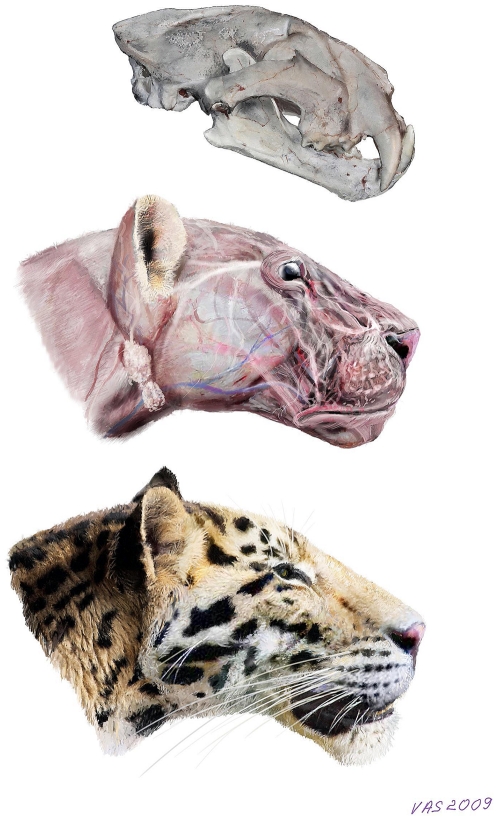
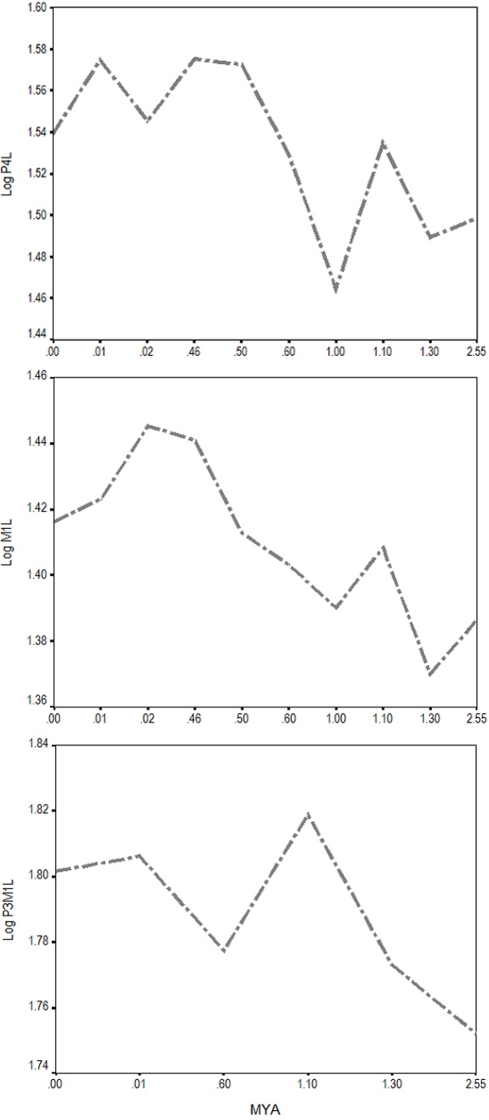
The tiger is one of the most iconic extant animals, and its origin and evolution have been intensely debated. Fossils attributable to extant pantherine species-lineages are less than 2 MYA and the earliest tiger fossils are from the Calabrian, Lower Pleistocene. Molecular studies predict a much younger age for the divergence of modern tiger subspecies at <100 KYA, although their cranial morphology is readily distinguishable, indicating that early Pleistocene tigers would likely have differed markedly anatomically from extant tigers. Such inferences are hampered by the fact that well-known fossil tiger material is middle to late Pleistocene in age. Here we describe a new species of pantherine cat from Longdan, Gansu Province, China, Panthera zdanskyi sp. nov. With an estimated age of 2.55-2.16 MYA it represents the oldest complete skull of a pantherine cat hitherto found. Although smaller, it appears morphologically to be surprisingly similar to modern tigers considering its age. Morphological, morphometric, and cladistic analyses are congruent in confirming its very close affinity to the tiger, and it may be regarded as the most primitive species of the tiger lineage, demonstrating the first unequivocal presence of a modern pantherine species-lineage in the basal stage of the Pleistocene (Gelasian; traditionally considered to be Late Pliocene). This find supports a north-central Chinese origin of the tiger lineage, and demonstrates that various parts of the cranium, mandible, and dentition evolved at different rates. An increase in size and a reduction in the relative size of parts of the dentition appear to have been prominent features of tiger evolution, whereas the distinctive cranial morphology of modern tigers was established very early in their evolutionary history. The evolutionary trend of increasing size in the tiger lineage is likely coupled to the evolution of its primary prey species.
老虎是现存最具标志性的动物之一,其起源和进化一直备受争议。可归因于现生豹属物种谱系的化石不到 200 万年,最早的老虎化石来自卡拉布里亚阶,更新世早期。分子研究预测,现代老虎亚种的分化年龄要年轻得多,<100 万年,尽管它们的头骨形态很容易区分,但这表明早更新世的老虎在解剖学上可能与现生老虎有很大的不同。这种推断受到一个事实的阻碍,即著名的化石老虎材料的年龄为中更新世到晚更新世。在这里,我们描述了来自中国甘肃省龙担的一种新的豹猫 Panthera zdanskyi sp. nov.,其年代估计为 2.55-2.16 万年,是迄今发现的最古老的完整豹猫头骨。尽管体型较小,但考虑到其年龄,它在形态上似乎与现代老虎惊人地相似。形态学、形态测量学和分支分析都一致证实了它与老虎非常密切的亲缘关系,它可以被视为虎谱系中最原始的物种,证明了现代豹属物种谱系在更新世(基拉利期;传统上被认为是上新世晚期)的基础阶段的首次明确存在。这一发现支持了虎谱系的中国中北部起源,并表明颅骨、下颌骨和牙齿的各个部分以不同的速度进化。大小的增加和牙齿部分相对大小的减少似乎是老虎进化的显著特征,而现代老虎独特的头骨形态在其进化历史的早期就已经确立。虎谱系中体型增大的进化趋势可能与它的主要猎物物种的进化有关。