Department of Biochemistry, Amala Cancer Research Centre, Amala Nagar, Thrissur 680 555, Kerala, India.
Indian J Pharmacol. 2011 Sep;43(5):526-31. doi: 10.4103/0253-7613.84961.
This study was aimed to evaluate the chemical composition, antioxidant potential in vitro and in vivo, anti-inflammatory, and antinociceptive activity of turmeric oil.
Chemical analysis of turmeric oil was done by gas chromatography/mass spectrometry. Antioxidant activities in vitro was done by six different methods and in vivo antioxidant activity was determined by measuring superoxide generation from macrophages treated with phorbol-12-myristate-13-acetate (PMA) as well as determining antioxidant level after feeding the oil orally for one month. Anti-inflammatory activity was studied in mice using carrageenan, dextran, and formalin. Antinociceptive activity was evaluated by using acetic acid-induced writhing movement in mice.
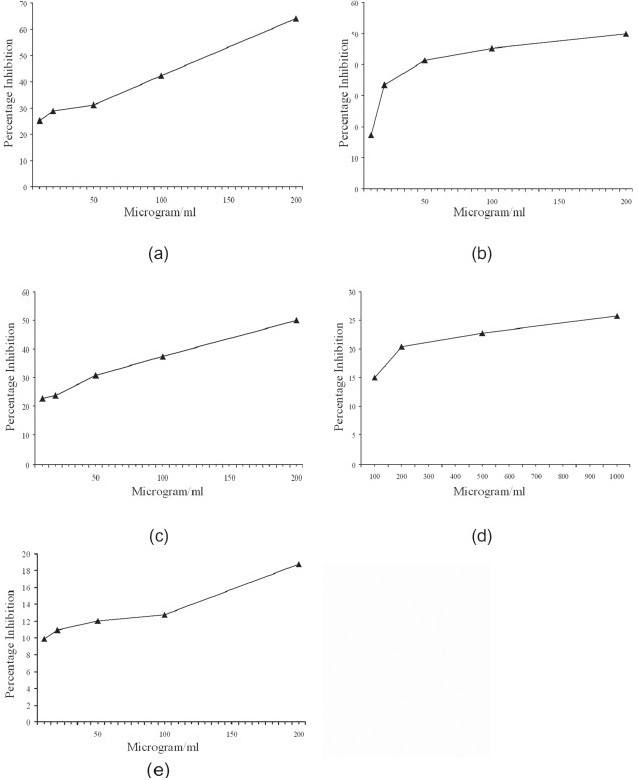
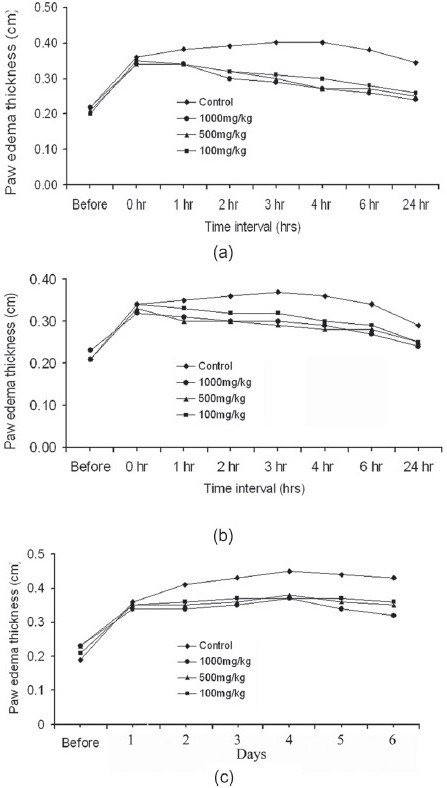
The main constituent of essential oil of turmeric was found to be ar-turmerone (61.79%), curlone (12.48%), and ar-curcumene (6.11%). Turmeric oil was found to have in vitro antioxidant activity and IC(50) for scavenging superoxides, hydroxyl radicals, and lipid peroxidation were 135 μg/ml, 200 μg/ml, and 400 μg/ml, respectively. The ferric-reducing activity for 50 μg of turmeric essential oil was found to be 5 mM. Intraperitoneal administration of oil was found to inhibit PMA-induced superoxide radicals elicited by macrophages. Oral administration of turmeric oil for one month to mice significantly increased superoxide dismutase, glutathione, and glutathione reductase enzyme levels in blood and glutathione-S-transferase and superoxide dismutase enzymes in liver. Turmeric oil showed significant reduction in paw thickness in carrageenan, dextran-induced acute inflammation, and formalin-induced chronic inflammation. The drug produced significant antinociceptive activity (P < 0.001) at all doses studied.
These results demonstrated that turmeric oil has potential health benefits as it can scavenge the free radicals and produce significant anti-inflammatory and antinociceptive activities.
本研究旨在评估姜黄油的化学成分、体外和体内抗氧化潜力、抗炎和镇痛活性。
通过气相色谱/质谱法对姜黄油进行化学分析。体外抗氧化活性通过六种不同方法进行,体内抗氧化活性通过测量佛波醇 12-肉豆蔻酸 13-乙酸酯(PMA)处理的巨噬细胞中超氧自由基的产生以及口服姜黄油一个月后测定抗氧化水平来确定。使用角叉菜胶、葡聚糖和甲醛研究姜黄油在小鼠中的抗炎活性。通过乙酸诱导的小鼠扭体运动评估镇痛活性。
发现姜黄油的主要成分是莪术酮(61.79%)、卷曲酮(12.48%)和姜黄烯(6.11%)。姜黄油具有体外抗氧化活性,清除超氧化物、羟基自由基和脂质过氧化的 IC50 分别为 135μg/ml、200μg/ml 和 400μg/ml。50μg 姜黄油的铁还原活性为 5mM。油的腹腔内给药可抑制 PMA 诱导的巨噬细胞产生的超氧自由基。姜黄油口服给药一个月可显著增加小鼠血液中超氧化物歧化酶、谷胱甘肽和谷胱甘肽还原酶的水平以及肝脏中谷胱甘肽-S-转移酶和超氧化物歧化酶的水平。姜黄油可显著减少角叉菜胶、葡聚糖诱导的急性炎症和甲醛诱导的慢性炎症引起的爪肿胀。该药物在所有研究剂量下均产生显著的镇痛活性(P<0.001)。
这些结果表明,姜黄油具有潜在的健康益处,因为它可以清除自由基并产生显著的抗炎和镇痛活性。