Kvint Svetlana, Bassiri Brian, Pruski April, Nia John, Nemet Israel, Lopresti Melissa, Perfetti Bernardo, Moisello Clara, Tononi Giulio, Ghilardi M Felice
Department of Physiology and Pharmacology, Sophie Davis School of Biomedical Education, [corrected] The City University of New York Medical School, 138th Street and Convent Avenue, New York, NY, [corrected] USA.
Arch Ital Biol. 2011 Sep;149(3):303-12. doi: 10.4449/aib.v149i3.1244.
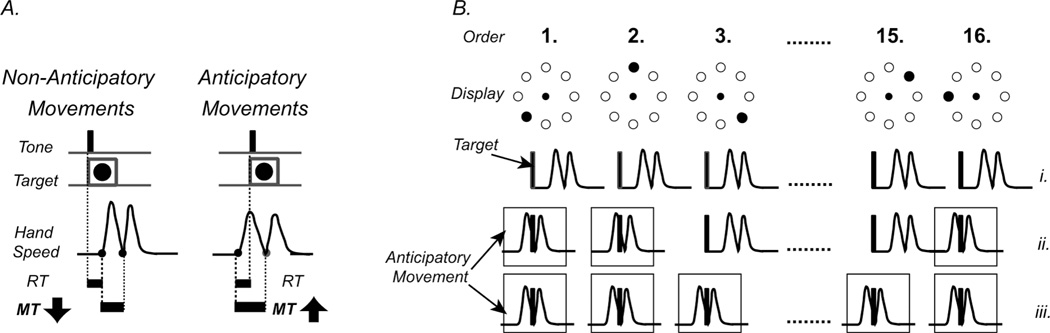
We used a sequence-learning task to assess whether: 1. The time interval between awakening and training equally affects the rate of acquisition of sequence order, a declarative component, and the kinematic optimization process, an implicit component; 2. Sleep enhances the retention of both these aspects of sequence learning.
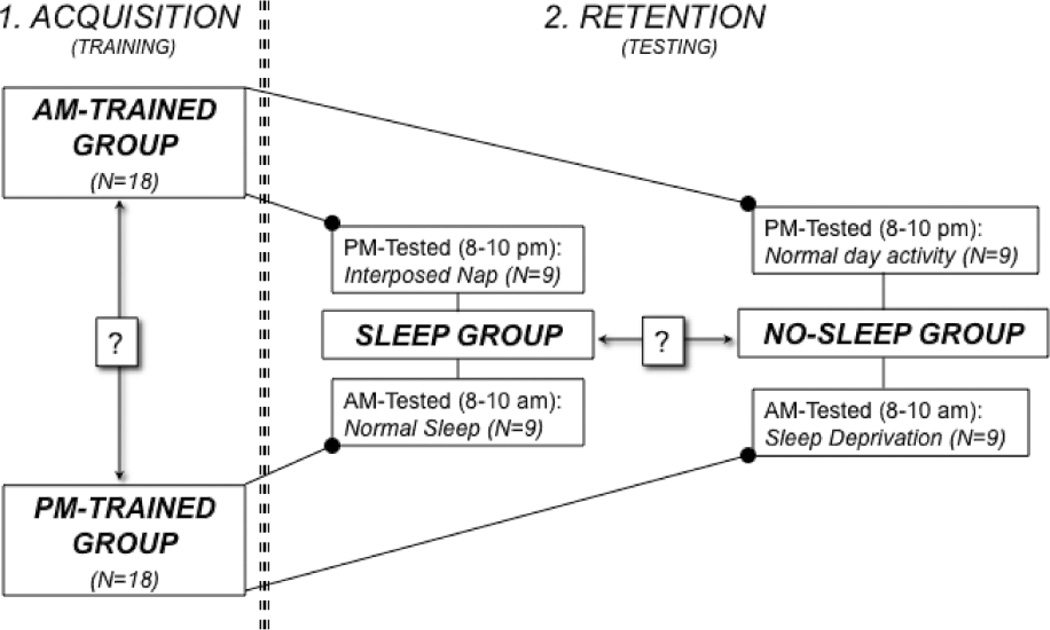
For aim 1, we compare the acquisition rate of a new motor sequence in a group trained in the morning and another in the evening. For aim 2., we tested retention of the same motor sequence twelve hours later, either without sleep (normal day activity or a night of sleep deprivation) or with interposed sleep (afternoon napping or regular full night sleep).
Training and Testing were performed in a controlled laboratory setting.
Thirty-six right-handed normal subjects (age range 18-24 years; 16 women).
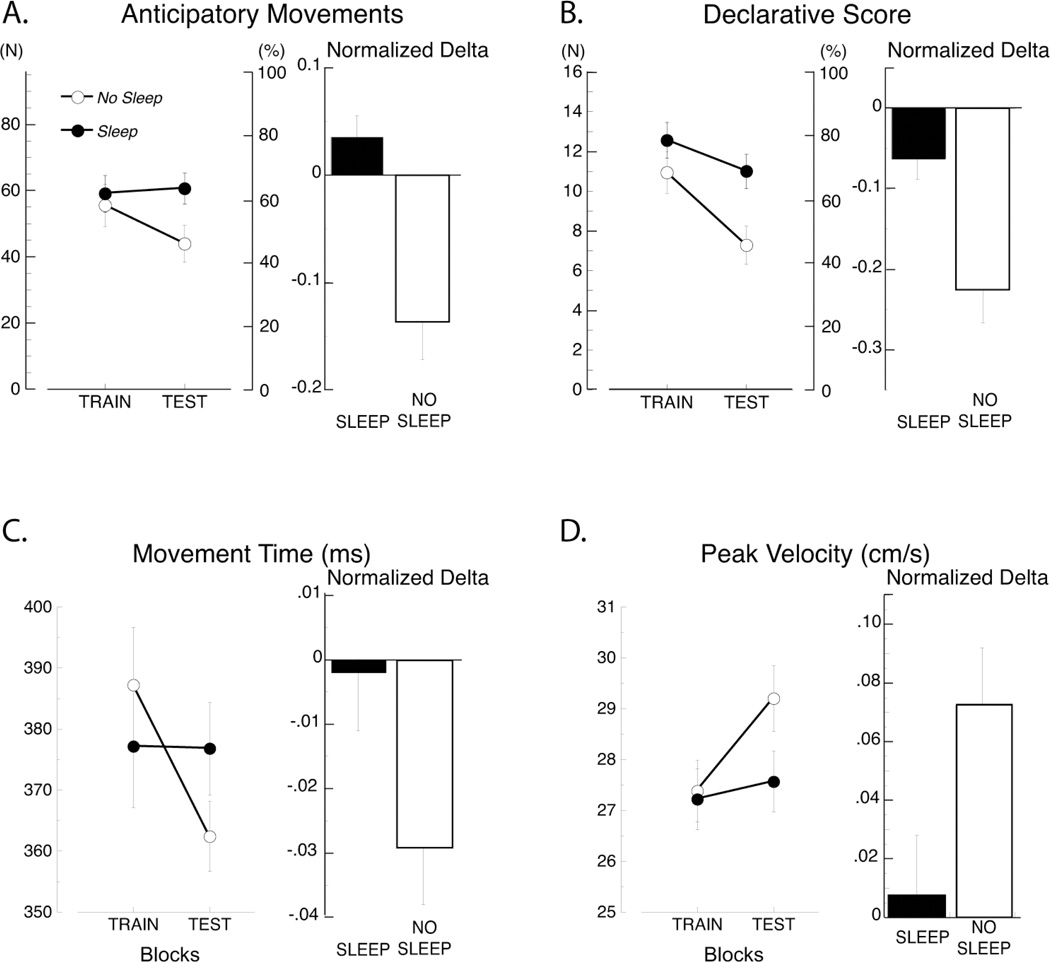
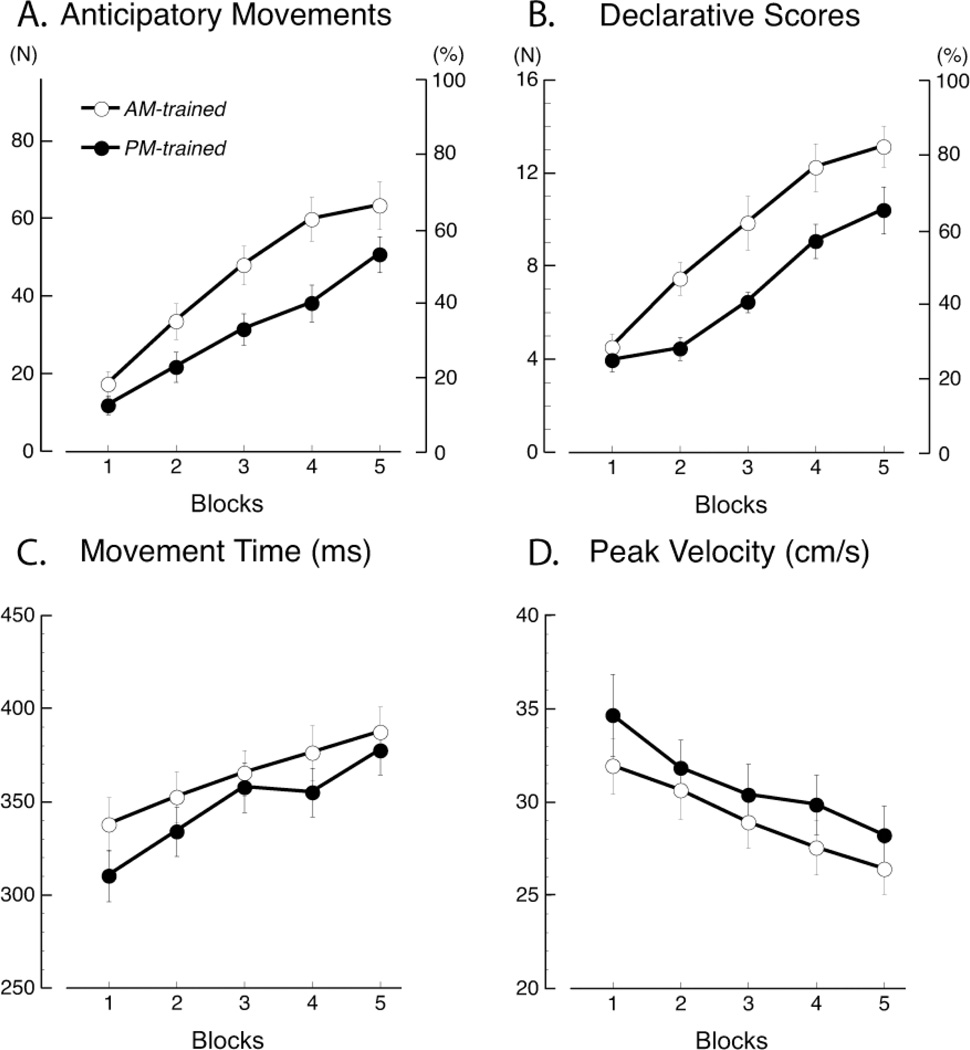
During the training, acquisition rate of the sequence order was significantly higher in the AM-trained than in the PM-trained group, without differences in the kinematic optimization processes. Both declarative and implicit learning indices were significantly higher in the subjects tested after sleep compared to those tested without interposed sleep.
The best time for fast and efficient acquisition of new declarative material is the morning, while the kinematic aspects of skill acquisition are not sensitive to the time of day. However, better retention of both declarative material and motor skills requires two conditions: a period of post-training sleep and the achievement of performance saturation during training.
我们使用序列学习任务来评估:1. 觉醒与训练之间的时间间隔是否同样影响序列顺序(一种陈述性成分)的习得速率以及运动优化过程(一种内隐性成分);2. 睡眠是否能增强序列学习这两个方面的记忆保持。
对于目标1,我们比较了一组在早晨训练和另一组在晚上训练的新运动序列的习得速率。对于目标2,我们在12小时后测试了同一运动序列的记忆保持情况,测试时要么没有睡眠(正常白天活动或一晚睡眠剥夺),要么有插入睡眠(下午小睡或正常整晚睡眠)。
训练和测试在受控的实验室环境中进行。
36名右利手正常受试者(年龄范围18 - 24岁;16名女性)。
在训练期间,上午训练组的序列顺序习得速率显著高于下午训练组,而运动优化过程没有差异。与未插入睡眠进行测试的受试者相比,睡眠后进行测试的受试者的陈述性和内隐学习指标均显著更高。
快速有效地习得新陈述性材料的最佳时间是早晨,而技能习得的运动方面对一天中的时间不敏感。然而,更好地保持陈述性材料和运动技能需要两个条件:训练后的一段睡眠时间以及在训练期间达到表现饱和。