• 文献检索
  • 文档翻译
  • 深度研究
  • 学术资讯
  • Suppr Zotero 插件Zotero 插件
  • 邀请有礼
  • 套餐&价格
  • 历史记录
应用&插件
Suppr Zotero 插件Zotero 插件浏览器插件Mac 客户端Windows 客户端微信小程序
定价
高级版会员购买积分包购买API积分包
服务
文献检索文档翻译深度研究API 文档MCP 服务
关于我们
关于 Suppr公司介绍联系我们用户协议隐私条款
关注我们

Suppr 超能文献

核心技术专利:CN118964589B侵权必究
粤ICP备2023148730 号-1Suppr @ 2026

文献检索

告别复杂PubMed语法,用中文像聊天一样搜索,搜遍4000万医学文献。AI智能推荐,让科研检索更轻松。

立即免费搜索

文件翻译

保留排版,准确专业,支持PDF/Word/PPT等文件格式,支持 12+语言互译。

免费翻译文档

深度研究

AI帮你快速写综述,25分钟生成高质量综述,智能提取关键信息,辅助科研写作。

立即免费体验

大肠杆菌代谢网络的进化。

The evolution of metabolic networks of E. coli.

作者信息

Baumler David J, Peplinski Roman G, Reed Jennifer L, Glasner Jeremy D, Perna Nicole T

机构信息

Genome Center of Wisconsin, University of Wisconsin-Madison, Madison, Wisconsin, USA.

出版信息

BMC Syst Biol. 2011 Nov 1;5:182. doi: 10.1186/1752-0509-5-182.

DOI:10.1186/1752-0509-5-182
PMID:22044664
原文链接:https://pmc.ncbi.nlm.nih.gov/articles/PMC3229490/
Abstract

BACKGROUND

Despite the availability of numerous complete genome sequences from E. coli strains, published genome-scale metabolic models exist only for two commensal E. coli strains. These models have proven useful for many applications, such as engineering strains for desired product formation, and we sought to explore how constructing and evaluating additional metabolic models for E. coli strains could enhance these efforts.

RESULTS

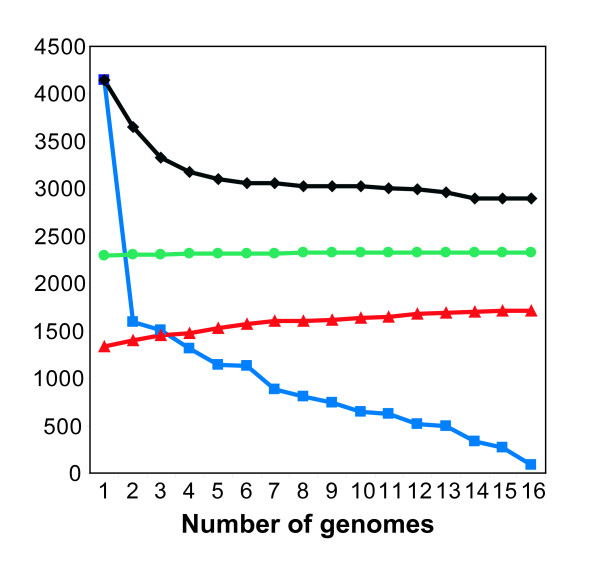
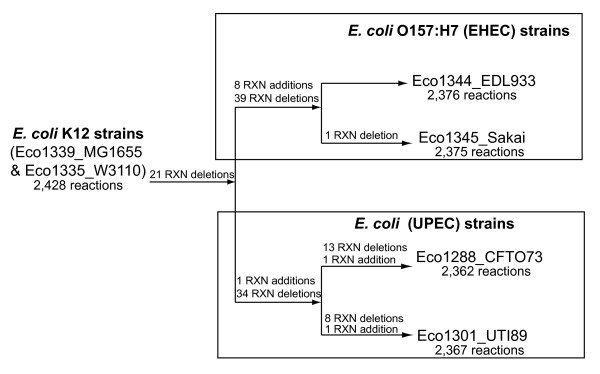
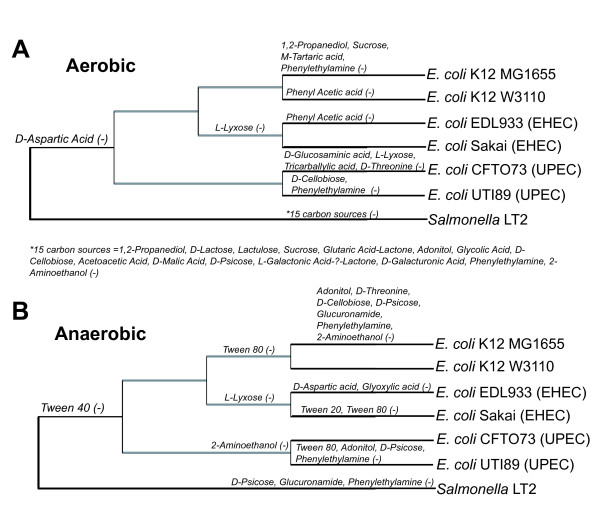
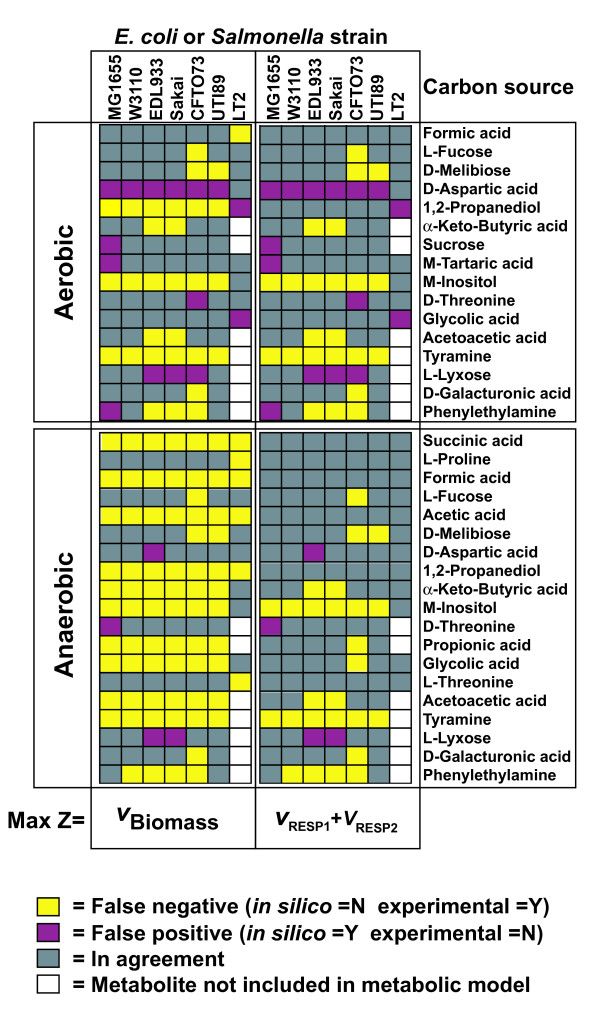
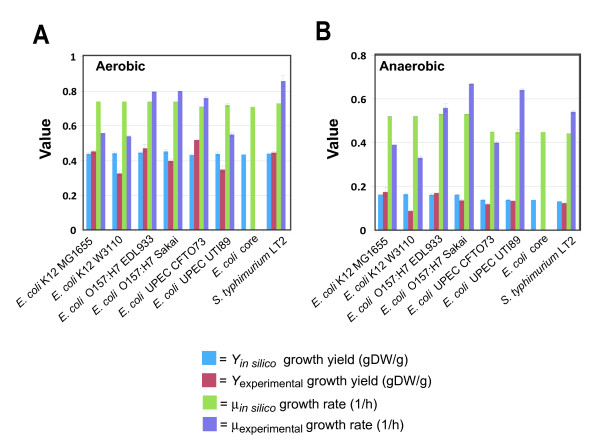
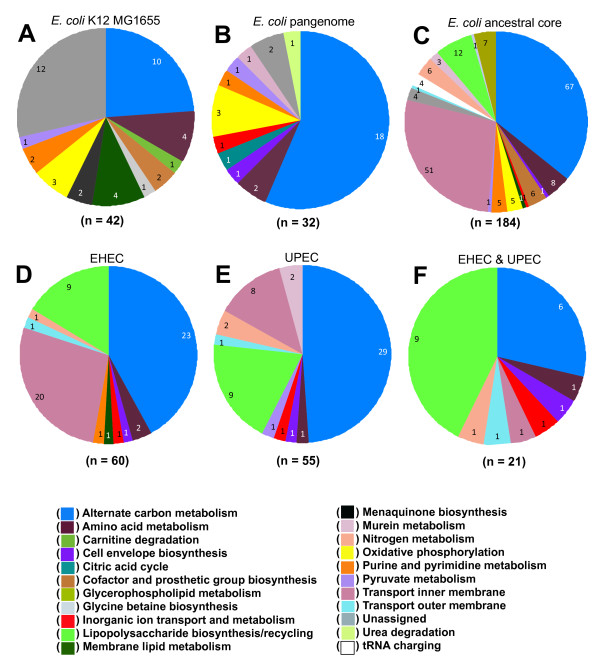
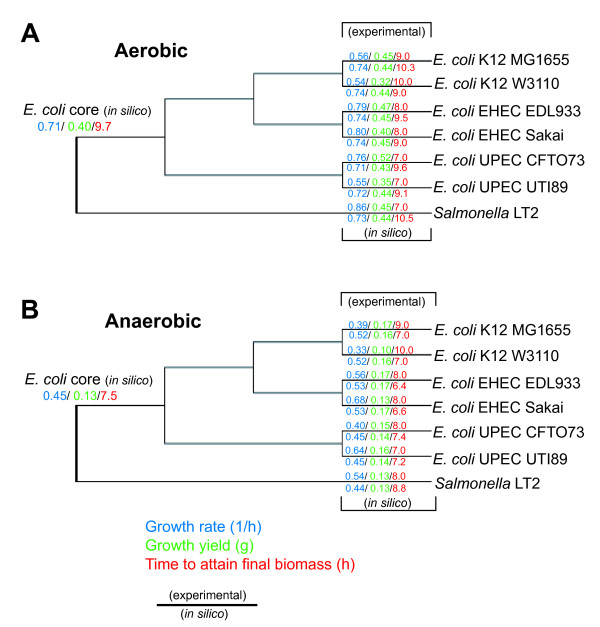
We used the genomic information from 16 E. coli strains to generate an E. coli pangenome metabolic network by evaluating their collective 76,990 ORFs. Each of these ORFs was assigned to one of 17,647 ortholog groups including ORFs associated with reactions in the most recent metabolic model for E. coli K-12. For orthologous groups that contain an ORF already represented in the MG1655 model, the gene to protein to reaction associations represented in this model could then be easily propagated to other E. coli strain models. All remaining orthologous groups were evaluated to see if new metabolic reactions could be added to generate a pangenome-scale metabolic model (iEco1712_pan). The pangenome model included reactions from a metabolic model update for E. coli K-12 MG1655 (iEco1339_MG1655) and enabled development of five additional strain-specific genome-scale metabolic models. These additional models include a second K-12 strain (iEco1335_W3110) and four pathogenic strains (two enterohemorrhagic E. coli O157:H7 and two uropathogens). When compared to the E. coli K-12 models, the metabolic models for the enterohemorrhagic (iEco1344_EDL933 and iEco1345_Sakai) and uropathogenic strains (iEco1288_CFT073 and iEco1301_UTI89) contained numerous lineage-specific gene and reaction differences. All six E. coli models were evaluated by comparing model predictions to carbon source utilization measurements under aerobic and anaerobic conditions, and to batch growth profiles in minimal media with 0.2% (w/v) glucose. An ancestral genome-scale metabolic model based on conserved ortholog groups in all 16 E. coli genomes was also constructed, reflecting the conserved ancestral core of E. coli metabolism (iEco1053_core). Comparative analysis of all six strain-specific E. coli models revealed that some of the pathogenic E. coli strains possess reactions in their metabolic networks enabling higher biomass yields on glucose. Finally the lineage-specific metabolic traits were compared to the ancestral core model predictions to derive new insight into the evolution of metabolism within this species.

CONCLUSION

Our findings demonstrate that a pangenome-scale metabolic model can be used to rapidly construct additional E. coli strain-specific models, and that quantitative models of different strains of E. coli can accurately predict strain-specific phenotypes. Such pangenome and strain-specific models can be further used to engineer metabolic phenotypes of interest, such as designing new industrial E. coli strains.
https://cdn.ncbi.nlm.nih.gov/pmc/blobs/81ca/3229490/388dbd2a2d7e/1752-0509-5-182-7.jpg
https://cdn.ncbi.nlm.nih.gov/pmc/blobs/81ca/3229490/d7874999cfe2/1752-0509-5-182-1.jpg
https://cdn.ncbi.nlm.nih.gov/pmc/blobs/81ca/3229490/7cf4057a277b/1752-0509-5-182-2.jpg
https://cdn.ncbi.nlm.nih.gov/pmc/blobs/81ca/3229490/e975b1a3a9ed/1752-0509-5-182-3.jpg
https://cdn.ncbi.nlm.nih.gov/pmc/blobs/81ca/3229490/332664c93a32/1752-0509-5-182-4.jpg
https://cdn.ncbi.nlm.nih.gov/pmc/blobs/81ca/3229490/4d383b7d171b/1752-0509-5-182-5.jpg
https://cdn.ncbi.nlm.nih.gov/pmc/blobs/81ca/3229490/dc31293585d1/1752-0509-5-182-6.jpg
https://cdn.ncbi.nlm.nih.gov/pmc/blobs/81ca/3229490/388dbd2a2d7e/1752-0509-5-182-7.jpg
https://cdn.ncbi.nlm.nih.gov/pmc/blobs/81ca/3229490/d7874999cfe2/1752-0509-5-182-1.jpg
https://cdn.ncbi.nlm.nih.gov/pmc/blobs/81ca/3229490/7cf4057a277b/1752-0509-5-182-2.jpg
https://cdn.ncbi.nlm.nih.gov/pmc/blobs/81ca/3229490/e975b1a3a9ed/1752-0509-5-182-3.jpg
https://cdn.ncbi.nlm.nih.gov/pmc/blobs/81ca/3229490/332664c93a32/1752-0509-5-182-4.jpg
https://cdn.ncbi.nlm.nih.gov/pmc/blobs/81ca/3229490/4d383b7d171b/1752-0509-5-182-5.jpg
https://cdn.ncbi.nlm.nih.gov/pmc/blobs/81ca/3229490/dc31293585d1/1752-0509-5-182-6.jpg
https://cdn.ncbi.nlm.nih.gov/pmc/blobs/81ca/3229490/388dbd2a2d7e/1752-0509-5-182-7.jpg
摘要

背景

尽管已有众多大肠杆菌菌株的完整基因组序列,但已发表的全基因组规模代谢模型仅针对两种共生大肠杆菌菌株。这些模型已被证明在许多应用中有用,例如改造菌株以形成所需产物,我们试图探索构建和评估更多大肠杆菌菌株的代谢模型如何能加强这些工作。

结果

我们利用16种大肠杆菌菌株的基因组信息,通过评估它们总共76,990个开放阅读框(ORF),生成了一个大肠杆菌泛基因组代谢网络。这些ORF中的每一个都被分配到17,647个直系同源组中的一个,包括与大肠杆菌K-12最新代谢模型中的反应相关的ORF。对于那些在MG1655模型中已有代表的ORF所在的直系同源组,该模型中基因到蛋白质再到反应的关联随后可以很容易地传播到其他大肠杆菌菌株模型中。对所有其余的直系同源组进行评估,以确定是否可以添加新的代谢反应来生成一个泛基因组规模的代谢模型(iEco1712_pan)。该泛基因组模型包括来自大肠杆菌K-12 MG1655代谢模型更新版(iEco1339_MG1655)的反应,并使得能够开发另外五个菌株特异性的全基因组规模代谢模型。这些额外的模型包括第二个K-12菌株(iEco1335_W3110)和四个致病菌株(两个肠出血性大肠杆菌O157:H7和两个尿路致病菌)。与大肠杆菌K-12模型相比,肠出血性(iEco1344_EDL933和iEco1345_Sakai)和尿路致病菌株(iEco1288_CFT073和iEco1301_UTI89)的代谢模型包含许多谱系特异性的基因和反应差异。通过将模型预测与需氧和厌氧条件下的碳源利用测量结果以及在含有0.2%(w/v)葡萄糖的基本培养基中的分批生长曲线进行比较,对所有六个大肠杆菌模型进行了评估。还构建了一个基于所有16个大肠杆菌基因组中保守直系同源组的祖先全基因组规模代谢模型,反映了大肠杆菌代谢的保守祖先核心(iEco1053_core)。对所有六个菌株特异性大肠杆菌模型的比较分析表明,一些致病性大肠杆菌菌株在其代谢网络中具有能够在葡萄糖上产生更高生物量产量的反应。最后,将谱系特异性代谢特征与祖先核心模型预测进行比较,以获得对该物种内代谢进化的新见解。

结论

我们的研究结果表明,泛基因组规模的代谢模型可用于快速构建更多大肠杆菌菌株特异性模型,并且不同大肠杆菌菌株的定量模型可以准确预测菌株特异性表型。这种泛基因组和菌株特异性模型可进一步用于改造感兴趣的代谢表型,例如设计新的工业大肠杆菌菌株。

相似文献

1
The evolution of metabolic networks of E. coli.大肠杆菌代谢网络的进化。
BMC Syst Biol. 2011 Nov 1;5:182. doi: 10.1186/1752-0509-5-182.
2
Genomic peculiarity of coding sequences and metabolic potential of probiotic Escherichia coli strain Nissle 1917 inferred from raw genome data.从原始基因组数据推断益生菌大肠杆菌菌株Nissle 1917的编码序列基因组特性和代谢潜力。
J Biotechnol. 2005 May 4;117(2):147-61. doi: 10.1016/j.jbiotec.2005.01.008.
3
Analysis of genome plasticity in pathogenic and commensal Escherichia coli isolates by use of DNA arrays.利用DNA阵列分析致病性和共生性大肠杆菌分离株的基因组可塑性。
J Bacteriol. 2003 Mar;185(6):1831-40. doi: 10.1128/JB.185.6.1831-1840.2003.
4
Core and panmetabolism in Escherichia coli.大肠杆菌的核心代谢和全面代谢。
J Bacteriol. 2011 Mar;193(6):1461-72. doi: 10.1128/JB.01192-10. Epub 2011 Jan 14.
5
To kill or to be killed: pangenome analysis of Escherichia coli strains reveals a tailocin specific for pandemic ST131.生死抉择:大肠杆菌菌株的泛基因组分析揭示了一种针对流行 ST131 的尾菌素特异性。
BMC Biol. 2022 Jun 16;20(1):146. doi: 10.1186/s12915-022-01347-7.
6
Comparison of carbon nutrition for pathogenic and commensal Escherichia coli strains in the mouse intestine.小鼠肠道中致病性和共生性大肠杆菌菌株的碳营养比较。
Infect Immun. 2008 Mar;76(3):1143-52. doi: 10.1128/IAI.01386-07. Epub 2008 Jan 7.
7
Defining genomic islands and uropathogen-specific genes in uropathogenic Escherichia coli.界定尿路致病性大肠杆菌中的基因组岛和尿路病原体特异性基因。
J Bacteriol. 2007 May;189(9):3532-46. doi: 10.1128/JB.01744-06. Epub 2007 Mar 9.
8
Cytolethal distending toxin producing Escherichia coli O157:H43 strain T22 represents a novel evolutionary lineage within the O157 serogroup.产细胞致死膨胀毒素的大肠杆菌O157:H43菌株T22代表了O157血清群内一个新的进化谱系。
Infect Genet Evol. 2016 Dec;46:110-117. doi: 10.1016/j.meegid.2016.11.003. Epub 2016 Nov 5.
9
Genome-Based Comparison of Cyclic Di-GMP Signaling in Pathogenic and Commensal Escherichia coli Strains.致病性和共生性大肠杆菌菌株中基于基因组的环二鸟苷酸信号传导比较
J Bacteriol. 2015 Aug 24;198(1):111-26. doi: 10.1128/JB.00520-15. Print 2016 Jan 1.
10
Complete genome sequence of enterohemorrhagic Escherichia coli O157:H7 and genomic comparison with a laboratory strain K-12.肠出血性大肠杆菌O157:H7全基因组序列及与实验室菌株K-12的基因组比较
DNA Res. 2001 Feb 28;8(1):11-22. doi: 10.1093/dnares/8.1.11.

引用本文的文献

1
An integrated systems biology approach reveals differences in formate metabolism in the genus .一种综合系统生物学方法揭示了该属中甲酸代谢的差异。
iScience. 2023 Sep 22;26(10):108016. doi: 10.1016/j.isci.2023.108016. eCollection 2023 Oct 20.
2
The EcoCyc Database (2023).EcoCyc数据库(2023年)。
EcoSal Plus. 2023 Dec 12;11(1):eesp00022023. doi: 10.1128/ecosalplus.esp-0002-2023. Epub 2023 May 11.
3
Localization of Noise in Biochemical Networks.生化网络中噪声的定位

本文引用的文献

1
Metabolic modeling of endosymbiont genome reduction on a temporal scale.在时间尺度上对共生体基因组减少进行代谢建模。
Mol Syst Biol. 2011 Mar 29;7:479. doi: 10.1038/msb.2011.11.
2
Core and panmetabolism in Escherichia coli.大肠杆菌的核心代谢和全面代谢。
J Bacteriol. 2011 Mar;193(6):1461-72. doi: 10.1128/JB.01192-10. Epub 2011 Jan 14.
3
The genome sequence of E. coli W (ATCC 9637): comparative genome analysis and an improved genome-scale reconstruction of E. coli.大肠杆菌 W(ATCC 9637)的基因组序列:比较基因组分析和大肠杆菌的基因组规模重建的改进。
ACS Omega. 2023 Jan 11;8(3):3043-3056. doi: 10.1021/acsomega.2c06113. eCollection 2023 Jan 24.
4
Comparative Pathogenomics of : Polyvalent Vaccine Target Identification through Virulome Analysis.多价疫苗靶标鉴定的比较病原体组学:通过病毒组分析。
Infect Immun. 2021 Jul 15;89(8):e0011521. doi: 10.1128/IAI.00115-21.
5
Genome-Scale Metabolic Modeling for Unraveling Molecular Mechanisms of High Threat Pathogens.用于揭示高威胁病原体分子机制的全基因组规模代谢建模
Front Cell Dev Biol. 2020 Nov 3;8:566702. doi: 10.3389/fcell.2020.566702. eCollection 2020.
6
Adaptations of Escherichia coli strains to oxidative stress are reflected in properties of their structural proteomes.大肠杆菌菌株对氧化应激的适应反映在其结构蛋白质组的特性上。
BMC Bioinformatics. 2020 Apr 29;21(1):162. doi: 10.1186/s12859-020-3505-y.
7
Metabolic modelling of chronic wound microbiota predicts mutualistic interactions that drive community composition.慢性创面微生物组的代谢建模预测了促进群落组成的共生相互作用。
J Appl Microbiol. 2019 Nov;127(5):1576-1593. doi: 10.1111/jam.14421. Epub 2019 Sep 9.
8
Systems Metabolic Engineering of Escherichia coli Improves Coconversion of Lignocellulose-Derived Sugars.大肠杆菌的系统代谢工程提高了木质纤维素衍生糖的共转化。
Biotechnol J. 2019 Sep;14(9):e1800441. doi: 10.1002/biot.201800441. Epub 2019 Aug 5.
9
Influence of Plant Species, Tissue Type, and Temperature on the Capacity of Shiga-Toxigenic To Colonize, Grow, and Be Internalized by Plants.植物种类、组织类型和温度对产志贺毒素大肠杆菌定植、生长和内化植物的能力的影响。
Appl Environ Microbiol. 2019 May 16;85(11). doi: 10.1128/AEM.00123-19. Print 2019 Jun 1.
10
Use of genome-scale models to get new insights into the marine actinomycete genus Salinispora.利用基因组规模模型深入了解海洋放线菌盐孢菌属。
BMC Syst Biol. 2019 Jan 21;13(1):11. doi: 10.1186/s12918-019-0683-1.
BMC Genomics. 2011 Jan 6;12:9. doi: 10.1186/1471-2164-12-9.
4
An automated phenotype-driven approach (GeneForce) for refining metabolic and regulatory models.一种自动化的表型驱动方法(GeneForce),用于精炼代谢和调控模型。
PLoS Comput Biol. 2010 Oct 28;6(10):e1000970. doi: 10.1371/journal.pcbi.1000970.
5
High-throughput generation, optimization and analysis of genome-scale metabolic models.高通量生成、优化和分析基因组规模代谢模型。
Nat Biotechnol. 2010 Sep;28(9):977-82. doi: 10.1038/nbt.1672. Epub 2010 Aug 29.
6
Biofuel production improvement with genome-scale models: The role of cell composition.基于基因组尺度模型的生物燃料生产改进:细胞组成的作用。
Biotechnol J. 2010 Jul;5(7):671-85. doi: 10.1002/biot.201000007.
7
The biomass objective function.生物质目标函数。
Curr Opin Microbiol. 2010 Jun;13(3):344-9. doi: 10.1016/j.mib.2010.03.003. Epub 2010 Apr 27.
8
What is flux balance analysis?通量平衡分析是什么?
Nat Biotechnol. 2010 Mar;28(3):245-8. doi: 10.1038/nbt.1614.
9
A protocol for generating a high-quality genome-scale metabolic reconstruction.生成高质量基因组尺度代谢重建的方案。
Nat Protoc. 2010 Jan;5(1):93-121. doi: 10.1038/nprot.2009.203. Epub 2010 Jan 7.
10
Applications of genome-scale metabolic reconstructions.基因组尺度代谢重建的应用。
Mol Syst Biol. 2009;5:320. doi: 10.1038/msb.2009.77. Epub 2009 Nov 3.