National Institute of Nutrition and Seafood Research (NIFES), PO Box 2029 Nordnes, N-5817 Bergen, Norway.
Nutr J. 2011 Nov 19;10:127. doi: 10.1186/1475-2891-10-127.
Seafood intake is associated with beneficial effects for human health. Seafood provides a number of nutrients beyond the traditionally known long chain marine n-3 fatty acids EPA, DPA and DHA, such as protein, vitamin D, iodine, selenium and vitamin B12. Valid assessment of dietary seafood and n-3 supplement intakes are becoming increasingly crucial when giving recommendations to populations as seafood consumption is regarded as an important part of a healthy and balanced diet.
The aim was to validate a short FFQ developed for assessment of dietary intake of seafood and n-3 supplements using the biomarkers marine n-3 fatty acids in erythrocytes and 25(OH)D in serum.
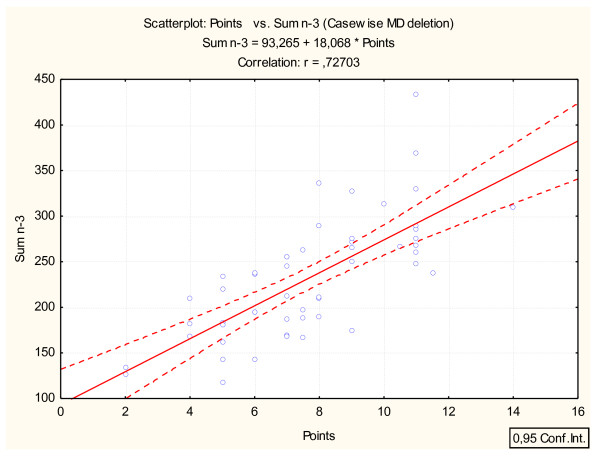
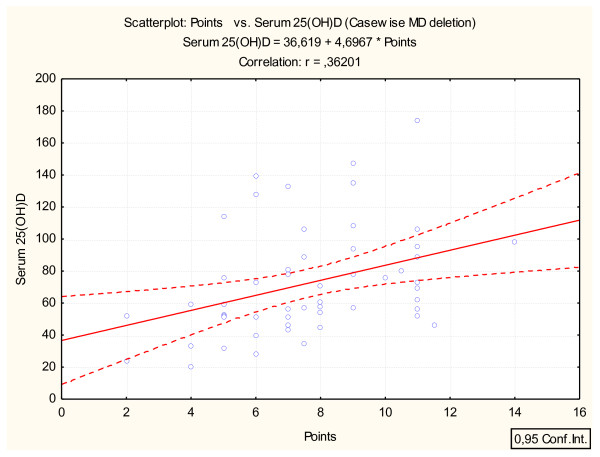
Fifty-three healthy Norwegians aged 30-64 years with a mean BMI of 25 kg/m2 were compliant with the study protocol. 70% reported eating seafood for dinner one to two times per week, and 45% reported to eat seafood as spread, in salads or as snack meal three to five times or more per week. The FFQ correlated significantly with both the levels of marine n-3 fatty acids (r=0.73, p<0.0001) and with 25(OH)D (r=0.37, p<0.01). Mean level of marine n-3 and of 25(OH)D were 232±65 μg/g erythrocytes and 73±33 nmol/L serum, respectively.
The present short FFQ predicted strongly the levels of marine n-3 fatty acids in erythrocytes, and predicted fairly good the level of serum 25(OH)D and may therefore be a valid method for assessment of seafood and n-3 supplements intake among adults.
海鲜摄入对人体健康有益。海鲜除了传统上已知的长链海洋 n-3 脂肪酸 EPA、DPA 和 DHA 外,还提供多种营养物质,如蛋白质、维生素 D、碘、硒和维生素 B12。当向人群提出建议时,评估膳食海鲜和 n-3 补充剂的摄入量变得越来越重要,因为海鲜消费被认为是健康均衡饮食的重要组成部分。
本研究旨在使用红细胞中的海洋 n-3 脂肪酸和血清中的 25(OH)D 两种生物标志物来验证用于评估海鲜和 n-3 补充剂饮食摄入量的短 FFQ。
53 名年龄在 30-64 岁、平均 BMI 为 25kg/m2 的健康挪威人符合研究方案。70%的人报告每周一到两次晚餐吃海鲜,45%的人报告每周三到五次或更多次将海鲜作为涂抹酱、沙拉或小吃食用。FFQ 与海洋 n-3 脂肪酸水平(r=0.73,p<0.0001)和 25(OH)D 水平(r=0.37,p<0.01)均呈显著相关。红细胞中海洋 n-3 脂肪酸和 25(OH)D 的平均水平分别为 232±65μg/g 红细胞和 73±33nmol/L 血清。
本研究的短 FFQ 强烈预测了红细胞中海洋 n-3 脂肪酸的水平,并且相当好地预测了血清 25(OH)D 的水平,因此可能是评估成年人海鲜和 n-3 补充剂摄入量的有效方法。