Baliga Lab, Institute for Systems Biology, Seattle, WA 98109, USA.
Mol Syst Biol. 2011 Nov 22;7:554. doi: 10.1038/msb.2011.87.
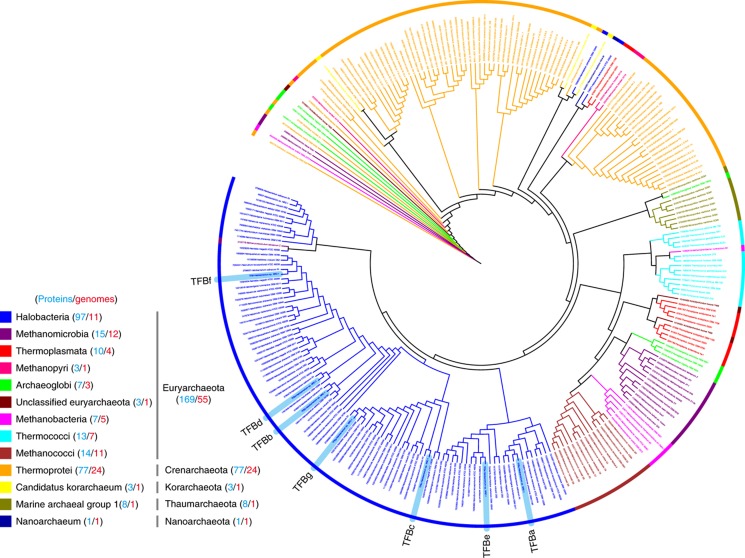
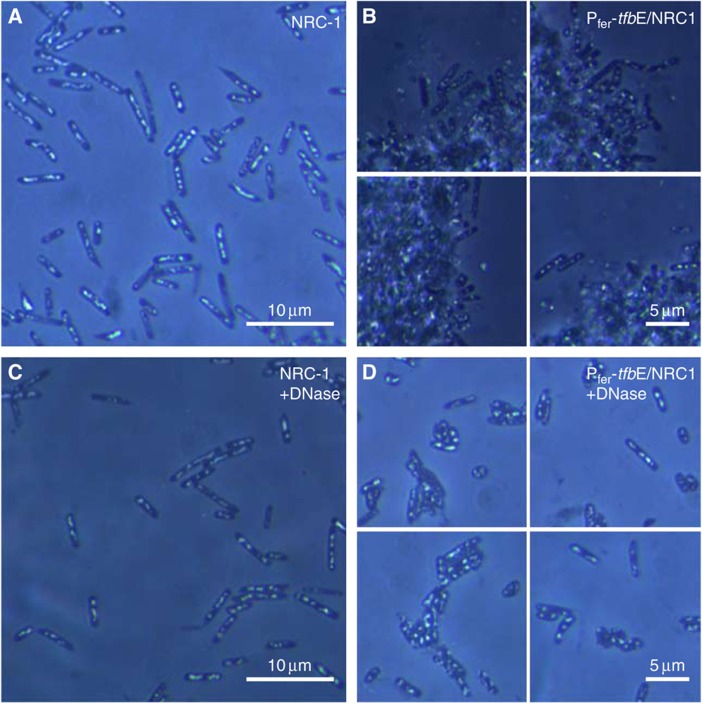
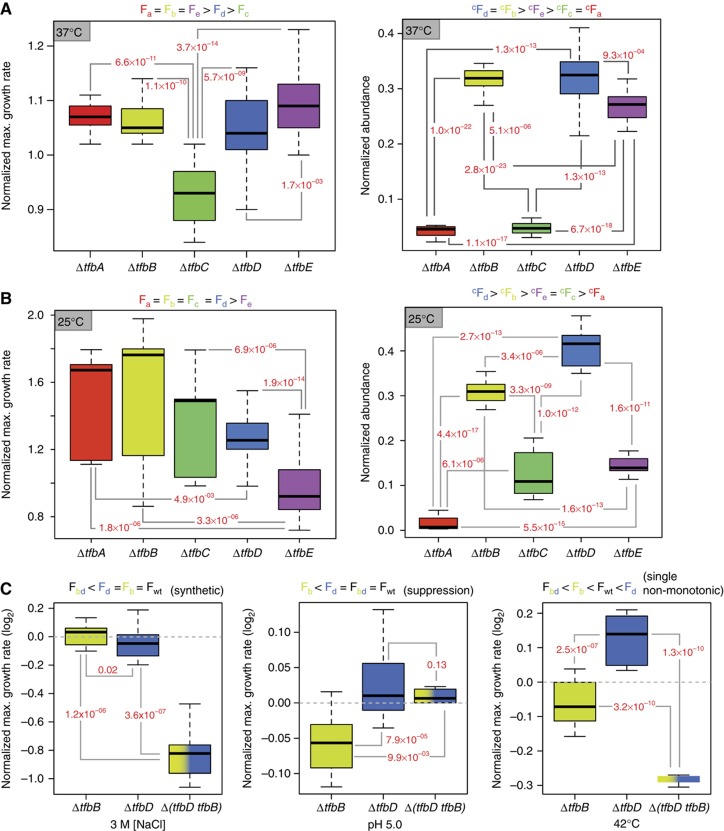
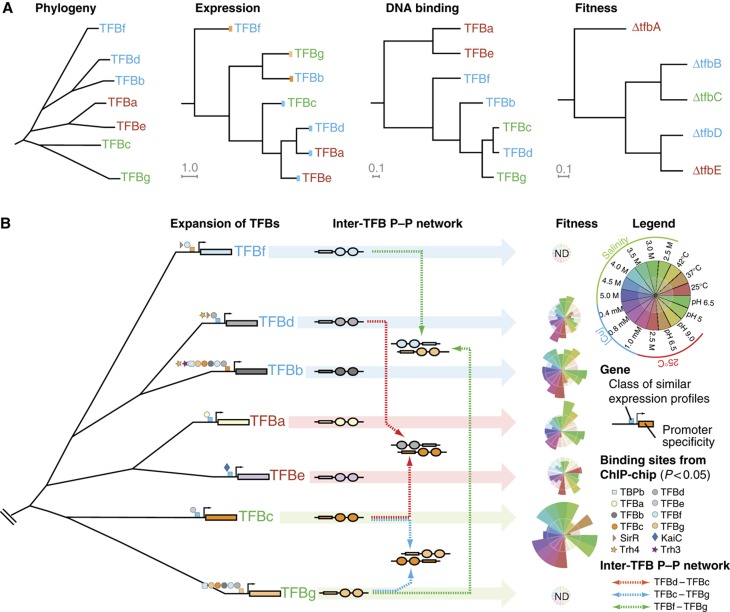
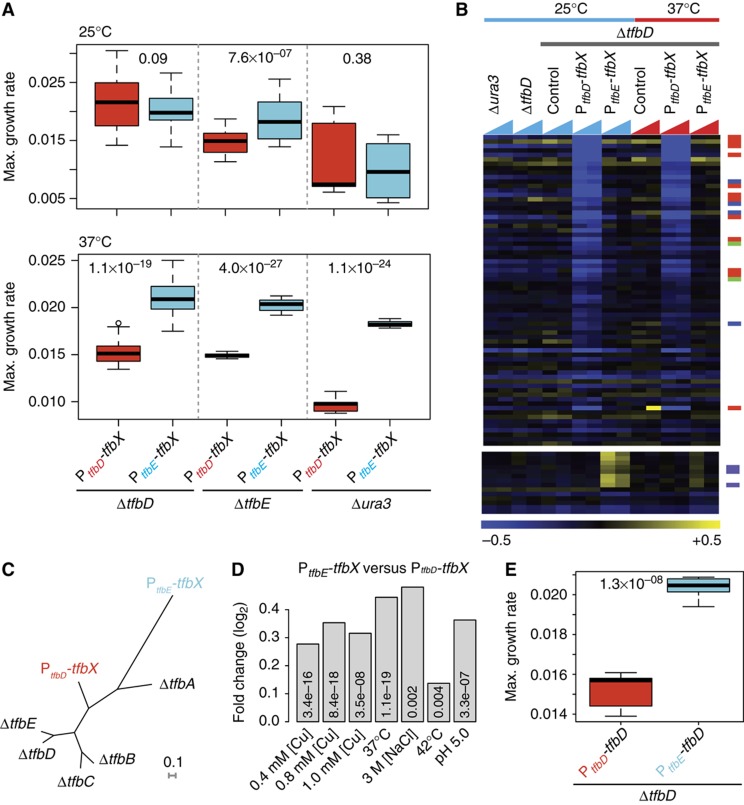
Numerous lineage-specific expansions of the transcription factor B (TFB) family in archaea suggests an important role for expanded TFBs in encoding environment-specific gene regulatory programs. Given the characteristics of hypersaline lakes, the unusually large numbers of TFBs in halophilic archaea further suggests that they might be especially important in rapid adaptation to the challenges of a dynamically changing environment. Motivated by these observations, we have investigated the implications of TFB expansions by correlating sequence variations, regulation, and physical interactions of all seven TFBs in Halobacterium salinarum NRC-1 to their fitness landscapes, functional hierarchies, and genetic interactions across 2488 experiments covering combinatorial variations in salt, pH, temperature, and Cu stress. This systems analysis has revealed an elegant scheme in which completely novel fitness landscapes are generated by gene conversion events that introduce subtle changes to the regulation or physical interactions of duplicated TFBs. Based on these insights, we have introduced a synthetically redesigned TFB and altered the regulation of existing TFBs to illustrate how archaea can rapidly generate novel phenotypes by simply reprogramming their TFB regulatory network.
在古菌中,转录因子 B(TFB)家族的许多谱系特异性扩张表明,扩展的 TFB 在编码特定于环境的基因调控程序中具有重要作用。鉴于盐湖的特点,嗜盐古菌中异常多的 TFB 进一步表明,它们可能在快速适应动态变化的环境挑战方面尤为重要。受这些观察结果的启发,我们通过将嗜盐盐杆菌 NRC-1 中所有七个 TFB 的序列变异、调节和物理相互作用与它们的适应度景观、功能层次结构和跨越 2488 个实验的遗传相互作用相关联,调查了 TFB 扩张的意义,这些实验涵盖了盐、pH 值、温度和 Cu 应激的组合变化。这项系统分析揭示了一个优雅的方案,其中完全新颖的适应度景观是通过基因转换事件产生的,这些事件会对重复 TFB 的调节或物理相互作用产生微妙的变化。基于这些见解,我们引入了一个经过重新设计的合成 TFB,并改变了现有 TFB 的调节,以说明古菌如何通过简单地重新编程其 TFB 调控网络来快速产生新的表型。