Department of Chemical and Biological Engineering, University of Colorado, UCB Box 424, Boulder, Colorado 80309-0424, USA.
Nat Chem. 2011 Oct 23;3(12):925-31. doi: 10.1038/nchem.1174.
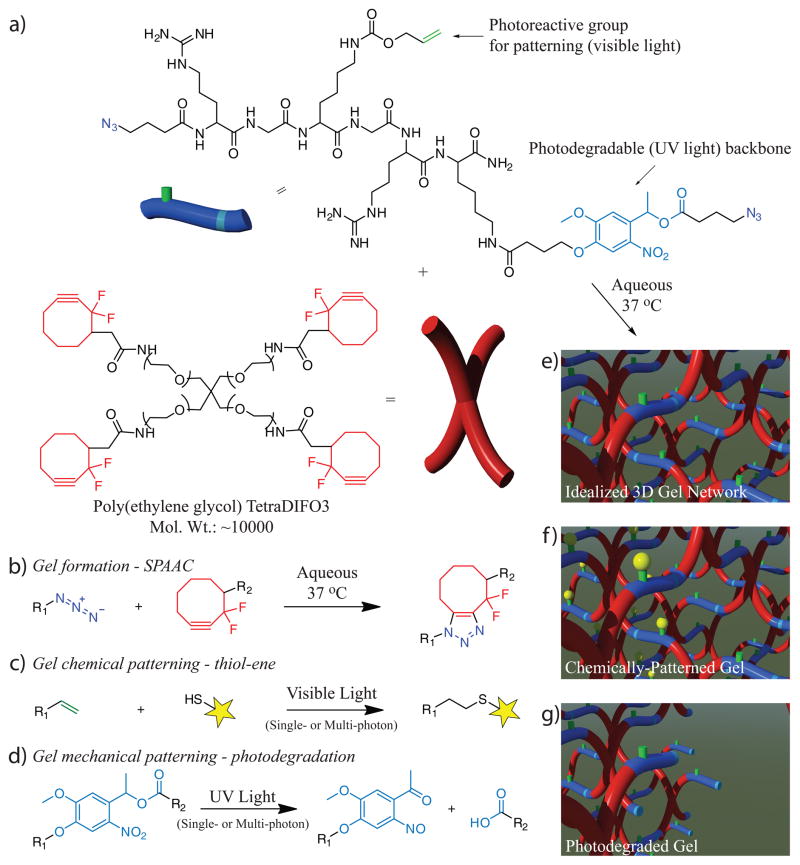
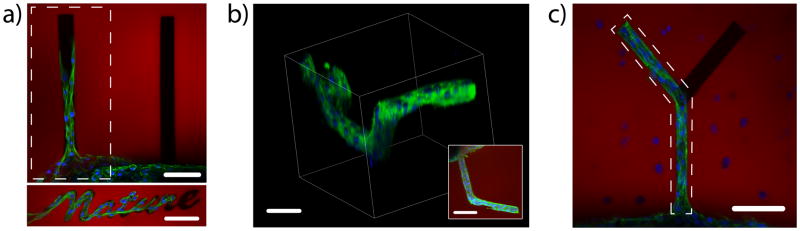
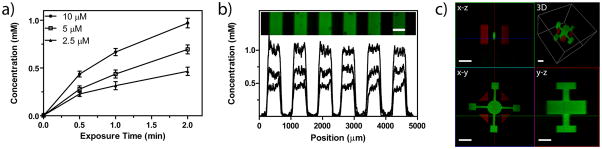
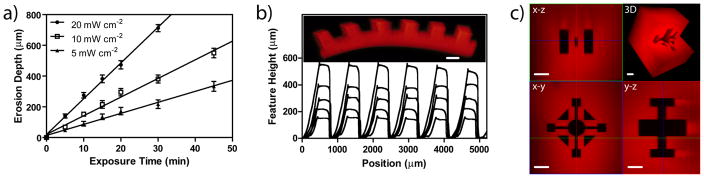
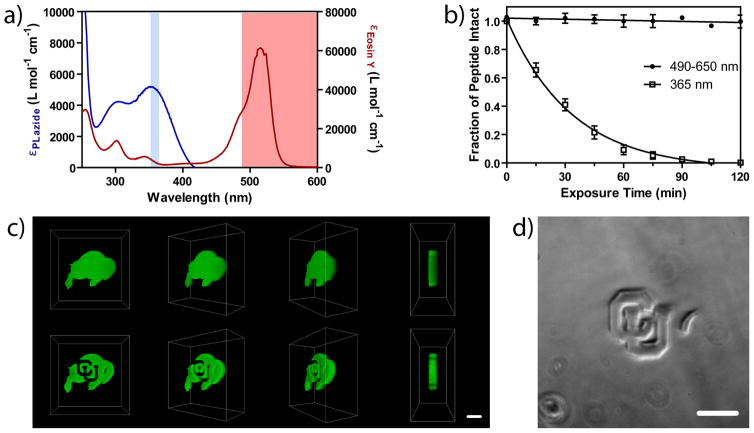
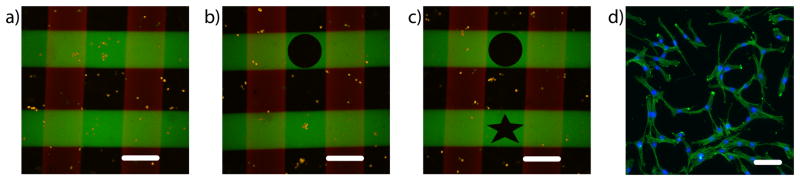
To provide insight into how cells receive information from their external surroundings, synthetic hydrogels have emerged as systems for assaying cell function in well-defined microenvironments where single cues can be introduced and subsequent effects individually elucidated. However, as answers to more complex biological questions continue to be sought, advanced material systems are needed that allow dynamic alteration of the three-dimensional cellular environment with orthogonal reactions that enable multiple levels of control of biochemical and biomechanical signals. Here, we seek to synthesize one such three-dimensional culture system using cytocompatible and wavelength-specific photochemical reactions to create hydrogels that allow orthogonal and dynamic control of material properties through independent spatiotemporally regulated photocleavage of crosslinks and photoconjugation of pendant functionalities. The results demonstrate the versatile nature of the chemistry to create programmable niches to study and direct cell function by modifying the local hydrogel environment.
为了深入了解细胞如何从外部环境接收信息,合成水凝胶已成为在定义明确的微环境中分析细胞功能的系统,在这些微环境中可以引入单一线索,并单独阐明随后的影响。然而,随着对更复杂生物学问题的答案不断被寻求,需要先进的材料系统,该系统允许使用正交反应动态改变三维细胞环境,从而能够对生物化学和生物力学信号进行多层次的控制。在这里,我们试图使用细胞相容性和波长特异性光化学反应来合成这样的三维培养系统,以创建水凝胶,通过独立的时空调节交联的光裂解和侧基功能的光接枝来实现材料特性的正交和动态控制。结果表明,该化学具有多种用途,可以通过改变局部水凝胶环境来创建可编程小生境,以研究和指导细胞功能。