Department of Molecular Biology and Genetics, Aarhus University, Aarhus, Denmark.
PLoS One. 2011;6(11):e27840. doi: 10.1371/journal.pone.0027840. Epub 2011 Nov 22.
MicroRNA (miRNA) expression is broadly altered in cancer, but few studies have investigated miRNA deregulation in oral squamous cell carcinoma (OSCC). Epigenetic mechanisms are involved in the regulation of >30 miRNA genes in a range of tissues, and we aimed to investigate this further in OSCC.
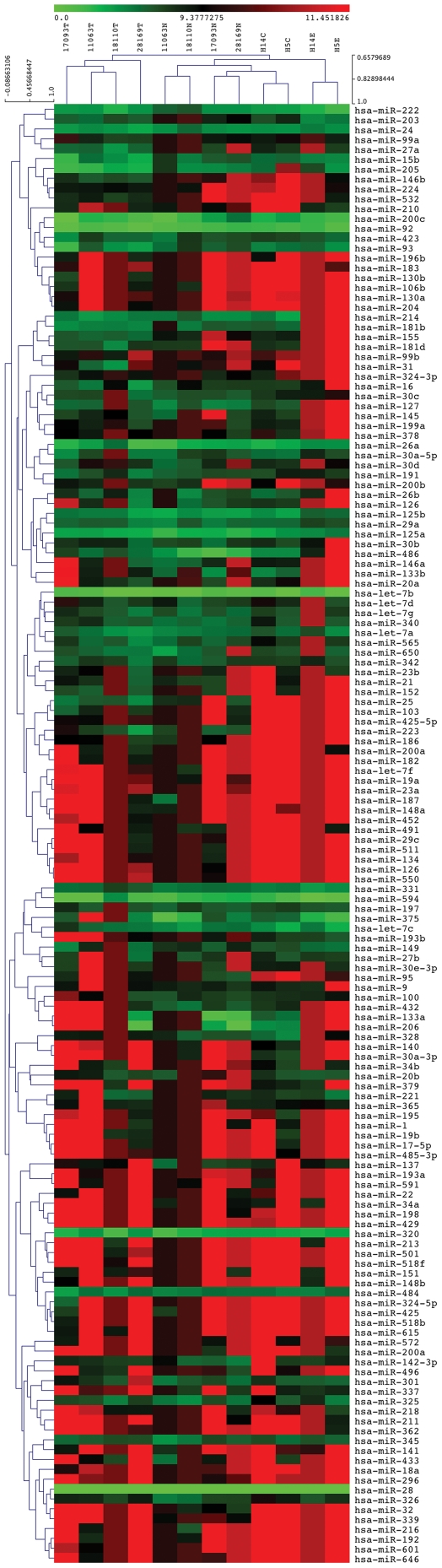
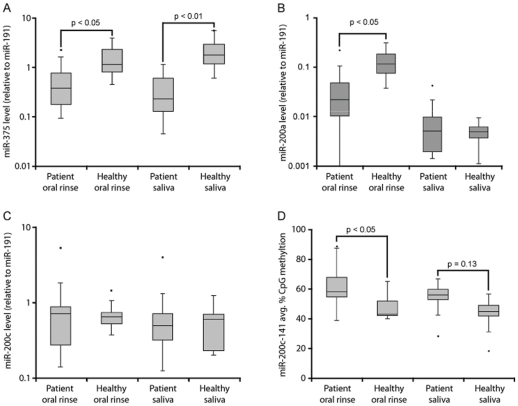
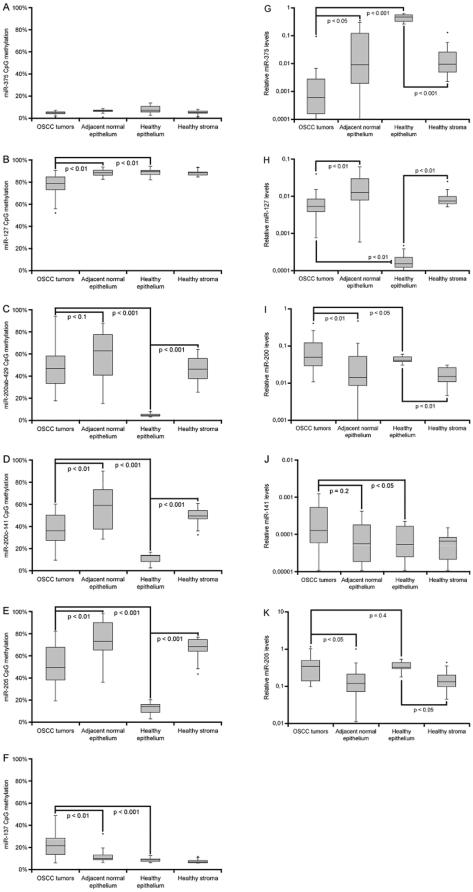
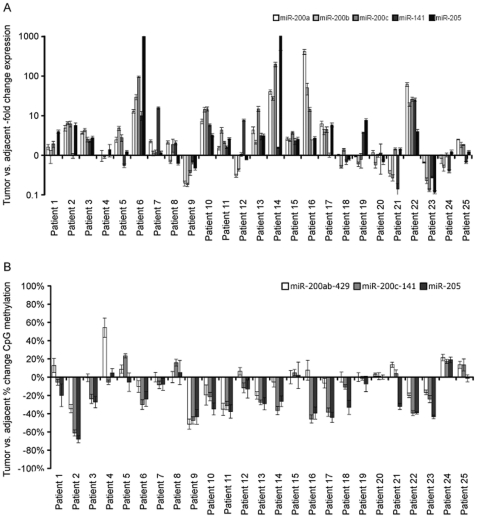
TaqMan® qRT-PCR arrays and individual assays were used to profile miRNA expression in a panel of 25 tumors with matched adjacent tissues from patients with OSCC, and 8 control paired oral stroma and epithelium from healthy volunteers. Associated DNA methylation changes of candidate epigenetically deregulated miRNA genes were measured in the same samples using the MassArray® mass spectrometry platform. MiRNA expression and DNA methylation changes were also investigated in FACS sorted CD44(high) oral cancer stem cells from primary tumor samples (CSCs), and in oral rinse and saliva from 15 OSCC patients and 7 healthy volunteers.
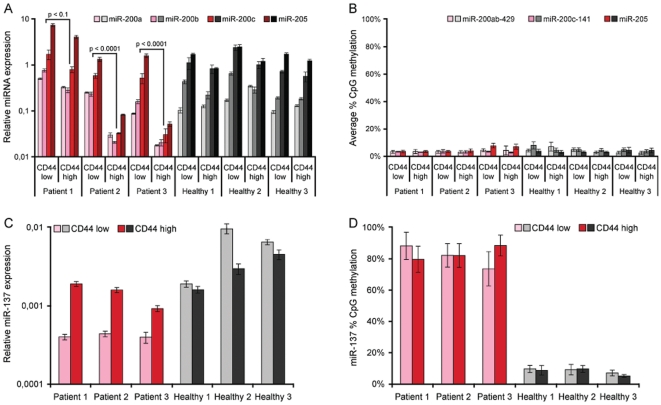
MiRNA expression patterns were consistent in healthy oral epithelium and stroma, but broadly altered in both tumor and adjacent tissue from OSCC patients. MiR-375 is repressed and miR-127 activated in OSCC, and we confirm previous reports of miR-137 hypermethylation in oral cancer. The miR-200 s/miR-205 were epigenetically activated in tumors vs normal tissues, but repressed in the absence of DNA hypermethylation specifically in CD44(high) oral CSCs. Aberrant miR-375 and miR-200a expression and miR-200c-141 methylation could be detected in and distinguish OSCC patient oral rinse and saliva from healthy volunteers, suggesting a potential clinical application for OSCC specific miRNA signatures in oral fluids.
MiRNA expression and DNA methylation changes are a common event in OSCC, and we suggest miR-375, miR-127, miR-137, the miR-200 family and miR-205 as promising candidates for future investigations. Although overall activated in OSCC, miR-200/miR-205 suppression in oral CSCs indicate that cell specific silencing of these miRNAs may drive tumor expansion and progression.
微小 RNA(miRNA)的表达在癌症中广泛改变,但很少有研究调查口腔鳞状细胞癌(OSCC)中 miRNA 的失调。表观遗传机制参与了多种组织中 >30 个 miRNA 基因的调节,我们旨在进一步研究 OSCC 中的这种机制。
使用 TaqMan® qRT-PCR 阵列和个别测定法,对 25 例肿瘤患者的肿瘤组织和匹配的相邻组织中的 miRNA 表达进行了分析,这些患者来自 OSCC 患者,8 例配对的健康志愿者口腔基质和上皮。使用 MassArray®质谱平台在相同样本中测量候选表观遗传失调 miRNA 基因的相关 DNA 甲基化变化。还在原发性肿瘤样本的 FACS 分选 CD44(高)口腔癌干细胞(CSCs)中以及 15 例 OSCC 患者和 7 例健康志愿者的口腔冲洗液和唾液中研究了 miRNA 表达和 DNA 甲基化变化。
健康口腔上皮和基质中的 miRNA 表达模式一致,但在 OSCC 患者的肿瘤和相邻组织中广泛改变。miR-375 在 OSCC 中受到抑制,miR-127 被激活,我们证实了先前报道的口腔癌中 miR-137 高甲基化。miR-200s/miR-205 在肿瘤与正常组织中被表观遗传激活,但在 CD44(高)口腔 CSCs 中,特异性地在没有 DNA 高甲基化的情况下被抑制。在 OSCC 患者的口腔冲洗液和唾液中可以检测到异常的 miR-375 和 miR-200a 表达以及 miR-200c-141 甲基化,这表明在口腔液中使用 OSCC 特异性 miRNA 特征进行潜在的临床应用。
miRNA 表达和 DNA 甲基化变化是 OSCC 的常见事件,我们建议 miR-375、miR-127、miR-137、miR-200 家族和 miR-205 作为未来研究的有前途的候选物。尽管在 OSCC 中总体被激活,但口腔 CSCs 中 miR-200/miR-205 的抑制表明,这些 miRNA 的细胞特异性沉默可能会促进肿瘤的扩张和进展。