Department of Maternal and Pediatric Sciences, Fondazione IRCCS ''Ca'Granda'' Ospedale Maggiore Policlinico, University of Milan, Milano, Italy.
PLoS One. 2011;6(11):e28010. doi: 10.1371/journal.pone.0028010. Epub 2011 Nov 30.
the addition of oligosaccharides to infant formula has been shown to mimic some of the beneficial effects of human milk. The aim of the study was to assess the tolerance and safety of a formula containing an innovative mixture of oligosaccharides in early infancy.
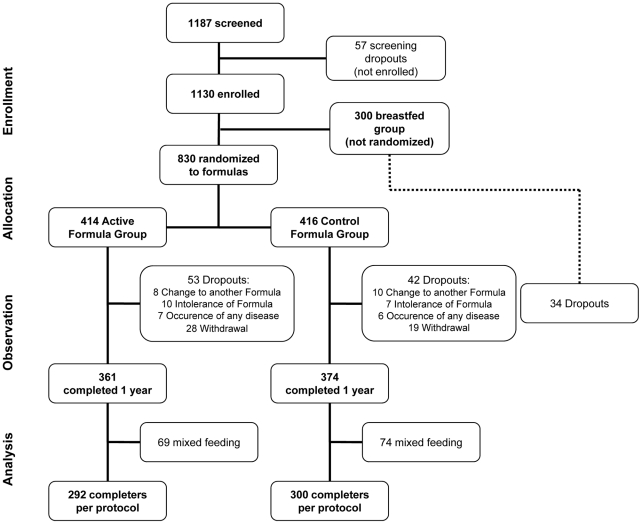
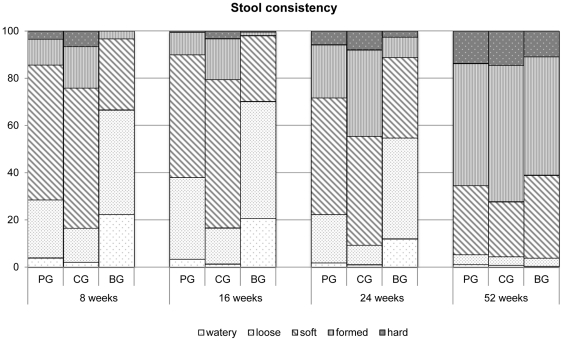
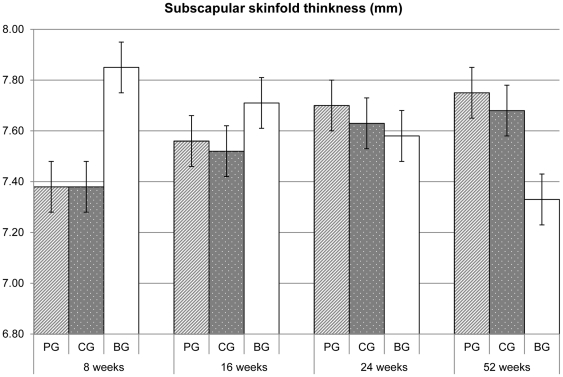
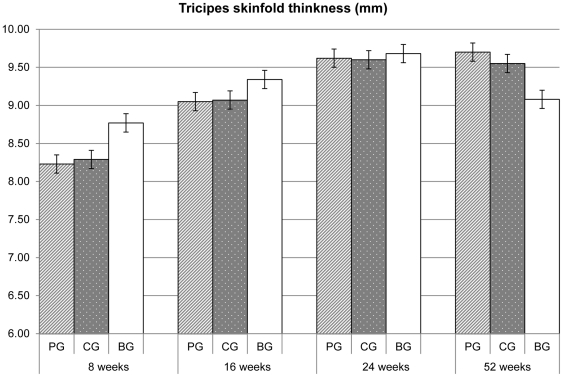
METHODOLOGY/PRINCIPAL FINDINGS: this study was performed as a multi-center, randomized, double-blind, placebo-controlled trial including healthy term infants. Infants were recruited before the age of 8 weeks, either having started with formula feeding or being fully breast-fed (breastfeeding group). Formula-fed infants were randomized to feeding with a regular formula containing a mixture of neutral oligosaccharides and pectin-derived acidic oligosaccharides (prebiotic formula group) or regular formula without oligosaccharides (control formula group). Growth, tolerance and adverse events were assessed at 8, 16, 24 and 52 weeks of age. The prebiotic and control groups showed similar mean weight, length and head circumference, skin fold thicknesses, arm circumference gains and stool frequency at each study point. As far as the anthropometric parameters are concerned, the prebiotic group and the control group did not attain the values shown by the breastfeeding group at any study point. The skin fold thicknesses assessed in the breastfeeding group at 8 weeks were strikingly larger than those in formula fed infants, whereas at 52 weeks were strikingly smaller. The stool consistency in the prebiotic group was softer than in the control group at 8, 16 and 24 weeks (p<0.001) and closer to that of the breastfeeding group. There was no difference in the incidence of adverse events between the two formula groups.
our findings demonstrate the tolerability and the long term safety of a formula containing an innovative mixture of oligosaccharides in a large cohort of healthy infants.
drks-neu.uniklinik-freiburg.de DRKS 00000201.
在婴儿配方奶粉中添加低聚糖已被证明可以模拟母乳的一些有益效果。本研究的目的是评估含有创新性混合低聚糖的配方在婴儿早期的耐受性和安全性。
方法/主要发现:这是一项多中心、随机、双盲、安慰剂对照试验,纳入了健康的足月婴儿。婴儿在 8 周龄之前入组,要么已经开始配方喂养,要么完全母乳喂养(母乳喂养组)。配方喂养的婴儿被随机分配到喂养常规配方(含中性低聚糖和果胶衍生的酸性低聚糖混合物)或不含低聚糖的常规配方(对照配方组)。在 8、16、24 和 52 周龄时评估生长、耐受性和不良事件。在每个研究点,益生元和对照组的平均体重、身长和头围、皮褶厚度、臂围增加和粪便频率相似。就人体测量参数而言,在任何研究点,益生元组和对照组都未达到母乳喂养组的值。母乳喂养组在 8 周龄时的皮褶厚度明显大于配方喂养组,而在 52 周龄时明显小于配方喂养组。在 8、16 和 24 周时,益生元组的粪便稠度比对照组更软(p<0.001),与母乳喂养组更接近。两组配方的不良事件发生率无差异。
我们的研究结果表明,在一个健康婴儿的大样本中,含有创新性混合低聚糖的配方具有良好的耐受性和长期安全性。
drks-neu.uniklinik-freiburg.de DRKS 00000201。