Aldahmash Abdullah, Zaher Walid, Al-Nbaheen May, Kassem Moustapha
Stem Cell Unit, King Saud University, Riyadh, Saudi Arabia.
Ann Saudi Med. 2012 Jan-Feb;32(1):68-77. doi: 10.5144/0256-4947.2012.68.
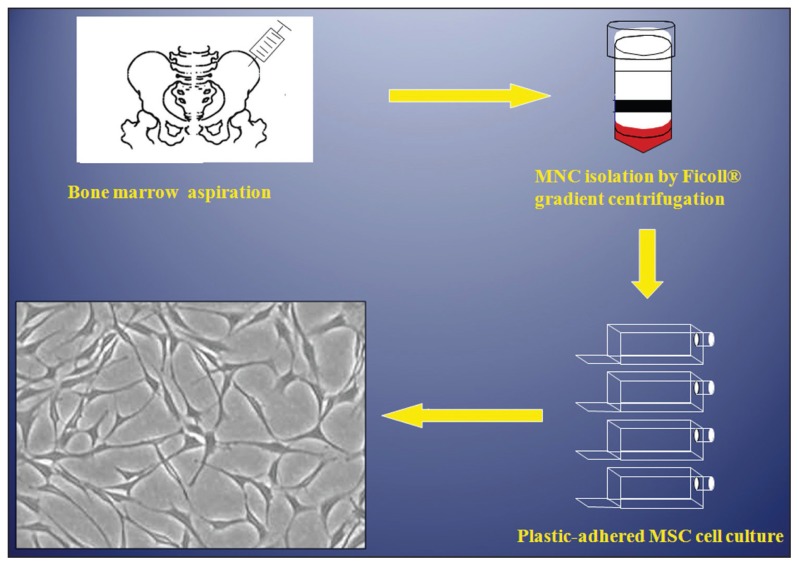
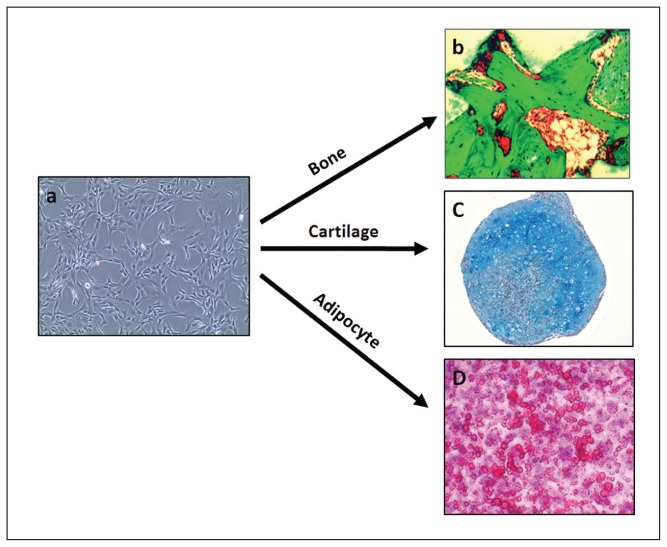
Human stromal (mesenchymal) stem cells (hMSC) represent a group of non-hematopoietic stem cells present in the bone marrow stroma and the stroma of other organs including subcutaneous adipose tissue, placenta, and muscles. They exhibit the characteristics of somatic stem cells of self-renewal and multi-lineage differentiation into mesoderm-type of cells, e.g., to osteoblasts, adipocytes, chondrocytes and possibly other cell types including hepatocytes and astrocytes. Due to their ease of culture and multipotentiality, hMSC are increasingly employed as a source for cells suitable for a number of clinical applications, e.g., non-healing bone fractures and defects and also non-skeletal degenerative diseases like heart failure. Currently, the numbers of clinical trials that employ MSC are increasing. However, several biological and biotechnological challenges need to be overcome to benefit from the full potential of hMSC. In this current review, we present some of the most important and recent advances in understanding of the biology of hMSC and their current and potential use in therapy.
人基质(间充质)干细胞(hMSC)是存在于骨髓基质以及包括皮下脂肪组织、胎盘和肌肉在内的其他器官基质中的一群非造血干细胞。它们具有体细胞干细胞自我更新的特性,并能多向分化为中胚层类型的细胞,如成骨细胞、脂肪细胞、软骨细胞,还可能分化为包括肝细胞和星形胶质细胞在内的其他细胞类型。由于hMSC易于培养且具有多能性,它们越来越多地被用作适合多种临床应用的细胞来源,例如用于治疗不愈合的骨折和骨缺损以及心力衰竭等非骨骼退行性疾病。目前,使用间充质干细胞的临床试验数量正在增加。然而,要充分发挥hMSC的潜力,还需要克服一些生物学和生物技术方面的挑战。在本综述中,我们介绍了在理解hMSC生物学特性及其当前和潜在治疗用途方面的一些最重要和最新的进展。