New Technology Group, ARUP Laboratories, Inc,, 500 Chipeta Way, Mail Code 209, Salt Lake City, UT 84108-1221, USA.
BMC Med. 2011 Dec 14;9:133. doi: 10.1186/1741-7015-9-133.
About half of Americans 50 to 75 years old do not follow recommended colorectal cancer (CRC) screening guidelines, leaving 40 million individuals unscreened. A simple blood test would increase screening compliance, promoting early detection and better patient outcomes. The objective of this study is to demonstrate the performance of an improved sensitivity blood-based Septin 9 (SEPT9) methylated DNA test for colorectal cancer. Study variables include clinical stage, tumor location and histologic grade.
Plasma samples were collected from 50 untreated CRC patients at 3 institutions; 94 control samples were collected at 4 US institutions; samples were collected from 300 colonoscopy patients at 1 US clinic prior to endoscopy. SEPT9 methylated DNA concentration was tested in analytical specimens, plasma of known CRC cases, healthy control subjects, and plasma collected from colonoscopy patients.
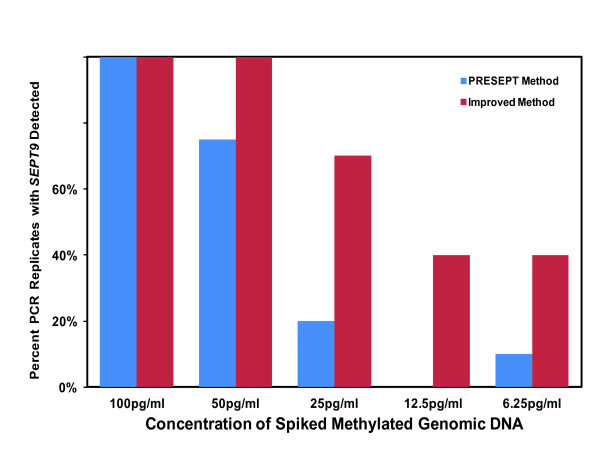
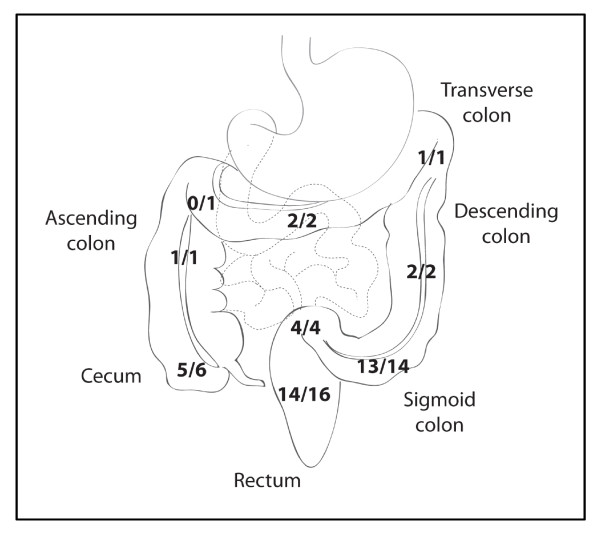
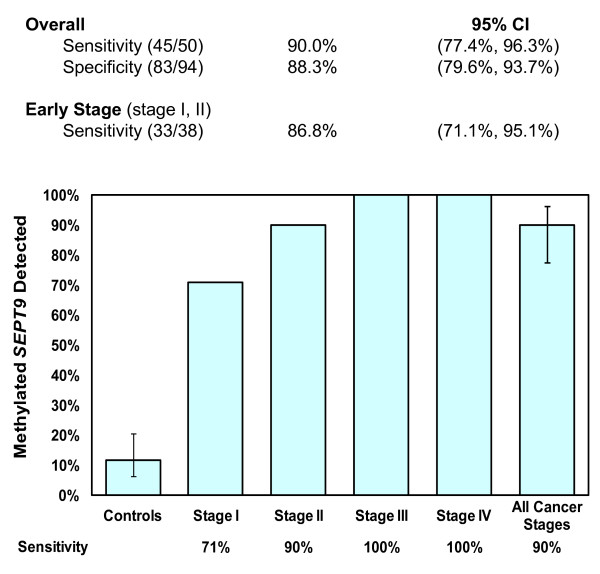
The improved SEPT9 methylated DNA test was more sensitive than previously described methods; the test had an overall sensitivity for CRC of 90% (95% CI, 77.4% to 96.3%) and specificity of 88% (95% CI, 79.6% to 93.7%), detecting CRC in patients of all stages. For early stage cancer (I and II) the test was 87% (95% CI, 71.1% to 95.1%) sensitive. The test identified CRC from all regions, including proximal colon (for example, the cecum) and had a 12% false-positive rate. In a small prospective study, the SEPT9 test detected 12% of adenomas with a false-positive rate of 3%.
A sensitive blood-based CRC screening test using the SEPT9 biomarker specifically detects a majority of CRCs of all stages and colorectal locations. The test could be offered to individuals of average risk for CRC who are unwilling or unable to undergo colonscopy.
约有一半的 50 至 75 岁美国人未遵循推荐的结直肠癌(CRC)筛查指南,导致 4000 万人未接受筛查。一种简单的血液检测方法将提高筛查的依从性,促进早期发现和更好的患者预后。本研究的目的是展示改良的敏感性基于血液的 Septin 9(SEPT9)甲基化 DNA 检测在结直肠癌中的性能。研究变量包括临床分期、肿瘤位置和组织学分级。
从 3 个机构的 50 名未经治疗的 CRC 患者中采集血浆样本;在美国的 4 个机构采集了 94 个对照样本;在美国的 1 个诊所,在结肠镜检查前从 300 名结肠镜检查患者中采集样本。在分析样本、已知 CRC 病例的血浆、健康对照者和结肠镜检查患者采集的血浆中检测 SEPT9 甲基化 DNA 浓度。
改良的 SEPT9 甲基化 DNA 检测比以前描述的方法更敏感;该检测对 CRC 的总敏感性为 90%(95%CI,77.4%至 96.3%),特异性为 88%(95%CI,79.6%至 93.7%),可检测所有阶段的 CRC。对于早期癌症(I 期和 II 期),该检测的敏感性为 87%(95%CI,71.1%至 95.1%)。该检测可从包括近端结肠(例如盲肠)在内的所有区域识别 CRC,假阳性率为 12%。在一项小型前瞻性研究中,SEPT9 检测到 12%的腺瘤,假阳性率为 3%。
一种基于 SEPT9 生物标志物的敏感血液 CRC 筛查检测方法可特异性检测大多数处于各个阶段和结直肠位置的 CRC。该检测方法可提供给不愿意或无法进行结肠镜检查的 CRC 平均风险个体。