Department of Environmental Health Sciences, University of Minnesota School of Public Health, , Minneapolis, Minnesota, USA.
Gut. 2014 Feb;63(2):317-25. doi: 10.1136/gutjnl-2012-304149. Epub 2013 Feb 13.
As screening methods for colorectal cancer (CRC) are limited by uptake and adherence, further options are sought. A blood test might increase both, but none has yet been tested in a screening setting.
We prospectively assessed the accuracy of circulating methylated SEPT9 DNA (mSEPT9) for detecting CRC in a screening population.
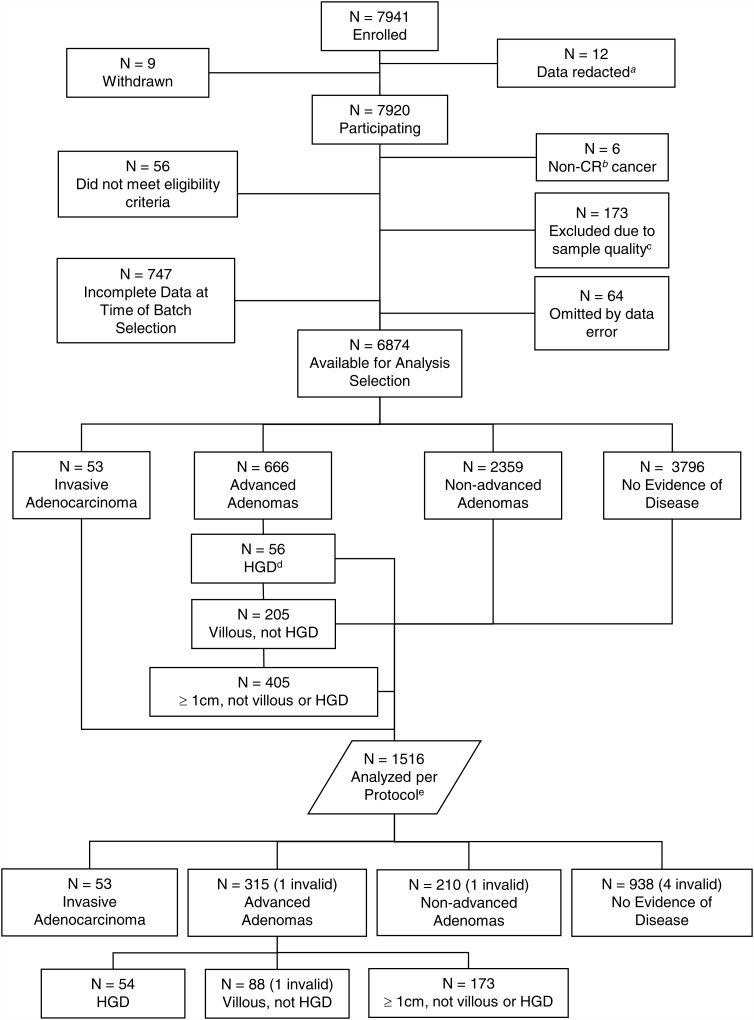
Asymptomatic individuals ≥50 years old scheduled for screening colonoscopy at 32 US and German clinics voluntarily gave blood plasma samples before colon preparation. Using a commercially available assay, three independent blinded laboratories assayed plasma DNA of all CRC cases and a stratified random sample of other subjects in duplicate real time PCRs. The primary outcomes measures were standardised for overall sensitivity and specificity estimates.
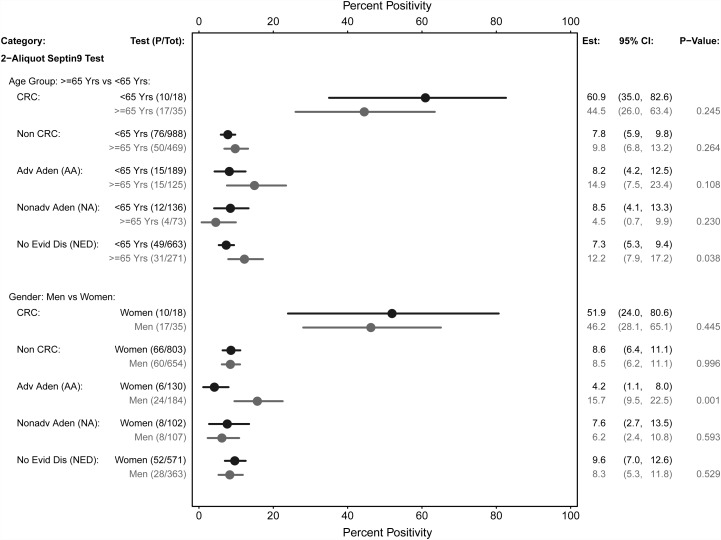
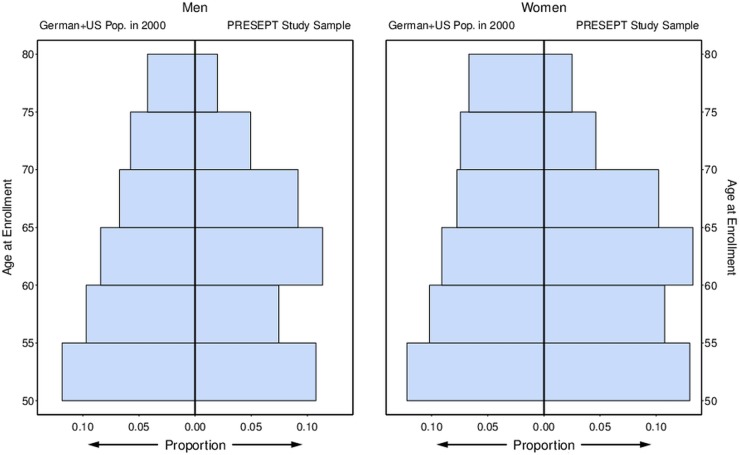
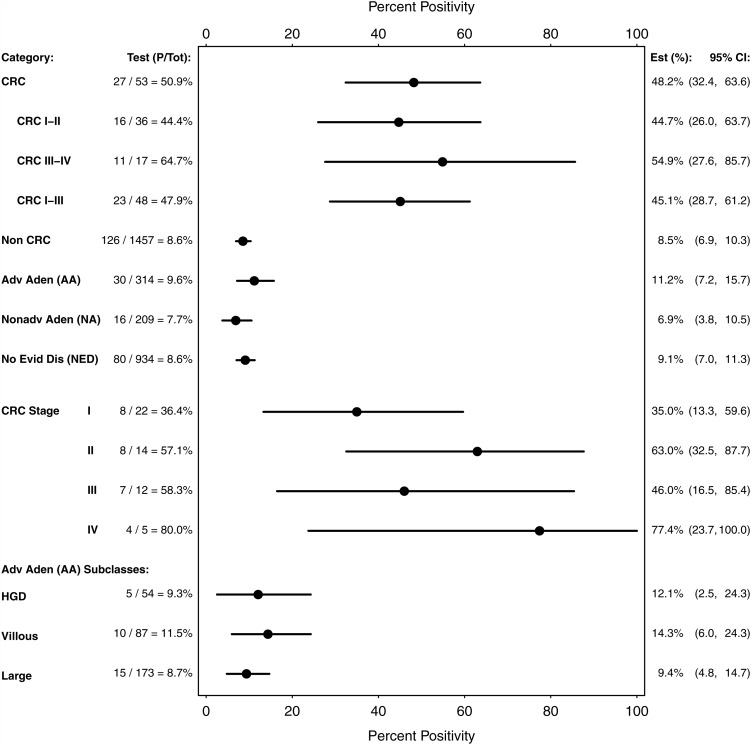
7941 men (45%) and women (55%), mean age 60 years, enrolled. Results from 53 CRC cases and from 1457 subjects without CRC yielded a standardised sensitivity of 48.2% (95% CI 32.4% to 63.6%; crude rate 50.9%); for CRC stages I-IV, values were 35.0%, 63.0%, 46.0% and 77.4%, respectively. Specificity was 91.5% (95% CI 89.7% to 93.1%; crude rate 91.4%). Sensitivity for advanced adenomas was low (11.2%).
Our study using the blood based mSEPT9 test showed that CRC signal in blood can be detected in asymptomatic average risk individuals undergoing screening. However, the utility of the test for population screening for CRC will require improved sensitivity for detection of early cancers and advanced adenomas.
NCT00855348.
由于结直肠癌(CRC)的筛查方法受到接受度和依从性的限制,因此需要寻找其他方法。血液检测可能会提高这两者的水平,但目前还没有在筛查环境中进行测试的方法。
我们前瞻性评估了循环甲基化 SEPT9 DNA(mSEPT9)在筛查人群中检测 CRC 的准确性。
32 家美国和德国诊所的无症状、年龄在 50 岁以上的筛查人群在进行结肠镜筛查前自愿采集血样。使用一种商业上可用的检测方法,三个独立的盲法实验室在实时 PCR 中对所有 CRC 病例的血浆 DNA 以及其他随机分层的对照者的血浆 DNA 进行了重复检测。主要观察指标是标准化后的整体敏感性和特异性估计值。
7941 名男性(45%)和女性(55%),平均年龄为 60 岁,入组。53 例 CRC 病例和 1457 例无 CRC 病例的结果得出标准化敏感性为 48.2%(95%CI 32.4%至 63.6%;粗率为 50.9%);对于 CRC Ⅰ-Ⅳ期,敏感性分别为 35.0%、63.0%、46.0%和 77.4%。特异性为 91.5%(95%CI 89.7%至 93.1%;粗率为 91.4%)。高级别腺瘤的敏感性较低(11.2%)。
本研究使用基于血液的 mSEPT9 检测发现,在接受筛查的无症状、平均风险个体中可以检测到血液中的 CRC 信号。然而,该检测方法用于 CRC 人群筛查的实用性还需要提高对早期癌症和高级别腺瘤的检测敏感性。
NCT00855348。