Yang Chenjie, Robbins Paul D
Department of Microbiology and Molecular Genetics, University of Pittsburgh School of Medicine, Pittsburgh, PA 15219, USA.
Clin Dev Immunol. 2011;2011:842849. doi: 10.1155/2011/842849. Epub 2011 Nov 30.
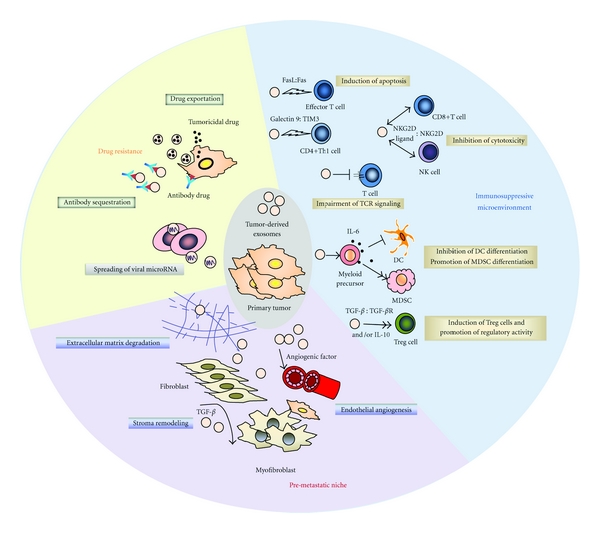
Exosomes are endosome-derived, 30-100 nm small membrane vesicles released by most cell types including tumor cells. They are enriched in a selective repertoire of proteins and nucleic acids from parental cells and are thought to be actively involved in conferring intercellular signals. Tumor-derived exosomes have been viewed as a source of tumor antigens that can be used to induce antitumor immune responses. However, tumor-derived exosomes also have been found to possess immunosuppressive properties and are able to facilitate tumor growth, metastasis, and the development of drug resistance. These different effects of tumor-derived exosomes contribute to the pathogenesis of cancer. This review will discuss the roles of tumor-derived exosomes in cancer pathogenesis, therapy, and diagnostics.
外泌体是源自内体的、大小为30-100纳米的小膜泡,由包括肿瘤细胞在内的大多数细胞类型释放。它们富含来自亲代细胞的蛋白质和核酸的选择性组合,被认为积极参与传递细胞间信号。肿瘤来源的外泌体被视为可用于诱导抗肿瘤免疫反应的肿瘤抗原来源。然而,也发现肿瘤来源的外泌体具有免疫抑制特性,能够促进肿瘤生长、转移和耐药性的发展。肿瘤来源的外泌体的这些不同作用促成了癌症的发病机制。本综述将讨论肿瘤来源的外泌体在癌症发病机制、治疗和诊断中的作用。