Department of Pathology and Laboratory Medicine, Temple University School of Medicine, Philadelphia, PA 19140, USA.
Front Biosci (Landmark Ed). 2012 Jan 1;17(2):656-69. doi: 10.2741/3950.
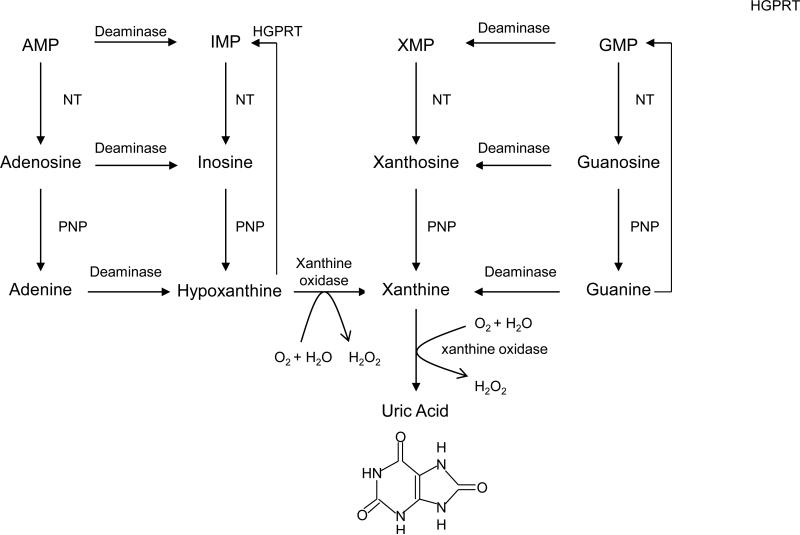
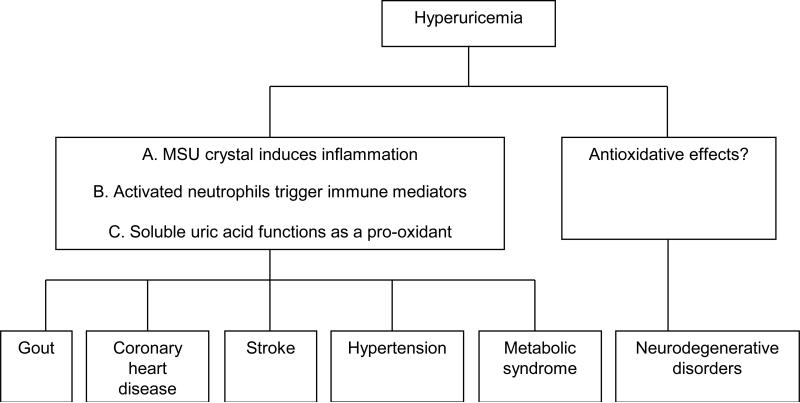
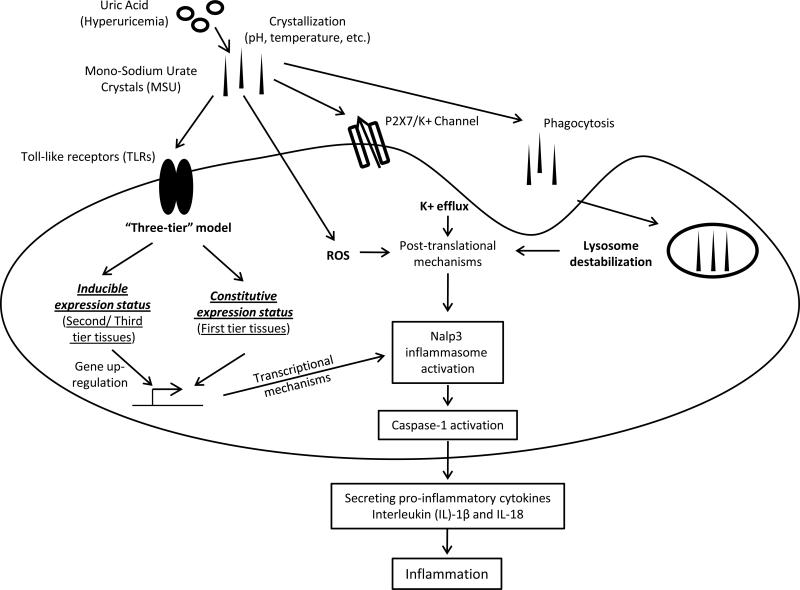
Uric acid is the product of purine metabolism. It is known that hyperuricemia, defined as high levels of blood uric acid, is the major etiological factor of gout. A number of epidemiological reports have increasingly linked hyperuricemia with cardiovascular and neurological diseases. Studies highlighting the pathogenic mechanisms of uric acid point to an inflammatory response as the primary mechanism for inducing gout and possibly contributing to uric acid's vascular effects. Monosodium urate (MSU) crystals induce an inflammatory reaction, which are recognized by toll-like receptors (TLRs). These TLRs then activate NALP3 inflammasome. MSU also triggers neutrophil activation and further produces immune mediators, which lead to a proinflammatory response. In addition, soluble uric acid can also mediate the generation of free radicals and function as a pro-oxidant. This review summarizes the epidemiological studies of hyperuricemia and cardiovascular disease, takes a brief look at hyperuricemia and its role in neurological diseases, and highlights the studies of the advanced pathological mechanisms of uric acid and inflammation.
尿酸是嘌呤代谢的产物。众所周知,高尿酸血症(定义为血液尿酸水平升高)是痛风的主要病因。越来越多的流行病学报告将高尿酸血症与心血管和神经系统疾病联系起来。强调尿酸致病机制的研究指出,炎症反应是诱导痛风的主要机制,并可能促成尿酸的血管作用。单钠尿酸盐(MSU)晶体引发炎症反应,被 Toll 样受体(TLRs)识别。这些 TLR 随后激活 NALP3 炎性小体。MSU 还会触发中性粒细胞的激活,并进一步产生免疫介质,导致促炎反应。此外,可溶性尿酸还可以介导自由基的产生,并发挥促氧化剂的作用。本文综述了高尿酸血症与心血管疾病的流行病学研究,简要探讨了高尿酸血症及其在神经系统疾病中的作用,并强调了尿酸和炎症的高级病理机制的研究。