Center for Tobacco Control Research and Education, University of California San Francisco, San Francisco, California, United States of America.
PLoS Med. 2011 Dec;8(12):e1001145. doi: 10.1371/journal.pmed.1001145. Epub 2011 Dec 20.
In 2009, the promulgation of US Food and Drug Administration (FDA) tobacco regulation focused attention on cigarette flavor additives. The tobacco industry had prepared for this eventuality by initiating a research program focusing on additive toxicity. The objective of this study was to analyze Philip Morris' Project MIX as a case study of tobacco industry scientific research being positioned strategically to prevent anticipated tobacco control regulations.
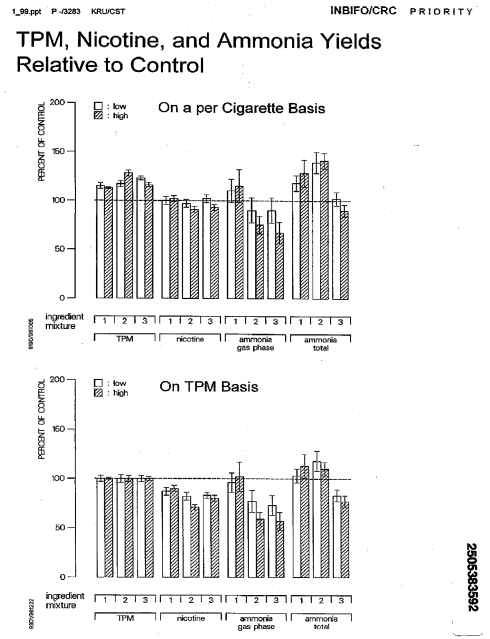
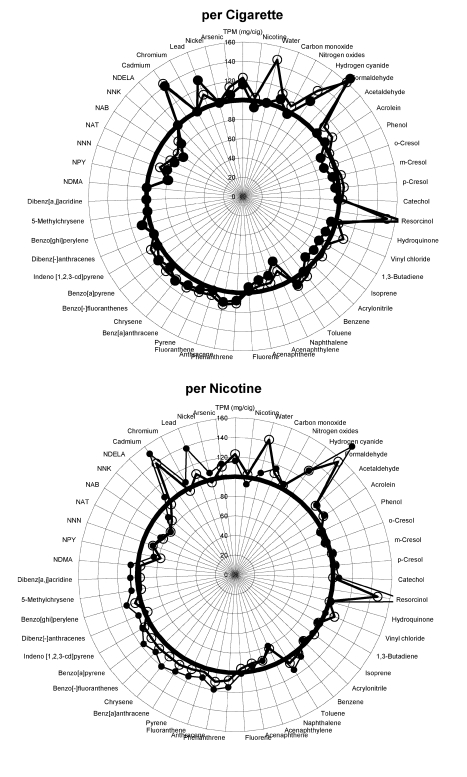
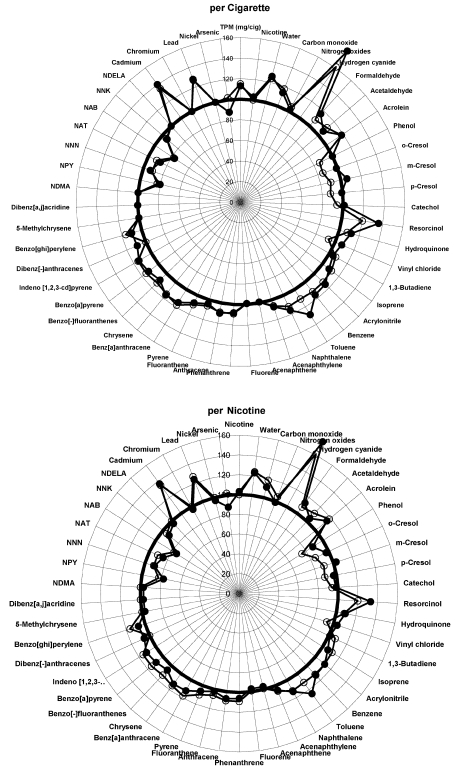
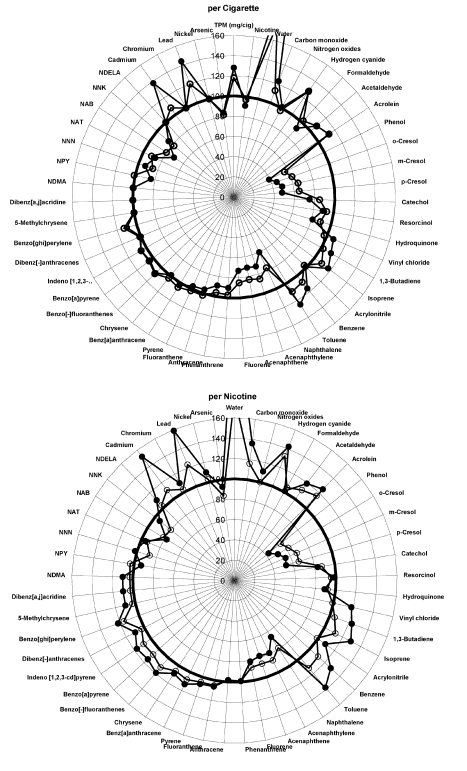
We analyzed previously secret tobacco industry documents to identify internal strategies for research on cigarette additives and reanalyzed tobacco industry peer-reviewed published results of this research. We focused on the key group of studies conducted by Phillip Morris in a coordinated effort known as "Project MIX." Documents showed that Project MIX subsumed the study of various combinations of 333 cigarette additives. In addition to multiple internal reports, this work also led to four peer-reviewed publications (published in 2001). These papers concluded that there was no evidence of substantial toxicity attributable to the cigarette additives studied. Internal documents revealed post hoc changes in analytical protocols after initial statistical findings indicated an additive-associated increase in cigarette toxicity as well as increased total particulate matter (TPM) concentrations in additive-modified cigarette smoke. By expressing the data adjusted by TPM concentration, the published papers obscured this underlying toxicity and particulate increase. The animal toxicology results were based on a small number of rats in each experiment, raising the possibility that the failure to detect statistically significant changes in the end points was due to underpowering the experiments rather than lack of a real effect.
The case study of Project MIX shows tobacco industry scientific research on the use of cigarette additives cannot be taken at face value. The results demonstrate that toxins in cigarette smoke increase substantially when additives are put in cigarettes, including the level of TPM. In particular, regulatory authorities, including the FDA and similar agencies elsewhere, could use the Project MIX data to eliminate the use of these 333 additives (including menthol) from cigarettes.
2009 年,美国食品和药物管理局(FDA)烟草法规的颁布引起了人们对香烟调味添加剂的关注。烟草业为此做好了准备,启动了一项专注于添加剂毒性的研究计划。本研究旨在分析菲利普莫里斯公司的“MIX 项目”,以此为例研究烟草业如何战略性地定位科学研究,以防止预期的烟草控制法规的出台。
我们分析了先前的烟草业机密文件,以确定该行业关于香烟添加剂研究的内部策略,并重新分析了该行业对这项研究的同行评议发表结果。我们专注于菲利普莫里斯公司以“MIX 项目”的名义协调开展的一组关键研究。文件显示,MIX 项目涵盖了对 333 种香烟添加剂的各种组合的研究。除了多份内部报告外,这项工作还促成了四项同行评议的出版物(2001 年发表)。这些论文得出的结论是,没有证据表明所研究的香烟添加剂有实质性毒性。内部文件显示,在初始统计结果表明添加剂与香烟毒性增加以及添加剂改性香烟烟雾中的总颗粒物(TPM)浓度增加有关之后,分析方案发生了事后更改。通过调整 TPM 浓度的数据表达,发表的论文掩盖了这种潜在的毒性和颗粒增加。动物毒理学结果基于每个实验中少数几只老鼠,这使得未能在终点检测到统计学上的显著变化可能是由于实验功率不足,而不是缺乏真实效应。
MIX 项目的案例研究表明,不能轻信烟草业关于香烟添加剂使用的科学研究。结果表明,香烟烟雾中的毒素在添加物被放入香烟时会大幅增加,包括 TPM 水平。特别是,监管机构,包括 FDA 和其他地方的类似机构,可以使用 MIX 项目数据从香烟中消除这 333 种添加剂(包括薄荷醇)的使用。