Department of Behavioral Science – Unit 1330, The University of Texas MD Anderson Cancer Center, P. O. Box 301439, Houston, TX 77030, USA.
Neuroimage. 2012 Mar;60(1):252-62. doi: 10.1016/j.neuroimage.2011.12.024. Epub 2011 Dec 21.
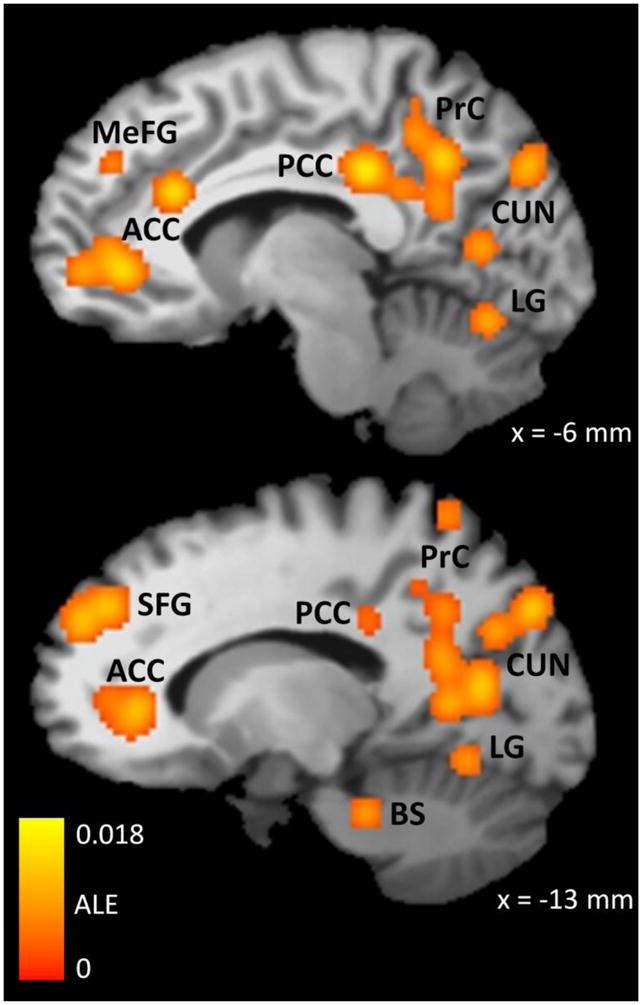
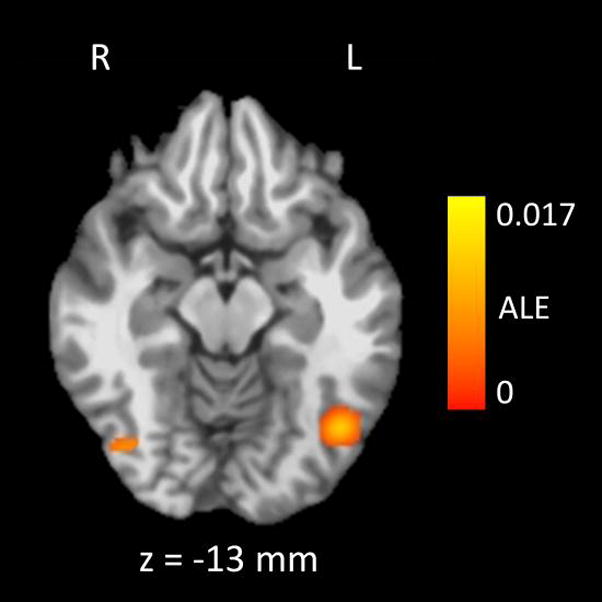
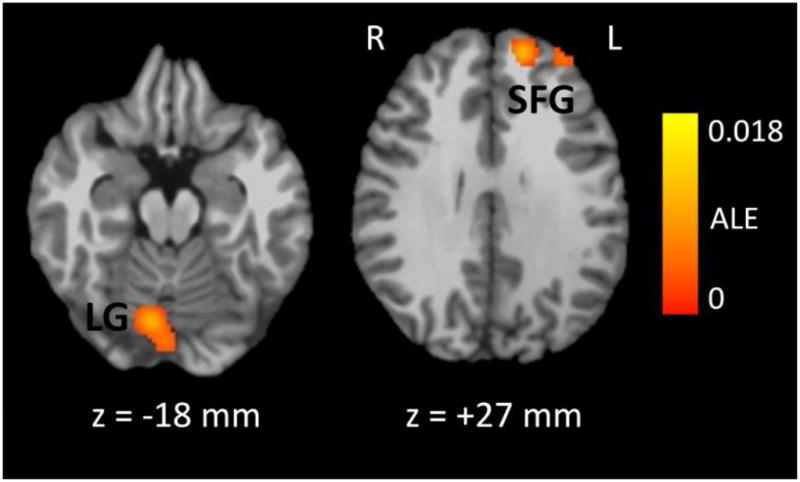
Reactivity to smoking-related cues may be an important factor that precipitates relapse in smokers who are trying to quit. The neurobiology of smoking cue reactivity has been investigated in several fMRI studies. We combined the results of these studies using activation likelihood estimation, a meta-analytic technique for fMRI data. Results of the meta-analysis indicated that smoking cues reliably evoke larger fMRI responses than neutral cues in the extended visual system, precuneus, posterior cingulate gyrus, anterior cingulate gyrus, dorsal and medial prefrontal cortex, insula, and dorsal striatum. Subtraction meta-analyses revealed that parts of the extended visual system and dorsal prefrontal cortex are more reliably responsive to smoking cues in deprived smokers than in non-deprived smokers, and that short-duration cues presented in event-related designs produce larger responses in the extended visual system than long-duration cues presented in blocked designs. The areas that were found to be responsive to smoking cues agree with theories of the neurobiology of cue reactivity, with two exceptions. First, there was a reliable cue reactivity effect in the precuneus, which is not typically considered a brain region important to addiction. Second, we found no significant effect in the nucleus accumbens, an area that plays a critical role in addiction, but this effect may have been due to technical difficulties associated with measuring fMRI data in that region. The results of this meta-analysis suggest that the extended visual system should receive more attention in future studies of smoking cue reactivity.
吸烟相关线索的反应性可能是试图戒烟的吸烟者复吸的一个重要因素。已有几项 fMRI 研究探讨了吸烟线索反应性的神经生物学。我们使用激活似然估计(一种 fMRI 数据分析的元分析技术)对这些研究的结果进行了综合。元分析的结果表明,与中性线索相比,吸烟线索能可靠地引起扩展视觉系统、楔前叶、后扣带皮层、前扣带皮层、背侧和内侧前额叶皮层、岛叶和背侧纹状体等区域更大的 fMRI 反应。减法元分析显示,与非剥夺吸烟者相比,剥夺吸烟者的扩展视觉系统和背侧前额叶皮层对吸烟线索的反应更为可靠,事件相关设计中呈现的短时长线索比在块设计中呈现的长时长线索能引起扩展视觉系统更大的反应。与线索反应性的神经生物学理论一致,我们发现了对吸烟线索有反应的区域,但有两个例外。首先,在楔前叶中发现了可靠的线索反应效应,而楔前叶通常不被认为是与成瘾有关的重要脑区。其次,我们在伏隔核中没有发现显著的效应,而伏隔核在成瘾中起着关键作用,但这一效应可能是由于在该区域测量 fMRI 数据的技术困难所致。这项元分析的结果表明,在未来的吸烟线索反应性研究中,扩展视觉系统应该受到更多的关注。