Medical University of South Carolina, Charleston, 29425, USA.
Addict Biol. 2011 Oct;16(4):654-66. doi: 10.1111/j.1369-1600.2011.00340.x. Epub 2011 Jul 25.
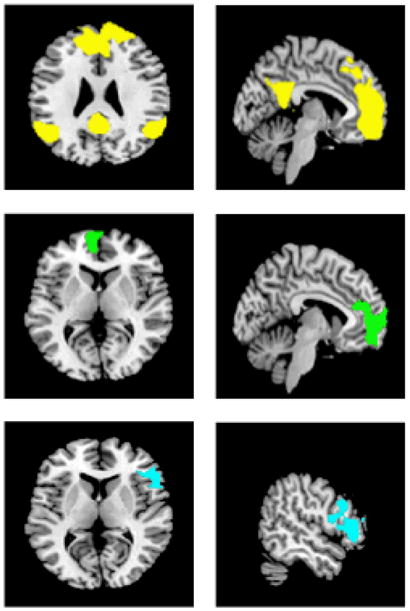
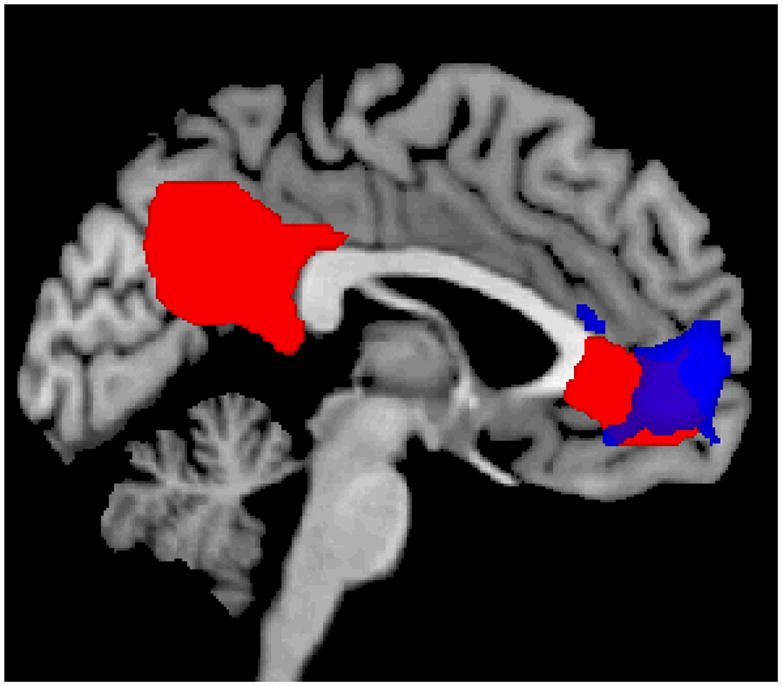
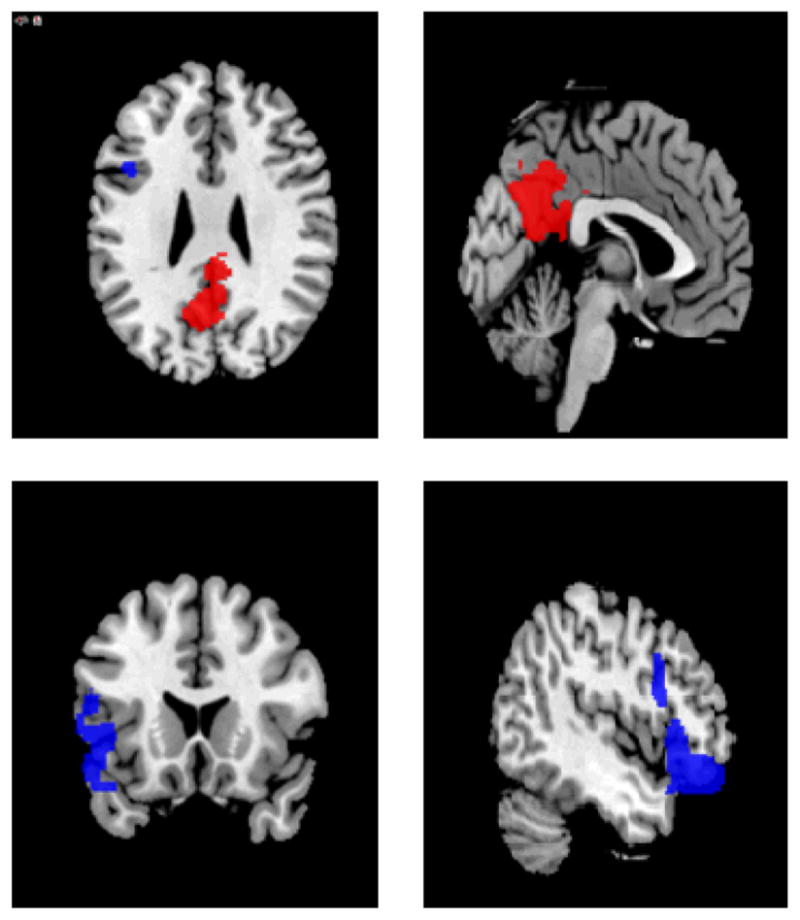
Craving is a significant factor which can lead to relapse during smoking quit attempts. Attempts to resist urges to smoke during cue-elicited craving have been shown to activate regions in the brain associated with decision-making, anxiety regulation and visual processing. In this study, 32 treatment-seeking, nicotine-dependent smokers viewed blocks of smoking and neutral cues alternating with rest periods during magnetic resonance imaging scanning in a 3T Siemens scanner (Siemens AG, Erlangen, Bavaria, Germany). While viewing cues or control images, participants were instructed either to 'allow yourself to crave' or 'resist craving.' Data were analyzed with FSL 4.1.5, focused on the smoking cues versus neutral cues contrast, using cluster thresholding (Z > 2.3 and corrected cluster threshold of P = 0.05) at the individual and group levels. During the Crave condition, activation was seen on the left anterior cingulated cortex (LACC), medial prefrontal cortex, left middle cingulate gyrus, bilateral posterior cingulated gyrus and bilateral precuneus, areas associated with attention, decision-making and episodic memory. The LACC and areas of the prefrontal cortex associated with higher executive functioning were activated during the Resist condition. No clear distinctions between group crave and resist analyses as a whole were seen without taking into account specific strategies used to resist the urge to smoke, supporting the idea that craving is associated with some degree of resisting the urge to smoke, and trying to resist is almost always accompanied by some degree of craving. Different strategies for resisting, such as distraction, activated different regions. Understanding the underlying neurobiology of resisting craving to smoke may identify new foci for treatments.
渴求感是导致戒烟尝试中复吸的一个重要因素。在诱发渴求感的线索下,尝试抵制吸烟的冲动会激活与决策、焦虑调节和视觉处理相关的大脑区域。在这项研究中,32 名寻求治疗的尼古丁依赖吸烟者在 3T 西门子扫描仪(德国巴伐利亚埃尔兰根西门子股份公司)中进行磁共振成像扫描,期间观看吸烟和中性线索块与休息期交替出现。在观看线索或对照图像时,参与者被指示“允许自己渴望”或“抵制渴望”。使用个体和群体水平的聚类阈值(Z > 2.3 和校正的 P = 0.05),使用 FSL 4.1.5 对数据进行了分析,重点是吸烟线索与中性线索对比。在 Crave 条件下,左前扣带皮层(LACC)、内侧前额叶皮层、左中扣带回、双侧后扣带回和双侧楔前叶出现激活,这些区域与注意力、决策和情景记忆有关。在 Resist 条件下,LACC 和与更高执行功能相关的前额叶皮层区域被激活。如果不考虑用于抵制吸烟冲动的具体策略,整个群体的 Crave 和 Resist 分析之间没有明显区别,这支持了这样一种观点,即渴求感与某种程度上抵制吸烟冲动有关,而试图抵制几乎总是伴随着某种程度的渴求感。不同的抵制策略,如分散注意力,会激活不同的区域。了解抵制吸烟渴求感的潜在神经生物学可能会为治疗提供新的焦点。