Department of Molecular Biology, University of Salzburg, 5020 Salzburg, Austria.
Part Fibre Toxicol. 2011 Dec 30;8:36. doi: 10.1186/1743-8977-8-36.
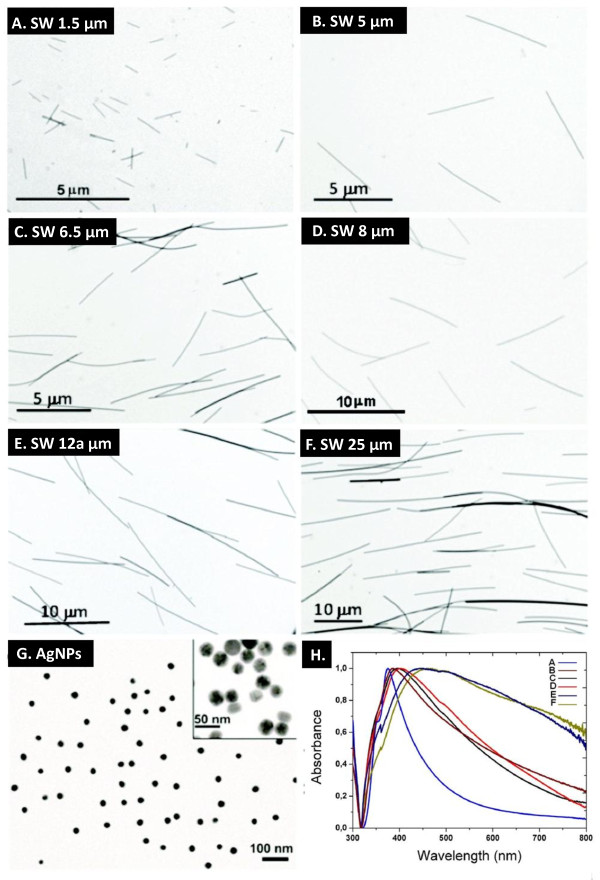
In nanotoxicology, the exact role of particle shape, in relation to the composition, on the capacity to induce toxicity is largely unknown. We investigated the toxic and immunotoxic effects of silver wires (length: 1.5 - 25 μm; diameter 100 - 160 nm), spherical silver nanoparticles (30 nm) and silver microparticles (<45 μm) on alveolar epithelial cells (A549).
Wires and nanoparticles were synthesized by wet-chemistry methods and extensively characterized. Cell viability and cytotoxicity were assessed and potential immunotoxic effects were investigated. To compare the effects on an activated and a resting immune system, cells were stimulated with rhTNF-α or left untreated. Changes in intracellular free calcium levels were determined using calcium imaging. Finally, ion release from the particles was assessed by ICP-MS and the effects of released ions on cell viability and cytotoxicity were tested.
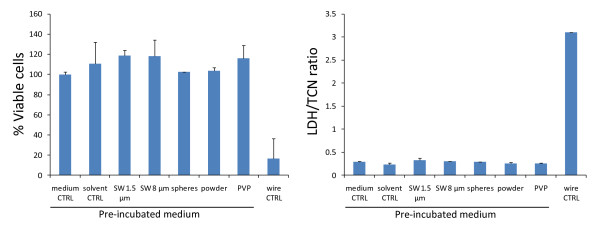
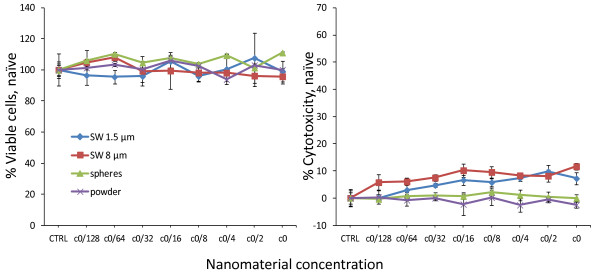
No effects were observed for the spherical particles, whereas the silver wires significantly reduced cell viability and increased LDH release from A549 cells. Cytokine promoter induction and NF-κB activation decreased in a concentration dependent manner similar to the decrease seen in cell viability. In addition, a strong increase of intracellular calcium levels within minutes after addition of wires was observed. This toxicity was not due to free silver ions, since the samples with the highest ion release did not induce toxicity and ion release control experiments with cells treated with pre-incubated medium did not show any effects either.
These data showed that silver wires strongly affect the alveolar epithelial cells, whereas spherical silver particles had no effect. This supports the hypothesis that shape is one of the important factors that determine particle toxicity.
在纳米毒理学中,颗粒形状与组成与诱导毒性的能力之间的确切关系在很大程度上尚不清楚。我们研究了银线(长度:1.5-25μm;直径 100-160nm)、球形银纳米颗粒(30nm)和银微粒(<45μm)对肺泡上皮细胞(A549)的毒性和免疫毒性作用。
通过湿法化学方法合成线材和纳米颗粒,并进行了广泛的表征。评估了细胞活力和细胞毒性,并研究了潜在的免疫毒性作用。为了比较对激活和静止免疫系统的影响,用 rhTNF-α 刺激细胞或不进行处理。通过钙成像测定细胞内游离钙水平的变化。最后,通过 ICP-MS 评估颗粒中离子的释放,并测试释放的离子对细胞活力和细胞毒性的影响。
球形颗粒没有观察到任何作用,而银线则显著降低了 A549 细胞的活力并增加了 LDH 的释放。细胞因子启动子诱导和 NF-κB 激活呈浓度依赖性降低,与细胞活力下降相似。此外,添加线材后几分钟内观察到细胞内钙水平的强烈增加。这种毒性不是由于游离银离子引起的,因为具有最高离子释放的样品没有诱导毒性,并且用预先孵育的培养基处理细胞的离子释放对照实验也没有显示出任何作用。
这些数据表明,银线强烈影响肺泡上皮细胞,而球形银颗粒则没有影响。这支持了形状是决定颗粒毒性的重要因素之一的假设。