Agarwal Ritesh, Khan Ajmal, Garg Mandeep, Aggarwal Ashutosh N, Gupta Dheeraj
Department of Pulmonary Medicine, Postgraduate Institute of Medical Education and Research, Sector-12, Chandigarh - 160 012, India.
Indian J Radiol Imaging. 2011 Oct;21(4):242-52. doi: 10.4103/0971-3026.90680.
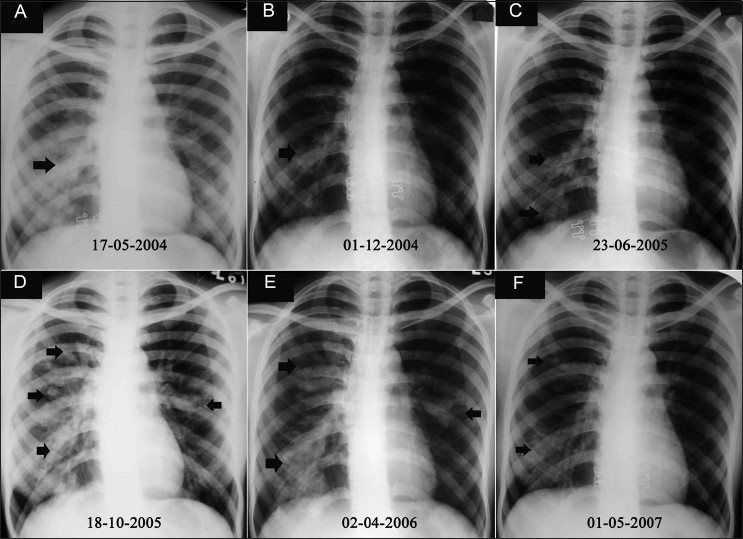
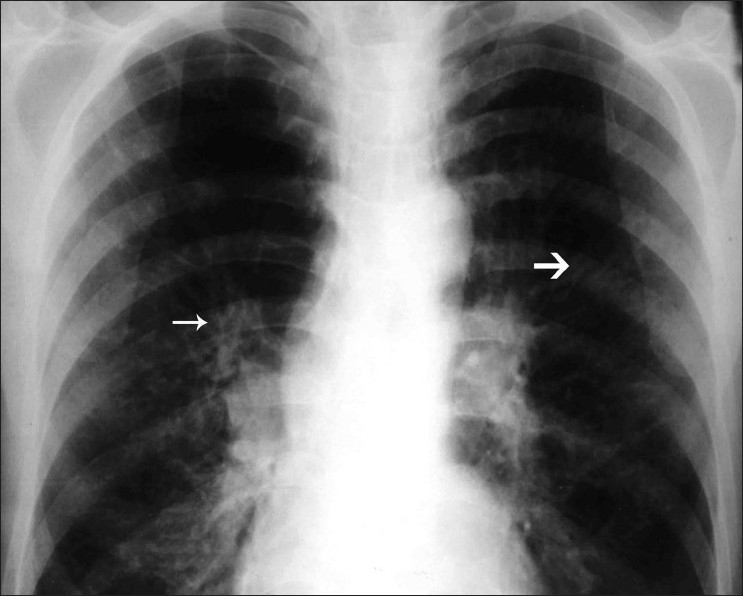
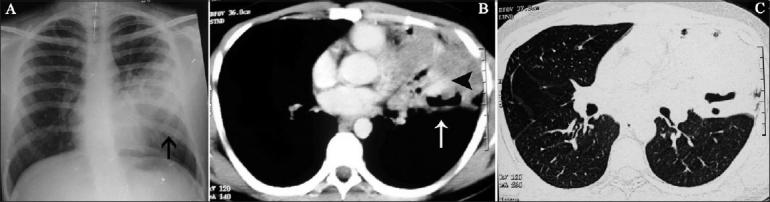
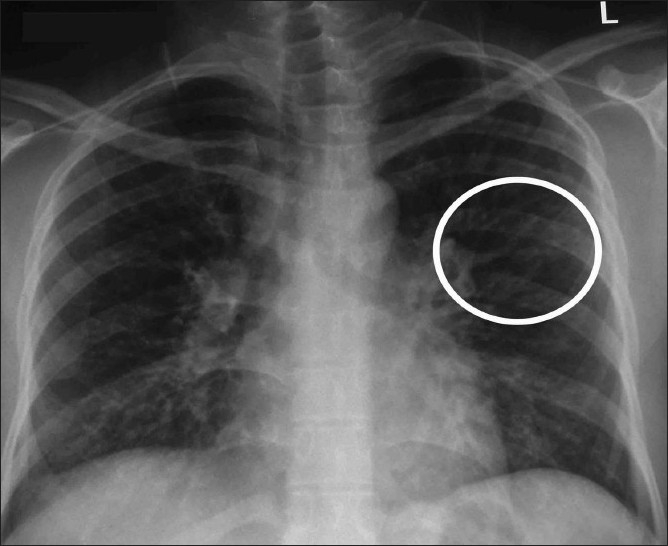
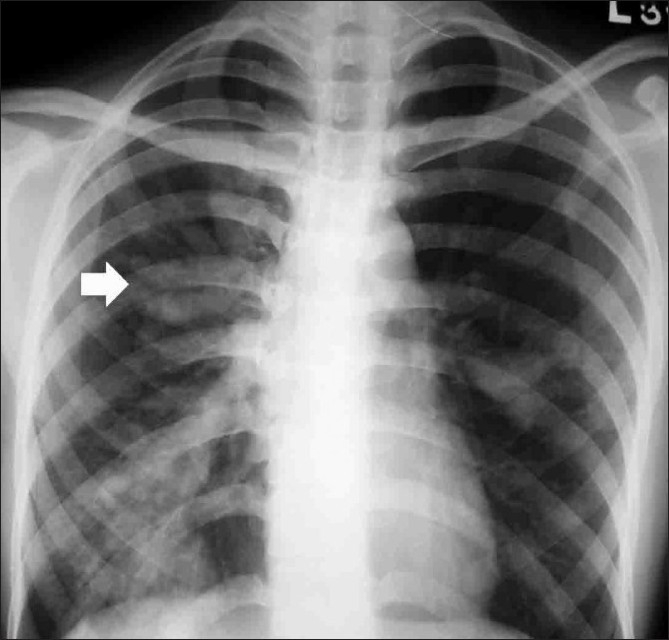
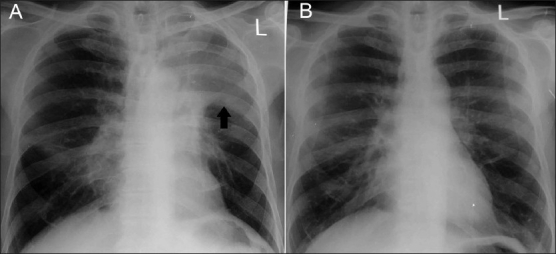
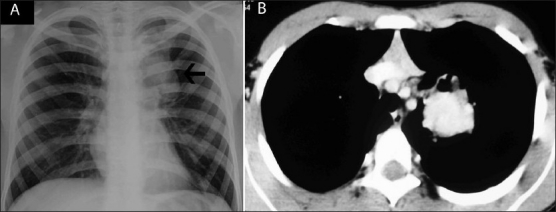
Allergic bronchopulmonary aspergillosis (ABPA) is the best-known allergic manifestation of Aspergillus-related hypersensitivity pulmonary disorders. Most patients present with poorly controlled asthma, and the diagnosis can be made on the basis of a combination of clinical, immunological, and radiological findings. The chest radiographic findings are generally nonspecific, although the manifestations of mucoid impaction of the bronchi suggest a diagnosis of ABPA. High-resolution CT scan (HRCT) of the chest has replaced bronchography as the initial investigation of choice in ABPA. HRCT of the chest can be normal in almost one-third of the patients, and at this stage it is referred to as serologic ABPA (ABPA-S). The importance of central bronchiectasis (CB) as a specific finding in ABPA is debatable, as almost 40% of the lobes are involved by peripheral bronchiectasis. High-attenuation mucus (HAM), encountered in 20% of patients with ABPA, is pathognomonic of ABPA. ABPA should be classified based on the presence or absence of HAM as ABPA-S (mild), ABPA-CB (moderate), and ABPA-CB-HAM (severe), as this classification not only reflects immunological severity but also predicts the risk of recurrent relapses.
变应性支气管肺曲霉病(ABPA)是最广为人知的曲霉相关超敏性肺疾病的变应性表现。大多数患者表现为哮喘控制不佳,可根据临床、免疫学和影像学检查结果综合做出诊断。胸部X线表现通常不具特异性,尽管支气管黏液嵌塞的表现提示ABPA诊断。胸部高分辨率CT扫描(HRCT)已取代支气管造影,成为ABPA的首选初始检查。几乎三分之一的患者胸部HRCT可无异常,在此阶段称为血清学ABPA(ABPA-S)。中心性支气管扩张(CB)作为ABPA的一项特异性表现,其重要性存在争议,因为近40%的肺叶受累于外周性支气管扩张。20%的ABPA患者会出现高密度黏液(HAM),这是ABPA的特征性表现。ABPA应根据HAM的有无分为ABPA-S(轻度)、ABPA-CB(中度)和ABPA-CB-HAM(重度),因为这种分类不仅反映免疫严重程度,还能预测复发风险。